Using Play to Support Children’s Physical Health

News

December 14, 2020

Using Play to Support Children’s Physical Health

Creating play-rich early environments.

As children’s first teachers, parents and caregivers play a vital role in supporting their children’s healthy development. While it may sound like a big task, the first step is simple: incorporate developmentally appropriate activities into your daily routines!

Physical Activity Recommendations

Birth to one year old:

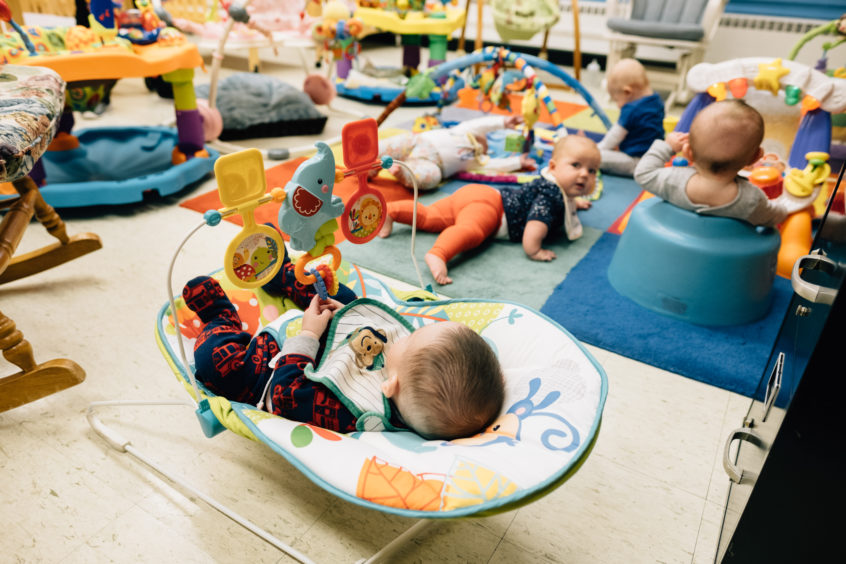
Caregivers should encourage their infants to practice movement skills while their infant is awake. These skills include supporting their head, rolling, crawling, walking, and picking up both small and large objects. Include at least 30 minutes of tummy time every day.

Ages two to five years old:

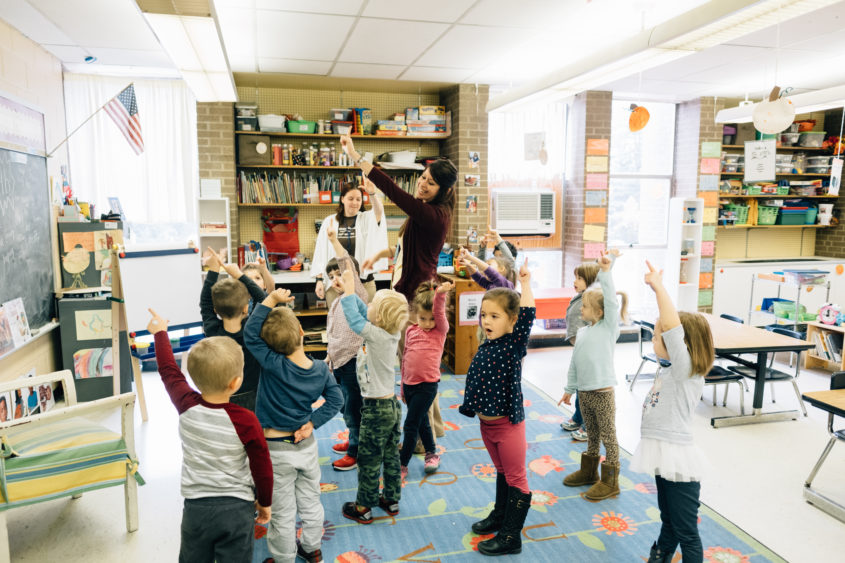
It is recommended that toddlers remain physically active throughout the entire day through a combination of play-based activities. Aim to include a mix of structured, adult-led play and unstructured, free play every day.

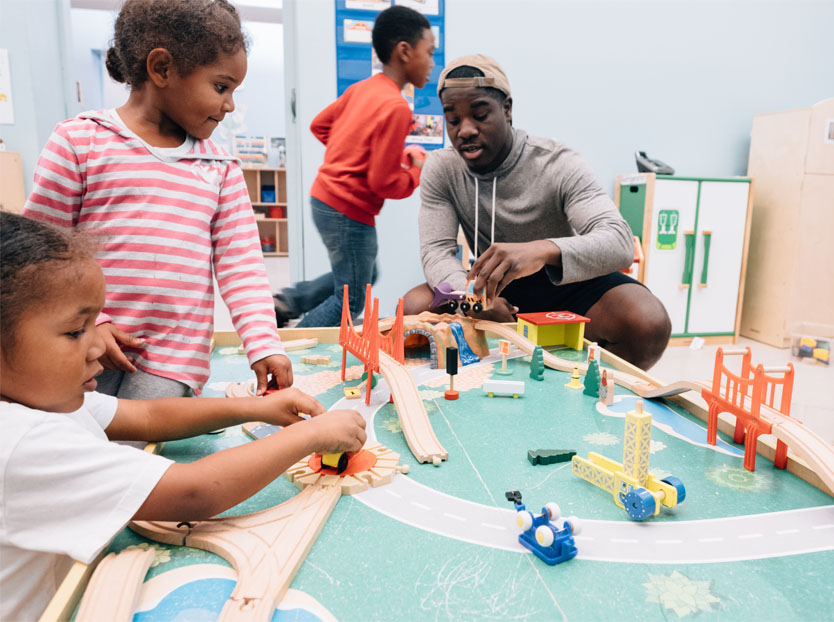
    • Structured play activities follow rules to reach a specific goal. Examples include assembling a LEGO set, playing organized sports like soccer, and playing tag.
    • Unstructured play is child-led, improvised, and creative. It does not follow a specific set of rules. Examples include playing with blocks, creating new games to play, and improvised dance.

Ages six years old and older:

Children in this age range should get at least 60 minutes of moderate-to-vigorous physical activity every day. There should be a mix of aerobic (running, swimming, jump roping) and bone- and muscle-strengthening activities (climbing, yoga, basketball, bodyweight exercises).

Playful Activity Ideas

Consider using these activities to get your family up and moving!

Infants and Young Toddlers: Household Item Play

With supervision, give your child their own spoon at meal time or give them a child-safe bowl and spoon to play with. You can also give your baby blocks and balls to strengthen their grip, practice their holding skills, and improve dexterity.

Pre-k: Muddy Maneuvers

Even though mud is messy and slippery, it provides a lot of great play opportunities for you and your child. Let your child take off their shoes; squish mud between their toes and fingers; make handprints, footprints, and mudpies; and more! Just bring some water and towels to clean up after!

Kindergarten: Nature Hunt

Take a walk in nature with your child and try to find local animals, plants, and bugs. If you have them, bring binoculars to see how far away you can see and a magnifying glass to get a closer look at bugs and plants. You can research information online about local plant life and wildlife to create a scavenger hunt and list of fun facts! For example, what type of animal is it? What does it eat?

School Age: Hold that Animal Pose (Yoga)

Challenge your child to pose like a giraffe, flamingo, and other animals to help build their muscles, practice their balance, and work on patience. You can find examples of yoga animal poses beforehand or tune in to your creativity to create poses (with your child) on the spot! For an extra challenge, ask them to hold a book, milk jug, or another household item while holding the pose.

Resources

Developmentally Appropriate Parenting Series

Developmentally Appropriate Parenting is a family resource content series developed by Trying Together as an effort to empower caregivers to create high-quality experiences at the earliest stages of their child’s life.

Playful Pittsburgh Collaborative

The Playful Pittsburgh Collaborative is a group of organizations dedicated to advancing the importance of play in the lives of children, families, and communities in the Pittsburgh region. Read their blog to learn about playful activities for children of all ages.

KidsHealth

The KidsHealth website features a wide range of information on childhood health topics such as exercise, breastfeeding, nutrition, and more.

Print This Resource

This resource is available as a printable PDF (English) (Español).
 

Songs, Rhymes, and Fingerplays in English and Spanish, Zero to Three

News

June 15, 2020

Songs, Rhymes, and Fingerplays in English and Spanish, Zero to Three

About

Singings songs to and with your child not only creates a playful, positive environment, it also teaches children important vocabulary and skills such as rhyming, rhythm, vocal pitch, and how to change the pace of their speech (fast, slow). In addition to these things, parents can use songs to help their child transition to new activities or to a new location!

In their resource “Songs, Rhymes, and Fingerplays in English and Spanish”, Zero to Three highlights several songs from Zero to Three Cornerstone Learning and Development Network member, Project Family. Project Family provides services across Arlington County, Virginia for low-income, predominantly Latino families with young children.

View the Resource

Songs are available in both English and Spanish. To view the list of songs, visit the Zero to Three website.


Outdoor Tips from PNC Grow Up Great

News

Outdoor Tips from PNC Grow Up Great

About

Are you looking for playful learning opportunities for your young child? Step outside and go on a learning adventure! In their resource “Outdoor Tips,” PNC Grow Up Great highlights several outdoor activities for you and your young child, including Exploring Your Shadow, Getting Creative with Storytelling, Making a Backyard Dig Site, and more!

View the List

Visit the PNC Grow Up Great website to view the list of activities.


Questions for Your Early Learning Provider During COVID-19

News

Questions for Your Early Learning Provider During COVID-19

Child Care and the COVID-19 Pandemic

Child Care Operations in Pennsylvania

During the COVID-19 pandemic, all child care programs located in counties in the yellow or green phase of Governor Tom Wolf’s Process to Reopen Pennsylvania are permitted to offer services to families and caregivers without a waiver. However, to maintain the health and safety of children, families, and staff, all programs must comply with the Center for Disease Control and Prevention’s Guidance for Child Care Programs that Remain Open.

To better understand the type of care and services your early learning program is providing during the COVID-19 pandemic, ask your early learning professional the following questions. For additional questions on program quality, visit our Questions to Ask Your Early Learning Professional page.


Questions to Ask Your Child Care Program

    • What are your current operating hours? (COVID-19 might have affected the normal hours.)
    • What is the health screening process you are implementing for children and staff?
    • What is your drop-off and pick-up process right now?
    • What is your policy regarding visitors and non-essential staff in your program?
    • What is your program’s policy on adults and children wearing masks?
    • Can you share with me a little about your handwashing and hygiene practices?
    • What is the staff-to-child ratio you are currently following?
    • How are you handling groupings of children and use of space in general (ie., meals, nap time, outdoor activities)?
    • How is your program communicating with families?
    • Can you tell me about the communication you will have with families about illnesses?
    • Does the program have an emergency plan for a child or staff member showing COVID-19 symptoms?
    • Can you share your sick/illness policy with me before enrolling?
    • How will you meet the developmental needs of my child while following the health and safety guidance of the CDC?
    • Do you have an outside play area or a plan to get children outside every day?
    • Recognizing the increased need for cleaning and sanitation, are cleaning supplies and chemicals locked up and out of the reach of children?

Print this Resource

This list of questions is also available as a printable Family Checklist (PDF).

Find Child Care

Is your family in need of child care? Use the Allegheny Child Care tool to search for child care, before and after school programs, and summer programs near you! This tool displays real-time available child care slots at early learning programs in Allegheny County. Visit our Find Child Care page to learn more and start your search.

More Information

If you are looking for additional questions to assess program quality, visit our Questions to Ask Your Early Learning Professional page. For more information and to stay up-to-date on COVID-19 guidance, please visit the Pennsylvania Department of Health website.


Questions to Ask Early Learning Professionals

News

Questions to Ask Early Learning Professionals

Type & Quality of Care

When a child has access to high-quality early care and learning environments, they have access to certified, experienced professionals who support their development. To learn more about the type and quality of care your child care professional is providing, consider asking the following questions:

Program Details

    • What will a typical day for my child look like?
    • Does your program use a play-based curriculum? Can you tell me a little bit about it?
    • Is your facility Keystone STARS certified? If so, what is your STAR level?
    • How does your program contact families?
    • Will there be family engagement events or opportunities? Can you tell me more about them?

Health and Safety

    • What is your adult-to-child ratio for each age group?
    • How will I be alerted if there is an emergency?
    • What is your facility’s Emergency Preparedness Plan?
    • Are all staff at your program certified in pediatric CPR and first aid?
    • Are all staff at your program required to complete a PA Child Abuse History Clearance, PA State Police Criminal Record Check, FBI Criminal History Background Check, and National Sex Offender Registry Clearance?

Qualifications

    • Is your program state certified?
    • What other qualifications or certifications are staff required to have at your location?
    • What topics are staff regularly trained on or learning about?
    • How often do your staff access professional development courses?

Reflection

In addition to asking questions, parents and caregivers can benefit from personally reflecting on their visit to the early learning program. Take a few minutes to answer the following questions:

    • What did you notice during your visit to the early learning program?
    • Were caregivers playing with and talking to children at their level?
    • Were caregivers using a warm tone and kind touch to engage with children?
    • Were caregivers responsive rather than reactive?
    • Was the facility clean?
    • Were toys and materials readily available for children to engage with?

Print this Resource

This list of questions is available as a printable PDF.

More Information

Looking for additional questions you can ask to learn about your program’s updated procedures and operations during the COVID-19 pandemic? Visit our Questions to Ask Your Early Learning Provider During the COVID-19 Pandemic page.


test

tes

Developmentally Appropriate Practice: A Guide for Caregivers of Infants and Toddlers

News

Developmentally Appropriate Practice: A Guide for Caregivers of Infants and Toddlers

About

At the earliest stages of your child’s life, it may seem like they can’t do too much. But that’s not true! Infants and toddlers are always learning and developing. To learn how you can support the early development of your young child, read the facts and opportunities highlighted below.

What is Developmentally Appropriate Practice?

Developmentally Appropriate Practice (DAP) is the approach early care and education professionals use to teach young children. Developmentally Appropriate Practice:

    • is grounded in research on how young children learn;
    • provides a connection to real-world experiences and opportunities to gain knowledge and skills through hands-on learning;
    • prepares children for future learning; and
    • acknowledges the role of play in learning and development.

Facts and Opportunities

FACT: All children, including babies, learn through play. Play is an important way that young children bond with their caregivers; develop cognitive, physical, social, and emotional skills; and build an understanding of the world around them.

    • Regularly touching, talking, and responding to your child’s sounds and needs will solidify the bond between you and your child. Look your baby in the eyes, sing songs to them, and interact with them regularly through play activities.
    • A simple game of peekaboo not only leaves your baby giggling and smiling, but it also provides a chance for children to make eye contact with their caregiver; practice their arm and head movements; and learn that even if a person or object disappears from their view, it still exists somewhere else.

FACT: Starting from birth, meaningful play experiences help your child build background knowledge, imagination, and rational thought that enables academic skill development. In fact, play is the primary way your child uses language and math concepts.

    • As an infant or toddler, your child is taking in new sights, sounds, smells, and sensations. Broaden your child’s horizon by taking a stroll through nature, narrating what you see, smell, hear, and feel during the journey. This will expose your baby to new vocabulary through a positive outdoor experience.
    • Support your child’s ability to make choices that interest them as a way to guide their math and literacy skills. Start by providing multiple book and activity options to your child and let them choose the one they are interested in.
    • Find a playful way to introduce math concepts. For example, you can use healthy food items like apple slices, grapes, or raisins to introduce concepts of adding, subtracting, and grouping during snack time. Use words like more, less, first, after, rectangle, circle, heavier, and other common math terms.

FACT: In addition to learning skills like counting and speaking in sentences, it’s important for children to practice social, emotional, and physical skills that support their future success inside and outside of the classroom.

    • With supervision, give your baby their own spoon at mealtime or give them a child-safe bowl and spoon to play with. You can also give your baby blocks and balls to strengthen their grip, practice their holding skills, and improve dexterity.
    • Be expressive with your face and make eye contact with your child. This will teach them different social expressions that help with non-verbal communication. Use your eyes and hands to point to something to teach the child how to follow other people’s cues. You can also introduce your child to the names of emotions during this time.
    • Encourage social skill development by providing opportunities for your child to meet and play with family members, friends, and caregivers. This allows children to develop relationships with people other than the parent or primary caregiver and helps build feelings of trust.

FACT: While caregiver-child play is important, unsupervised child-led play helps children become independent and make decisions.

    • Provide opportunities for your child to practice sharing, teamwork, creativity, and independence by inviting other children over for a playdate (when possible). Gather a box of household items like clothes, child-safe dishes, books, and more and let the children determine how they will use them.
    • Introduce your child to new items and materials. Let them touch the items and work to figure out what they do and how they work. If your child is expressing frustration, provide them with a quick demonstration or how-to. After that, let your child take the lead and try it out themselves.
    • Include times throughout the day where your child must direct their own play. In a safe environment (preferably a location with a baby monitor), leave your child unattended with child-safe play items for a short period of time. Monitor how your child handles the situation and if they play with the items. Each time you leave, stay away for a bit longer to encourage the development of self-regulation skills.

Print this Resource

To learn more and view the full guide, view the free printable PDF of this resource (English) (Español). Additional information is available. To learn more, please visit our Developmentally Appropriate Practice: A Guide for Parents page.


Developmentally Appropriate Practice: A Guide for Parents

News

Developmentally Appropriate Practice: A Guide for Parents

About

Early childhood is an important time when children experience rapid development, learn important skills, and learn more about the world around them. To learn how you can support the early development of your child, read the facts and opportunities provided below.

What is Developmentally Appropriate Practice?

Developmentally Appropriate Practice (DAP) is the approach early care and education professionals use to teach young children. Developmentally Appropriate Practice:

    • is grounded in research on how young children learn;
    • provides connection to real-world experiences and opportunities to gain knowledge and skills through hands-on learning;
    • prepares children for future learning; and
    • acknowledges the role of play in learning and development.

Facts and Opportunities

FACT: Meaningful play experiences help your child build background knowledge, imagination, and rational thought that enables academic skill development. Consider:

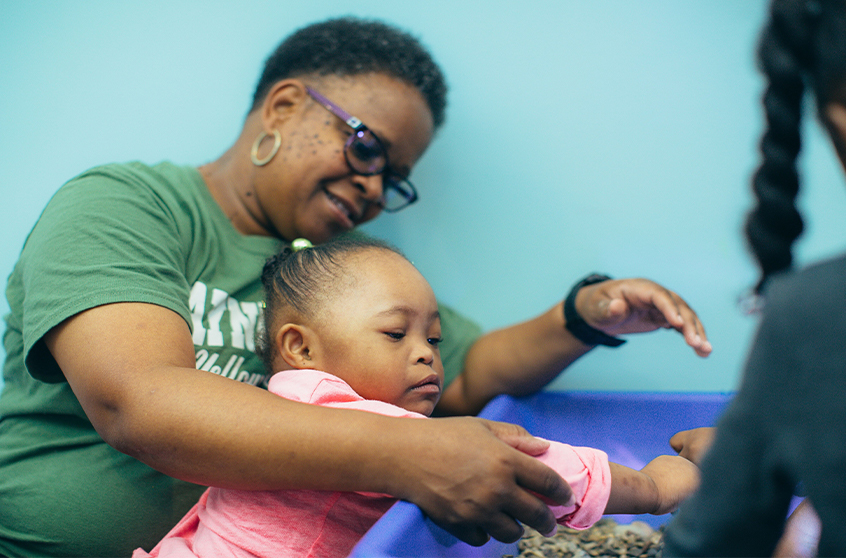
    • Playing with your child in a water table helps them understand math concepts like shapes and measurements, as well as science concepts like float, sink, and waves.
    • Asking your child questions about observed activities, encouraging experimentation, and helping them understand cause and effect relationships during play.
    • Including playful elements like using reusable materials to create their own inventions.

FACT: Play is the primary way your child uses language and math concepts. Consider:

    • Allowing your child to construct stories during imaginative play will later become the foundation for creative writing.
    • Helping your child recreate elements of familiar books during play, demonstrating the understanding of characters, emotions, and empathy.
    • Supporting your child to make choices that interest them as a way to guide their math and literacy skills.
    • Asking what strategies your child’s teacher uses for reading instruction.
    • Asking if worksheet and book activities are made playful.

FACT: Dramatic play helps your child develop executive functioning and the ability to self-regulate. Consider:

    • During dramatic play, take turns with your child contributing ideas into imagined scenarios.
    • Providing your child with opportunities to make choices in their learning.

FACT: Physical movement—including the freedom to play—helps your child improve his/ her behavior and attention. Consider:

    • Asking your child’s teacher if physical activity is part of the classroom routine.

Print this Resource

To learn more and view the full guide, view the free printable PDF of this resource (English) (Español). Additional information is available for parents and caregivers of infants and toddlers. To learn more, visit our Developmentally Appropriate Practice: A Guide for Caregivers of Infants and Toddlers page.


Tummy Time: an Important Child Developmental Milestone, TELI

News

Tummy Time: an Important Child Developmental Milestone, TELI

About

Tummy time helps to build a foundation for other skills as an infant develops proper alignment of the spine and the postural control needed for sitting, crawling, and walking. It’s also an opportunity to practice visual tracking, which is when your child moves their eyes in a coordinated manner as they turn their head.

In their resource “Tummy Time: An Important Child Development Milestone,” the Early Learning Institute (TELI) provides more information about tummy time and highlights opportunities for parents to support.

Learn More

To learn more, visit the Early Learning Institute website.


Creating Play Rich Environments: Incorporating DAP at Home

News

May 29, 2020

Creating Play Rich Environments: Incorporating DAP at Home

About

As children’s first teachers, parents and caregivers play a vital role in children’s healthy development. While it may sound like a big task, the first step is simple: incorporate developmentally appropriate activities into your daily routines! Consider using the play activities listed below or create your own to turn your home into a play-rich early learning environment!

Everyday Play

If you are looking for opportunities to play every day, start by looking around your house and identifying items that can be playfully repurposed! Pots, cans, pillows, and curtains. The opportunities are endless! Continue reading below for a few guiding examples.

Infant: Household Item Play

While babies can’t feed themselves, that doesn’t mean they can’t practice! With supervision, give your baby their own spoon at meal time or give them a child-safe bowl and spoon to play with. You can also give your baby blocks and balls to strengthen their grip, practice their holding skills, and improve dexterity.

Preschool: Dramatic Play

Instead of getting rid of old clothes or household items, make a costume play box! Try collecting notepads, sleep masks, blankets, or other extra items and watch as your child brings a new character to life right in front of you! For extra fun, ask other household members to join or dress up yourself!

Kindergarten: Snack Time

During meal or snack time, invite your kindergartener into the kitchen to help you read a recipe, measure, mix, and pour ingredients. Ask your child to try reading the words on ingredient boxes or to try finding ingredients that start with a particular letter, like “e” for eggs! You can even incorporate science by exploring how solid ingredients mix together with liquid ingredients!

Outdoor and Nature Play

A healthy relationship with nature and the outdoors is important for lifelong physical, emotional, and mental health. To help build this relationship, find play opportunities that are outside, such as: puddle jumping, copying rain sounds, or making rock towers. Continue reading below for more outdoor play opportunities!

Infant: Outdoor Observations

As an infant, your child is taking in new sights, sounds, smells, and sensations. Broaden your child’s horizon by taking a stroll through nature, narrating what you see, smell, hear, and feel during the journey. This will expose your baby to new vocabulary through a positive outdoor experience.

Preschool: Muddy Maneuvers

Even though mud is messy and slippery, it provides a lot of great play opportunities for you and your child. Let your preschooler take off their shoes; squish mud between their toes and fingers; make handprints, footprints, and mudpies; and more! Just bring some water and towels to clean up after!

Kindergarten: Nature Hunt

Take a walk in nature with your child and try to find local animals, plants, and bugs. If you have them, bring binoculars to see how far away you can see and a magnifying glass to get a closer look at bugs and plants. You can research information online about local plantlife and wildlife to create a scavenger hunt and list of fun facts! For example, what type of animal is it? What does it eat?

More Information

To learn more about opportunities for play, visit the Playful Pittsburgh Collaborative website.


Developmentally Appropriate Parenting Series

News

May 27, 2020

Developmentally Appropriate Parenting Series

Creating high-quality learning experiences at the earliest stages of your child’s life

As an early childhood nonprofit, Trying Together recognizes that a child’s parent is their first and most important caregiver.

From the moment a caregiver meets their child, whether that is through birth, adoption, fostering, or guardianship, parents use their instincts and experiences to guide their personal caregiving style. Caregivers’ perspectives are valuable and can be especially powerful in supporting children’s long-term success when paired with research and science on the way that children learn and develop.

Evidence-based research shows that children’s brains develop rapidly from zero to age five. Through consistent and caring daily interactions with their children, parents and other caregivers are able to build healthy relationships with and best support the early development and learning of their children. When children grow up in safe environments with engaged, supportive caregivers, the positive effects are felt throughout their lifetime. But where do caregivers go to find information and resources that help them do this?

Through the family resource series Developmentally Appropriate Parenting, Trying Together assists parents and caregivers like you in creating high-quality learning experiences at the earliest stages of your child’s life.

About the Series

Developmentally Appropriate Parenting is a family resource content series developed by Trying Together as an effort to empower caregivers to create high-quality experiences at the earliest stages of their child’s life. To do this, we are developing digital and print content for families that covers critical early childhood topics.

To stay up-to-date on available materials, sign up to receive our newsletter.

Featured Content

Use the list below to navigate through each series topic:

Request free printed materials from our Developmentally Appropriate Parenting Series.

Available Languages

Caregivers viewing our online resources can use the “Select Language” button in the top right corner of the screen to access the information in their native language.

Printed Materials

Request free printed materials from our Developmentally Appropriate Parenting Series. Printed materials are available in English and Spanish.

More Information

For questions about the Developmentally Appropriate Parenting series, email Trying Together at: info@tryingtogether.org.