News

April 23, 2021

Directory for Emergency and Safety Services

Keep information for emergency and safety services on hand with this printable resource.

Emergency Services


Personal/local contacts:

  • Police department
  • Fire department
  • Pediatrician

Battery Ingestion Hotline:

  • Call 202.625.3333.

Pittsburgh Poison Center:

  • Call 1.800.222.1222.
  • Text “poison” to 797979 to add the poison center number as a contact in your mobile phone.

UPMC Children’s Hospital of Pittsburgh Emergency Department:

  • Call 412.692.5555.

webPOINSONCONTROL:

The first fully-automated virtual poison center. As an interactive tool, it guides you through a specific poison exposure situation just as poison control centers would do if you called.

Safety Services

Allegheny County Health Department’s Safe and Healthy Homes (SHHP) Program:

Provides free in-home health and safety assessments to qualified participants in Allegheny County as well as Beaver, Washington, and Westmoreland counties.

Allegheny Lead Safe Homes Program:

Offers qualifying homeowners and renters in Allegheny County with free lead-paint testing throughout their homes and hires a certified lead abatement contractor to repair any lead hazards found up to $12,000.

Cribs for Kids:

Provides portable cribettes to families who, otherwise, cannot afford a safe place for their babies to sleep.

PA Car Seat Loan Program:

The PA Traffic Injury Prevention Project (PA TIPP) is funded by the Pennsylvania Department of Transportation and offers a car seat loan program for families in need.

The National Child Identification Program Inkless Fingerprint I.D. Kit:

The ID Kit allows parents to collect specific information by easily recording the physical characteristics and fingerprints of their children on identification cards that are then kept at home by the parent or guardian.

Print This Resource

This resource is available as a printable PDF (English) (Spanish).
News

December 14, 2020

Walk It Like An Animal Activity, Early Childhood TLC

About

Are you looking for a fun physical activity to do with your young child? Watch this video from Early Childhood TLC to jump like a kangaroo, swing like a monkey, walk like a bear, and climb like a sloth!

For more music videos, visit the Early Childhood TLC YouTube page.

Watch the Video


News

Remote Learning Resources

About

Trying Together compiled a list of remote learning resources to support parents and students as they navigate remote learning.

Resources for Families

Resources for Students


Child Care and Education Planning Tools

Allegheny Child Care

In partnership with the Allegheny County Department of Human Services and Allegheny Partners for Out-of-School-Time (APOST), Trying Together developed Allegheny Child Care. By using this online tool, parents and caregivers of young children can search for available child care spots at early learning, after-school, out-of-school, summer camp, and virtual programs in Allegheny County.

To use the tool, visit the Allegheny Child Care website. For additional support in finding child care and/or funding your child care needs, visit the ELRC Region 5 website or call 412.350.3577.

Family Care and Education Forum

Trying Together launched the Family Care & Education Forum. This new resource connects parents and caregivers across Southwestern Pennsylvania and provides a space to ask questions, network, and support one another.

Upon signing up, users will be able to post questions, respond to comments, and learn more about care and education opportunities in their area. To discuss your care and education plans for this fall with other families, visit the new Family Care and Education Forum.

Early Learning Resource Center (ELRC) Region 5

Pennsylvania’s Early Learning Resource Centers (ELRCs) provide a single point-of-contact for families, early learning service providers, and communities to gain information and access services that support high-quality child care and early learning programs.

To request support and learn more, visit the ELRC Region 5 website or call 412.350.3577.


News

Exercise Together with Darnell Campbell

Exercises for Families

Are you looking for simple but effective exercises to get your family up and moving? Watch this video from Darnell Campbell to learn four exercises your family can do right at home. Darnell Campbell is a Physical Education Teacher at Winchester Thurston, CPR Instructor, and Personal Trainer.

Watch the Video


News

Supporting Childhood Physical Health: A Guide for Families

Support Your Child’s Physical Health!

Did you know that children’s brain development is influenced by many health-related factors, including nutrition, physical activity, and toxic stress? That’s why it’s important for parents and caregivers to create routines and environments that support their children’s health. For more information, continue reading below.

The Importance of Exercise

All children should engage in at least one hour of physical activity daily and should not be still for more than 60 minutes at a time. To support physical activity, families should:

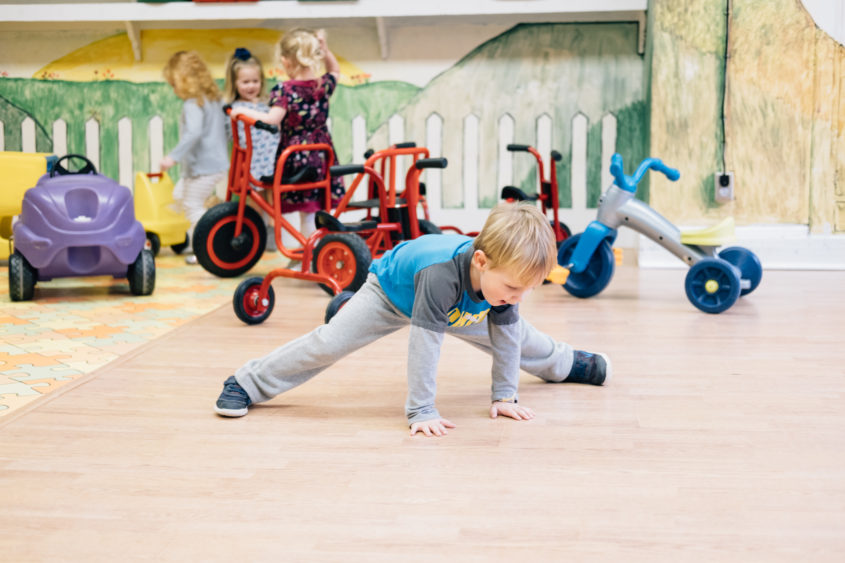
    • provide a space where children can safely run and play with toys and equipment (75 square feet is adequate),
    • provide a space for riding tricycles, running, and rolling balls,
    • purchase balls and toys with wheels that can keep a child active,
    • plan activities that promote perceptual motor development, the ability to interact with one’s environment by using one’s senses, and
    • have children dance to nursery rhymes or chants to help them develop rhythm.

Benefits of Exercise

    • Supports the development of children’s fundamental motor skills including walking, throwing, kicking, running, balancing, hopping, and skipping.
    • In addition to helping a child move better, physical activity helps their bodies maintain healthy body weight and build healthy bones, muscles, heart, and lungs.
    • Fights off depression, anger, and anxiety at early stages.
    • Sparks creativity and problem solving.

The Importance of Nutrition

Making healthy food and nutrition choices is a challenge for not only adults, but for children too. A balanced meal can help reduce the risk of many health conditions such as high blood pressure, obesity, diabetes, and cardiovascular diseases.

Fresh foods like fruits and vegetables are nutritious options and a great source of fiber. Children’s fruit and vegetable intake per meal should be as follows:

    • Two- to Three-Years-Old
      One cup of vegetables and one cup of fruit daily.
    • Four- to Eight-Years-Old
      One and a half cups of vegetables with each meal, and one and a half cups of fruit daily.
    • Nine-Years-Old and Older
      Two cups of vegetables with each meal, and one and a half cups of fruit daily.

TIP: Smoothies can be fun to make with children. They love to watch whole fruits being crushed up to make juice!

Benefits of Nutritious Food

    • Helps children’s digestive and immune systems stay healthy.
    • Provides a good source of vitamins.
    • Helps to fight infections.
    • Makes wonderful snacks that can be easily packed.

Strategies for a Healthy Routine

Create a schedule that includes time to be active throughout the day.

    • Dance
      A creative and fun way to keep the body moving, get the heart rate up, and promote good blood flow.
    • Tag
      One game that can help promote movement in a fun and fast-paced way.
    • Scavenger Hunt
      A creative way to get children up and moving. This can be done inside or outside. This is a great way to promote exploratory play with younger children.
    • Games
      It’s important to incorporate rules with some games, and to vaguely give directions for others. This helps children learn how to create their own rules which enhances their thinking abilities.
    • Some Rules
      Example: You can only hop during tag; no tagging the person who tagged you; freeze once you’re tagged, etc.
    • Meal Planning
      Create a meal menu. This helps to not only save money, but helps to keep track of the things one is eating. Allow children to help season food, sort food by type or color, and even taste the vegetables before they are cooked. Some children like raw veggies as snacks.

TIP: When making a schedule to support a healthy routine, try to block off time for activities that can be done in a 60-minute timeframe.

Print This Resource

This resource is available as a printable PDF (English) (Español).

Acknowledgments

This document was created by Darnell Campbell, in partnership with Trying Together, as a resource for Part II: Childhood Physical Health of the Developmentally Appropriate Parenting Series. Darnell Campbell is a Physical Education Teacher at Winchester Thurston, CPR Instructor, and Personal Trainer.

Developmentally Appropriate Parenting is a family resource content series developed by Trying Together as an effort to empower caregivers to create high-quality experiences at the earliest stages of their child’s life.


News

Using Play to Support Children’s Physical Health

Creating play-rich early environments.

As children’s first teachers, parents and caregivers play a vital role in supporting their children’s healthy development. While it may sound like a big task, the first step is simple: incorporate developmentally appropriate activities into your daily routines!

Physical Activity Recommendations

Birth to one year old:

Caregivers should encourage their infants to practice movement skills while their infant is awake. These skills include supporting their head, rolling, crawling, walking, and picking up both small and large objects. Include at least 30 minutes of tummy time every day.

Ages two to five years old:

It is recommended that toddlers remain physically active throughout the entire day through a combination of play-based activities. Aim to include a mix of structured, adult-led play and unstructured, free play every day.

    • Structured play activities follow rules to reach a specific goal. Examples include assembling a LEGO set, playing organized sports like soccer, and playing tag.
    • Unstructured play is child-led, improvised, and creative. It does not follow a specific set of rules. Examples include playing with blocks, creating new games to play, and improvised dance.

Ages six years old and older:

Children in this age range should get at least 60 minutes of moderate-to-vigorous physical activity every day. There should be a mix of aerobic (running, swimming, jump roping) and bone- and muscle-strengthening activities (climbing, yoga, basketball, bodyweight exercises).

Playful Activity Ideas

Consider using these activities to get your family up and moving!

Infants and Young Toddlers: Household Item Play

With supervision, give your child their own spoon at meal time or give them a child-safe bowl and spoon to play with. You can also give your baby blocks and balls to strengthen their grip, practice their holding skills, and improve dexterity.

Pre-k: Muddy Maneuvers

Even though mud is messy and slippery, it provides a lot of great play opportunities for you and your child. Let your child take off their shoes; squish mud between their toes and fingers; make handprints, footprints, and mudpies; and more! Just bring some water and towels to clean up after!

Kindergarten: Nature Hunt

Take a walk in nature with your child and try to find local animals, plants, and bugs. If you have them, bring binoculars to see how far away you can see and a magnifying glass to get a closer look at bugs and plants. You can research information online about local plant life and wildlife to create a scavenger hunt and list of fun facts! For example, what type of animal is it? What does it eat?

School Age: Hold that Animal Pose (Yoga)

Challenge your child to pose like a giraffe, flamingo, and other animals to help build their muscles, practice their balance, and work on patience. You can find examples of yoga animal poses beforehand or tune in to your creativity to create poses (with your child) on the spot! For an extra challenge, ask them to hold a book, milk jug, or another household item while holding the pose.

Resources

Developmentally Appropriate Parenting Series

Developmentally Appropriate Parenting is a family resource content series developed by Trying Together as an effort to empower caregivers to create high-quality experiences at the earliest stages of their child’s life.

Playful Pittsburgh Collaborative

The Playful Pittsburgh Collaborative is a group of organizations dedicated to advancing the importance of play in the lives of children, families, and communities in the Pittsburgh region. Read their blog to learn about playful activities for children of all ages.

KidsHealth

The KidsHealth website features a wide range of information on childhood health topics such as exercise, breastfeeding, nutrition, and more.

Print This Resource

This resource is available as a printable PDF (English) (Español).


News

June 16, 2020

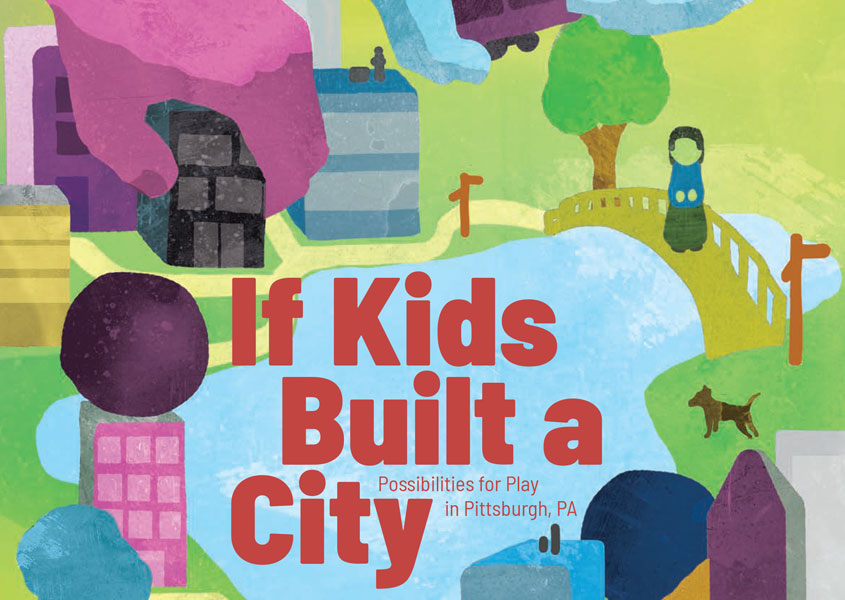
If Kids Built a City: Playful Pittsburgh Collaborative, Trying Together, and the Grable Foundation

About

Pittsburgh, like many cities, is only at the beginning of its journey to intentionally build a playful city. Every day, Pittsburghers young and old are answering the call to play more often. In their report “If Kids Built a City,” Trying Together, the Playful Pittsburgh Collaborative, and the Grable Foundation explore the many ways to play in the city and its potential for more.

Download This Resource

To learn more, download the “If Kids Built a City” report (PDF).


News

June 15, 2020

Developmentally Appropriate Parenting Series: Part II

Childhood Physical Health

About

Did you know that by age six children achieve over 90 percent of their adult brain volume? This means that a majority of early childhood development happens before a child enters their first elementary school classroom. In fact, during the early years of a child’s life, they develop functional skills such as comprehension, language, emotional regulation, and motor skills that act as a foundation for future learning.

When considering the topic of childhood physical health, brain development is influenced by many health-related factors, including nutrition, physical activity, toxic stress, and access to routine medical screenings and wellness exams. Because of this, it’s important for caregivers to create environments that support their child’s health.

To assist families in creating these environments, Trying Together developed family resources that explore ways to create and access safe, supportive early environments for young children.


Featured Resources

Using Play to Support Children’s Physical Health

As children’s first teachers, parents and caregivers play a vital role in supporting their children’s healthy development. While it may sound like a big task, the first step is simple: incorporate developmentally appropriate activities into your daily routines! Read this post to learn more.

Childhood Physical Health: A Guide for Families

Did you know that children’s brain development is influenced by many health-related factors, including nutrition, physical activity, and toxic stress? Read this guide to learn how you can help create a supportive early environment for your young child.

Creating a Safe and Supportive Environment

According to the Centers for Disease Control and Prevention (CDC), early childhood development itself is an important determinant of health over a person’s lifetime. Read this post to learn how.

The Head Start Program and Its Benefits

Did you know that Head Start children have more access to health care and have improved physical health throughout their lifetime? To learn about the benefits of Head Start, read this post.

Exercise Together with Darnell Campbell

Are you looking for simple but effective exercises to get your family up and moving? Watch this video from Darnell Campbell to learn four exercises your family can do right at home.

Play and Physical Activity Guide for Educators and Families

The Recess Advocacy Team compiled a list of resources for educators and families to make sure play and physical activity are a part of children’s’ days and serve as a foundation for their learning, growth, and development. Visit this post to view the list.

Childhood Physical Health: Resources

Trying Together compiled a list of organizations, tools, and resources that share information or provide services related to childhood physical health. To view the list, visit this post.


More Information

To stay up-to-date on available resources, follow Trying Together on Facebook and Twitter or sign up to receive our newsletter.


News

Developmentally Appropriate Practice: A Guide for Parents

About

Early childhood is an important time when children experience rapid development, learn important skills, and learn more about the world around them. To learn how you can support the early development of your child, read the facts and opportunities provided below.

What is Developmentally Appropriate Practice?

Developmentally Appropriate Practice (DAP) is the approach early care and education professionals use to teach young children. Developmentally Appropriate Practice:

    • is grounded in research on how young children learn;
    • provides connection to real-world experiences and opportunities to gain knowledge and skills through hands-on learning;
    • prepares children for future learning; and
    • acknowledges the role of play in learning and development.

Facts and Opportunities

FACT: Meaningful play experiences help your child build background knowledge, imagination, and rational thought that enables academic skill development. Consider:

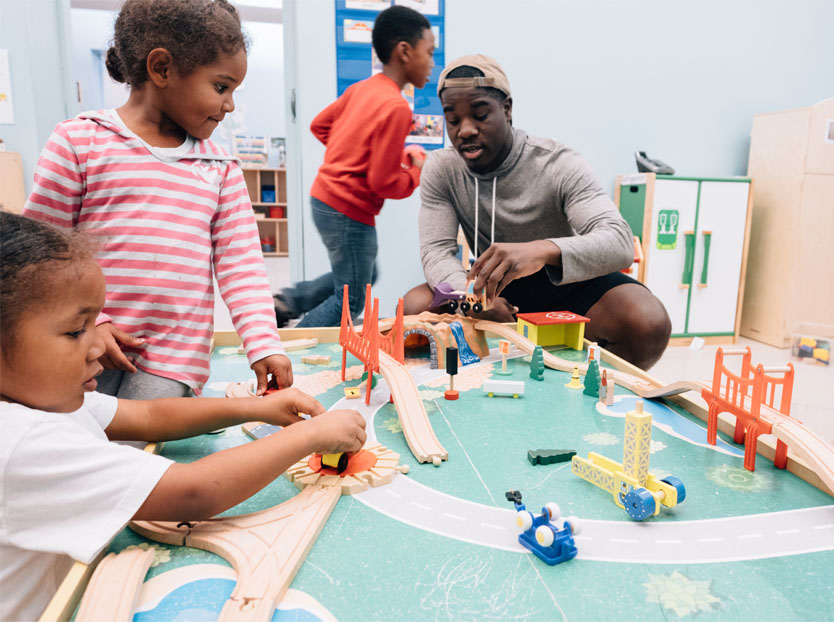
    • Playing with your child in a water table helps them understand math concepts like shapes and measurements, as well as science concepts like float, sink, and waves.
    • Asking your child questions about observed activities, encouraging experimentation, and helping them understand cause and effect relationships during play.
    • Including playful elements like using reusable materials to create their own inventions.

FACT: Play is the primary way your child uses language and math concepts. Consider:

    • Allowing your child to construct stories during imaginative play will later become the foundation for creative writing.
    • Helping your child recreate elements of familiar books during play, demonstrating the understanding of characters, emotions, and empathy.
    • Supporting your child to make choices that interest them as a way to guide their math and literacy skills.
    • Asking what strategies your child’s teacher uses for reading instruction.
    • Asking if worksheet and book activities are made playful.

FACT: Dramatic play helps your child develop executive functioning and the ability to self-regulate. Consider:

    • During dramatic play, take turns with your child contributing ideas into imagined scenarios.
    • Providing your child with opportunities to make choices in their learning.

FACT: Physical movement—including the freedom to play—helps your child improve his/ her behavior and attention. Consider:

    • Asking your child’s teacher if physical activity is part of the classroom routine.

Print this Resource

To learn more and view the full guide, view the free printable PDF of this resource (English) (Español). Additional information is available for parents and caregivers of infants and toddlers. To learn more, visit our Developmentally Appropriate Practice: A Guide for Caregivers of Infants and Toddlers page.


News

May 27, 2020

Developmentally Appropriate Parenting Series

Creating high-quality learning experiences at the earliest stages of your child’s life

As an early childhood nonprofit, Trying Together recognizes that a child’s parent is their first and most important caregiver.

From the moment a caregiver meets their child, whether that is through birth, adoption, fostering, or guardianship, parents use their instincts and experiences to guide their personal caregiving style. Caregivers’ perspectives are valuable and can be especially powerful in supporting children’s long-term success when paired with research and science on the way that children learn and develop.

Evidence-based research shows that children’s brains develop rapidly from zero to age five. Through consistent and caring daily interactions with their children, parents and other caregivers are able to build healthy relationships with and best support the early development and learning of their children. When children grow up in safe environments with engaged, supportive caregivers, the positive effects are felt throughout their lifetime. But where do caregivers go to find information and resources that help them do this?

Through the family resource series Developmentally Appropriate Parenting, Trying Together assists parents and caregivers like you in creating high-quality learning experiences at the earliest stages of your child’s life.

About the Series

Developmentally Appropriate Parenting is a family resource content series developed by Trying Together as an effort to empower caregivers to create high-quality experiences at the earliest stages of their child’s life. To do this, we are developing digital and print content for families that covers critical early childhood topics.

To stay up-to-date on available materials, sign up to receive our newsletter.

Featured Content

Use the list below to navigate through each series topic:

Request free printed materials from our Developmentally Appropriate Parenting Series.

Available Languages

Caregivers viewing our online resources can use the “Select Language” button in the top right corner of the screen to access the information in their native language.

Printed Materials

Request free printed materials from our Developmentally Appropriate Parenting Series. Printed materials are available in English and Spanish.

More Information

For questions about the Developmentally Appropriate Parenting series, email Trying Together at: info@tryingtogether.org.