Join MomsRising, along with experts from CLASP, National Employment Law Project (NELP), Food Research and Action Council (FRAC), and National Immigration Law Council, on April 21 for “COVID-19 Support Programs Webinar” to learn what you need to know to apply for assistance during the COVID-19 pandemic.
About
This online webinar will provide information on how to access the new COVID-19 programs recently passed by Congress, including paid sick days, paid family leave, unemployment insurance, and nutrition assistance. Presenters will also discuss the impacts of these programs on immigrant families. The webinar will take place on Zoom and will include both Spanish and English language options.
Registration
To register, please visit the event webpage. If you are unable to attend the day of the event, a recording of the webinar and a resource page will be sent out as well after the conclusion of the event.
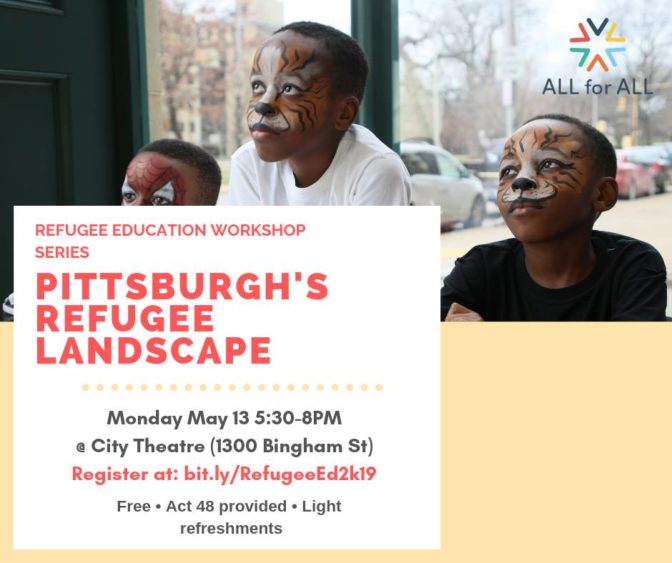
Join Dr. Xia Chao for the last interactive workshop of the 4-part series dedicated to helping educators understand the literacies, cultures, and needs of the Pittsburgh area’s refugee communities.
About
Through a grant from the National Geographic Society, Dr. Chao has conducted research over the past several years that explores the experiences and narratives of local refugee communities including the Nepali, Karen, and Somali Bantu.
This workshop series seeks to incorporate the findings of Dr. Chao’s research in order to offer local educators insight into working with students from these communities and resources for supporting immigrant and refugee families in their interactions with the American educational system. This session will help educators learn specific strategies for teaching English learners.
Registration
To register, visit the Eventbrite page.
Light refreshments and Act 48 credits will be provided.
More Information
For more information on the workshop series and content, please contact Dr. Xia Chao at chaox@duq.edu. For information about the event, ticketing, and logistics, please contact Taya Jackson at taya.jackson@theglobalswitchboard.org.
Share this flyer with your network.
Join Dr. Xia Chao for the third of four interactive workshops in a series dedicated to helping educators understand the cultures, needs, and assets of the Pittsburgh area’s refugee communities.
About
Through a grant from the National Geographic Society, Dr. Chao has conducted research over the past several years that explores the experiences and narratives of local refugee communities including the Nepali, Karen, and Somali Bantu.
This workshop series seeks to incorporate the findings of Dr. Chao’s research in order to offer local educators insight into working with students from these communities and resources for supporting immigrant and refugee families in their interactions with the American educational system. This session will help educators learn classroom practices to create an engaging and inviting classroom.
Registration
To register, visit the Eventbrite page.
Light refreshments and Act 48 credits will be provided.
More Information
For more information on the workshop series and content, please contact Dr. Xia Chao at chaox@duq.edu.
For information about the November event, ticketing, and logistics, please contact Taya Jackson at taya@changeagency.world.
Share this flyer with your network.
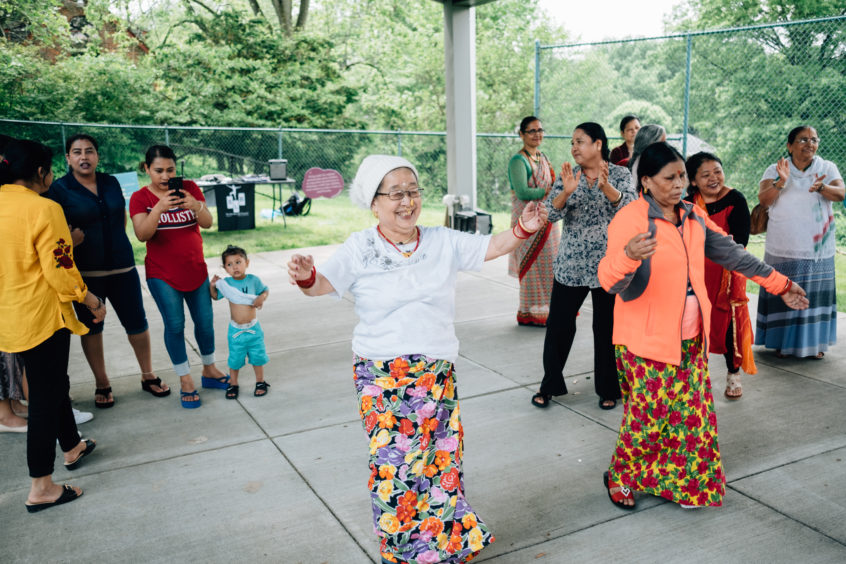
Join the Partnerships for Family Support Office of Child Development on June 27 for their Implicit Bias, Cultural Humility, & Parent Engagement workshop. This training is for staff of centers in the Allegheny County Family Support Network.
About
This interactive workshop explores various strength-based strategies to increase immigrant and refugee parent engagement. Participants attending this training will have the opportunity to reflect on their current practice, understand and apply the cultural humility perspective when designing and implementing parenting activities, and identify specific steps to enhance their knowledge and skills in working with diverse families.
Learning Objectives
Participants will:
-
- Reflect on how social stereotypes impact their work with immigrant and refugee families;
-
- Apply a cultural humility perspective to analyze scenarios and propose solutions that respond to the characteristics and interests of immigrant/refugee families; and
-
- Discover key strategies and best practices to develop relationships with diverse families, support families in their parenting, and advocate with them for culturally relevant services and resources.
More Information
To learn more and register, visit the Eventbrite page.

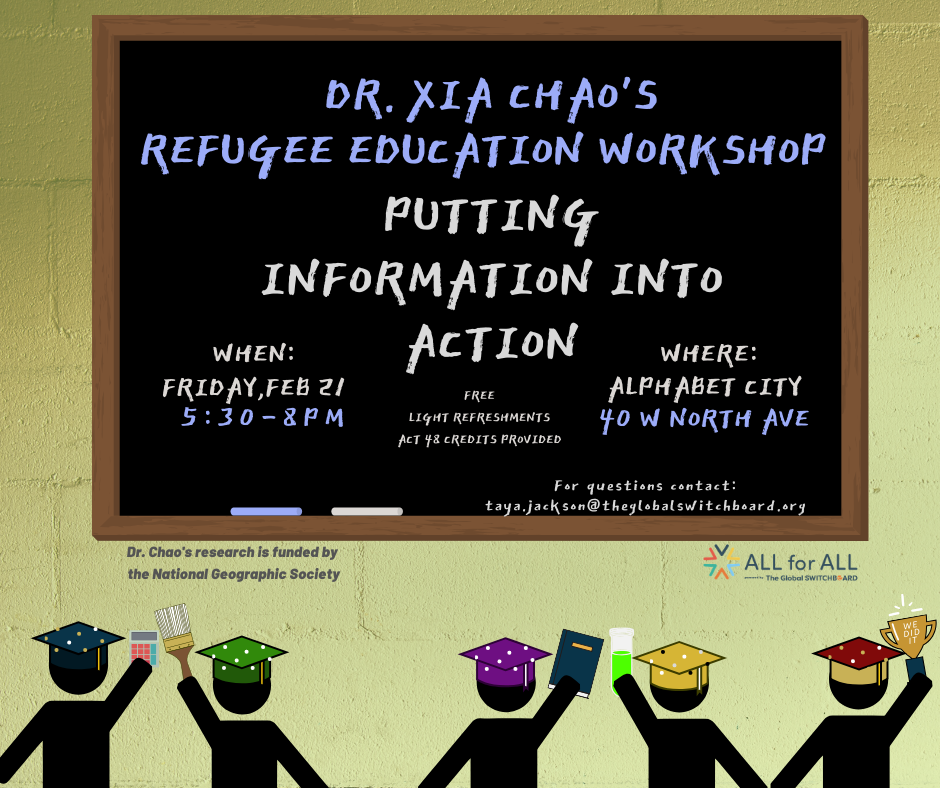
Join Dr. Xia Chao for the first of four interactive workshops in a series dedicated to helping educators understand the cultures, needs, and assets of the Pittsburgh area’s refugee communities.
Through a grant from the National Geographic Society, Dr. Chao has conducted research over the past several years that explores the experiences and narratives of local refugee communities including the Nepali/Bhutanese, Somali Bantu, and Sudanese. This workshop series seeks to incorporate the findings of Dr. Chao’s research in order to offer local educators insight into working with students from these populations and resources for creating culturally sustaining practices.
This event is free and light refreshments and Act 48 credits will be provided.
Topics
Workshop topics will be as follows:
- Understanding the Local Immigrant and Refugee Landscape | May 13, 2019 | City Theatre
- Culturally Relevant Pedagogy with Refugee Populations | June | TBA
- Cultural Navigation and Cultural Humility | Fall | TBA
- Putting Information into Action | Fall | TBA
More Information
For information on the May 13 event, contact Jenna Geiman at jenna@changeagency.world.
For more information on the workshop series and content, contact Dr. Xia Choa at chaox@duq.edu.
See the event’s Facebook page.
Join All for All, the World Affairs Council of Pittsburgh, and Remake Learning for a day-long forum focused on the ways that teachers, staff, and administration can create more welcoming school environments for immigrant and refugee students.
For further information, visit the event website.
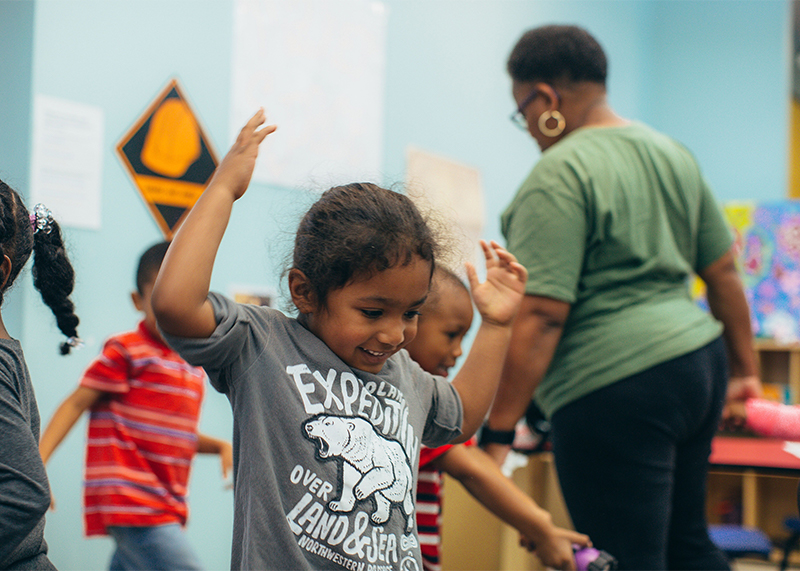
In today’s world, each new day brings an onslaught of information, images, data, and stories. While immigrant families with young children may cycle in and out of the front pages, the need for early childhood educators from all backgrounds to stand together to protect and support them continues to capture our time and attention.
As an active member of the Protecting Immigrant Families campaign, NAEYC continues to stand against family separation, and to stand in opposition to the new proposed regulation on “public charge,” which they believe would punish parents and harm children. With stories of two-year-olds in court and tent cities on the border, NAEYC remains deeply concerned about what has happened and what will happen to the hundreds of children still separated from their families, as well as what will happen to the families yet to be detained.
Opportunities to Stay Informed and Advocate
Speak Up, Speak Out
If you believe in a world in which all young children can thrive and learn, our society must be dedicated to ensuring that they reach their full potential. This world does not include incarcerating children, separating them from their families, or forcing families to stop accessing critical services and supports because they are afraid. Rather, NAEYC understands and upholds the bonds between children and their families, and, as advocates, calls for individuals to speak up and out to defend those bonds.
Recognize the power of your voice and actions, and stay engaged as NAEYC members move forward on this and many other issues facing our children, families, and educators.
*Information provided by NAEYC*
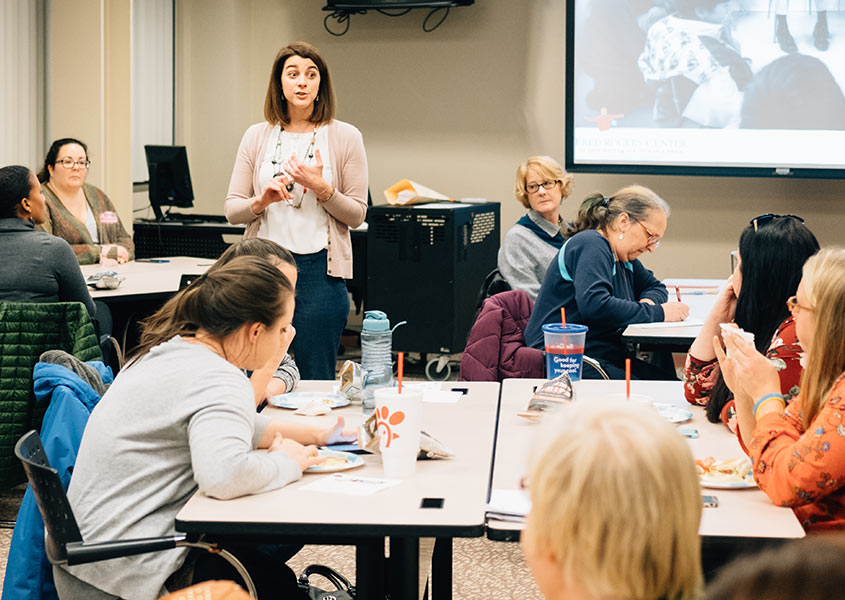
Jack P. Shonkoff, M.D., Founding Director of the Center on the Developing Child at Harvard University has released a statement on the impact to healthy development for young children separated from their families at the United States’ border.
Dr. Shonkoff states that based on the available understanding of decades of research, healthy brains develop through consistent, stable, responsive, and supportive relationships with at least one caregiver. He further notes that high and persistent levels of stress can disrupt this brain development as well as other biological systems having severely negative impacts on learning, behavior, and physical and mental health throughout the child’s life. Dr. Shonkoff calls for immediate reunification.
“Stated simply, each day we fail to return these children to their parents, we compound the harm and increase its lifelong consequences.”
To read Dr. Shonkoff’s full statement and for resources related to family separation visit developingchild.harvard.edu.