News

April 7, 2026

Five Ways to Advocate for Early Childhood Education During Month of the Young Child

There are numerous ways to advocate for early childhood education during April, which is celebrated by Trying Together as the Month of the Young Child and includes a regional advocacy blitz. 

It is an important time to collectively work together to create systemic and policy change for young children, families, and the educators who serve them. No action is too small and can be part of your day. Think of advocacy as educating policymakers on the reality of early childhood education and the families of young children to ensure their needs are met and to receive the resources and investments necessary for a thriving early childhood education (ECE) system.

April Advocacy Blitz

The Trying Together Policy team supports an April Advocacy Blitz, a regional advocacy effort that aims to amplify the voices of early childhood educators, families, and community partners across the Pittsburgh region, said Emily Neff, Trying Together’s director of public policy.

“Last year, we celebrated a major win – a $25 million recurring investment (in the state budget) for child care recruitment and retention, the first of its kind in nearly 20 years,” Neff said. “While that was a huge step, we’re just getting started.”

Neff noted that as the 2026-2027 state budget is being negotiated, it is a critical time for early childhood advocates in the region to come together to ensure that their voices are heard.

Neff outlined five things to do during April’s Month of the Young Child (MOYC) to advocate for early learning: 

  • Sign Start Strong PA’s petition
  • Complete the 2026 child care staffing crisis survey
  • Contact legislators
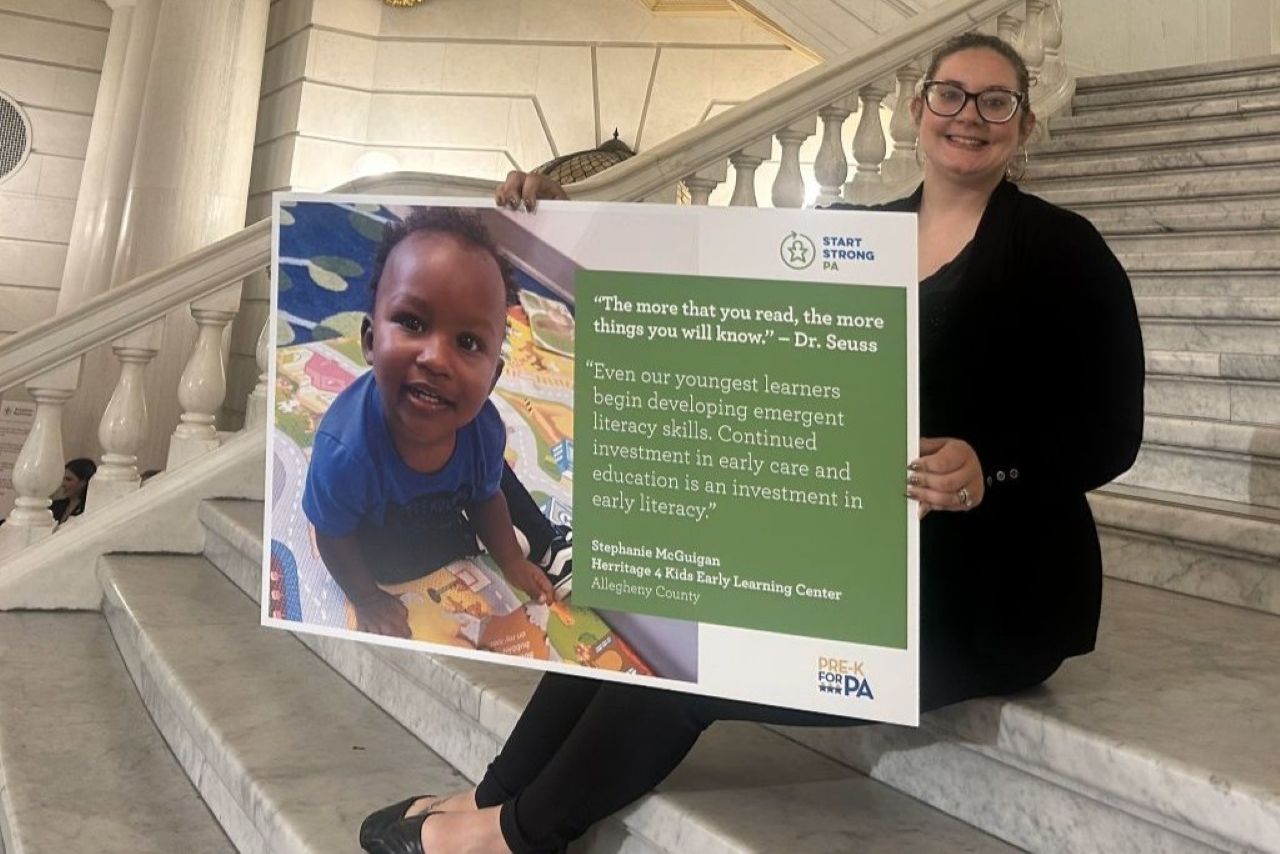
  • Submit children’s artwork to legislators
  • Post on social media

Sign Start Strong PA’s Petition

The first action that advocates can take is to sign Start Strong PA’s petition to include a number of proposed investments for early childhood education in the 2026-2027 state budget. The proposals include:

  • A $10 million increase for the Child Care Staff Recruitment and Retention program
  • A $2 million increase for the Head Start Supplemental Assistance program
  • A $7.5 million increase for Pre-K Counts

Other recommendations include raising the child care subsidy limit, dedicating funds so programs can better serve children with special needs, and advancing targeted reforms to reduce unnecessary burdens on child care providers while preserving strong health and safety standards to keep children safe.

After signing the petition, share it with your friends, family, colleagues, and community members.

Complete the 2026 Child Care Staffing Crisis Survey

Help to gather real stories and data from the field to inform state policymakers and advocacy efforts by filling out Start Strong PA’s 2026 Child Care Staffing Crisis Survey.

Those who fill out the survey will have the opportunity to discuss staffing issues at their child care programs. The information collected from the 15-minute survey will be used to demonstrate the need for the 2026-2027 state budget to increase funding for the Child Care Staff Recruitment and Retention program, so that bonuses for the workforce grow.

Those who take out the survey should encourage fellow staff members and families who utilize the program to also participate.

Contact Your Legislator

Another way to make your voice heard on the state’s child care staffing crisis is to reach out directly to the decision-makers in your community. 

Start by looking up your state legislators, and then sending an email, making a call, or inviting them to visit your program. Show and tell them why investing in early childhood education is important to your community.

To find your state legislator, visit the Pennsylvania General Assembly’s website.

Submit Children’s Artwork

Another simple and powerful way to advocate is to submit children’s artwork to elected officials who represent your community.

Ask the children in your program to create artwork. If you are already having them create something for the Week of the Young Child, you can use that – or ask them to create something new. An optional step would be to ask them to include a short message, such as “My name is ___ and I love my school because ___.”

Then, find your state legislator’s district office by searching the state General Assembly’s page and then entering your program’s address on the artwork that you submit. Send some of the artwork to your state House representative’s office and some to your state senator’s office.

Post on Social Media

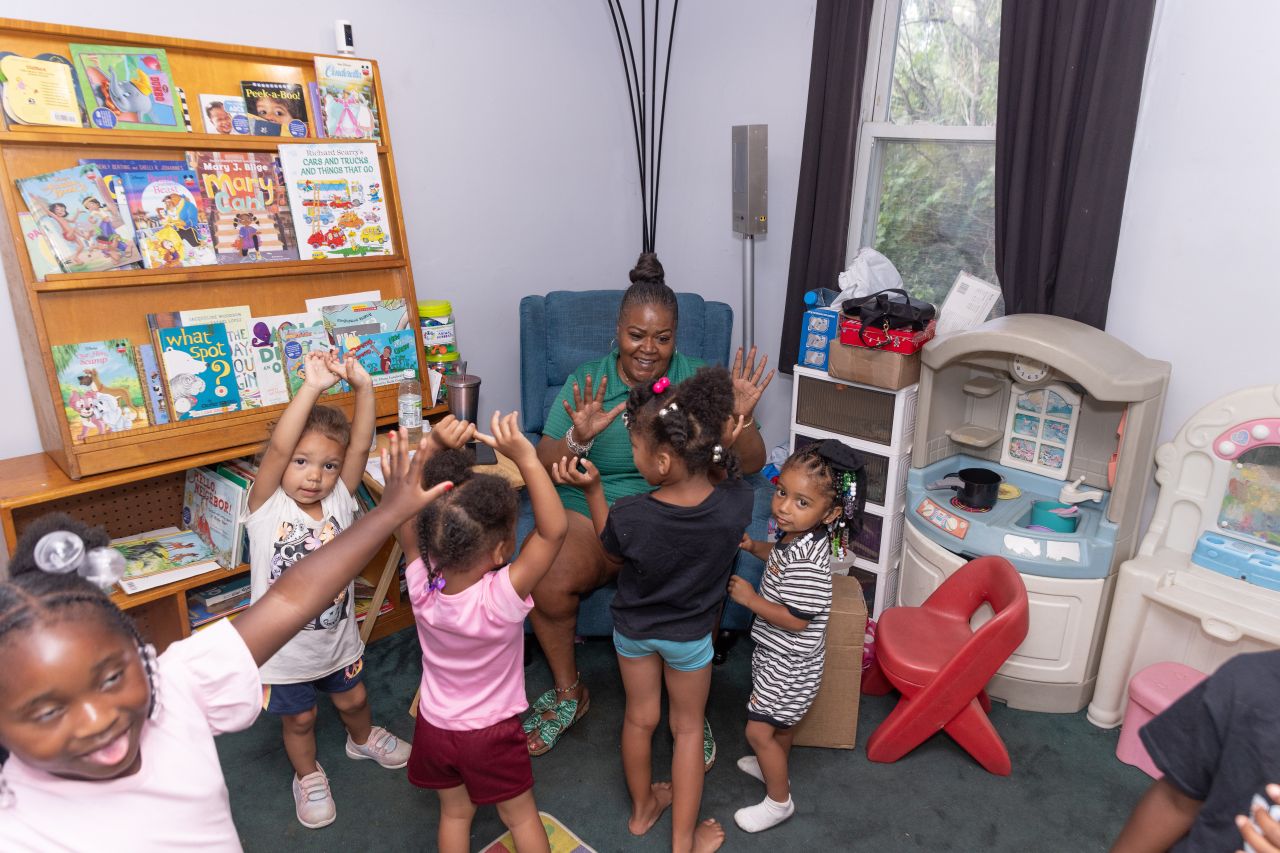
A final, simple way to advocate is to share what you are doing during the Month of the Young Child on social media and tag your legislator in the post. 

Information you might consider sharing in the post might include:

  • Activities taking place at your center
  • Teachers in action
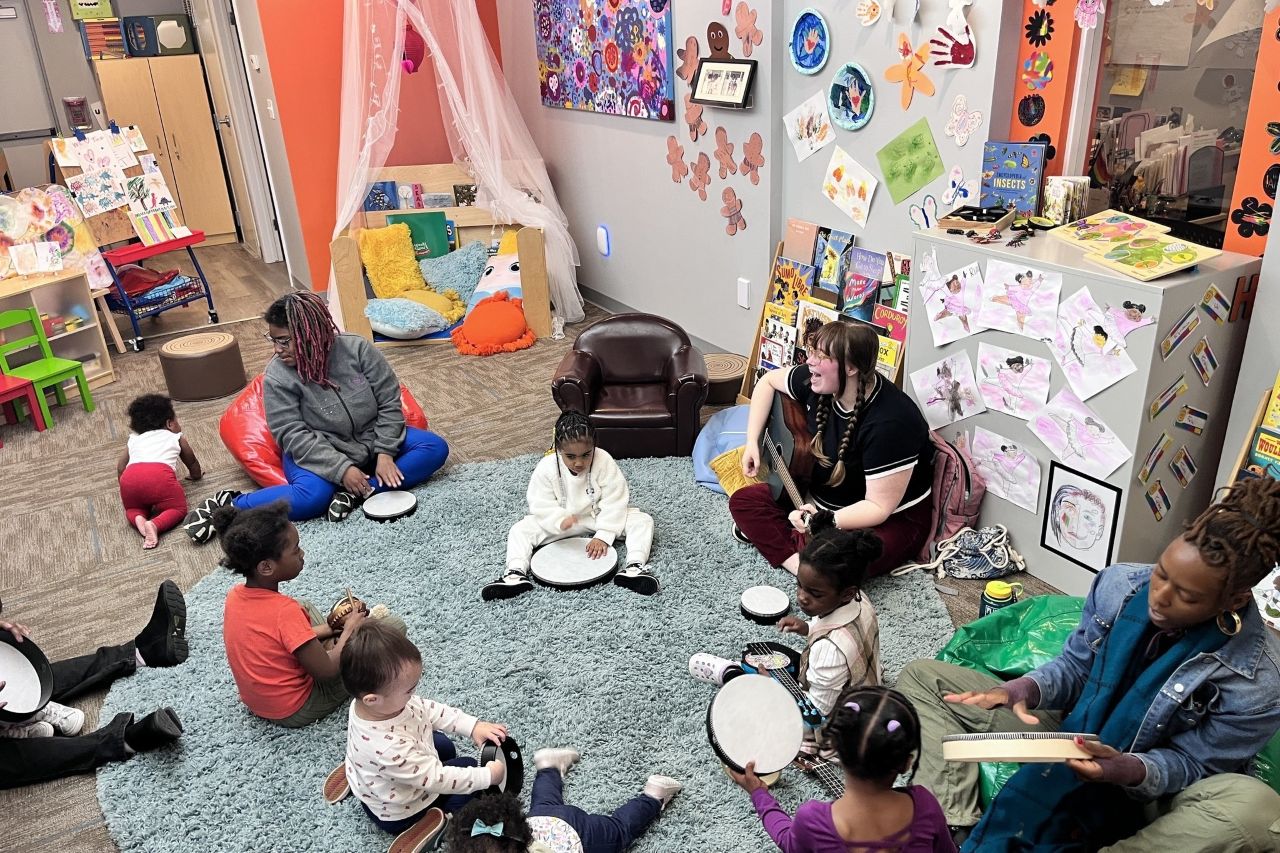
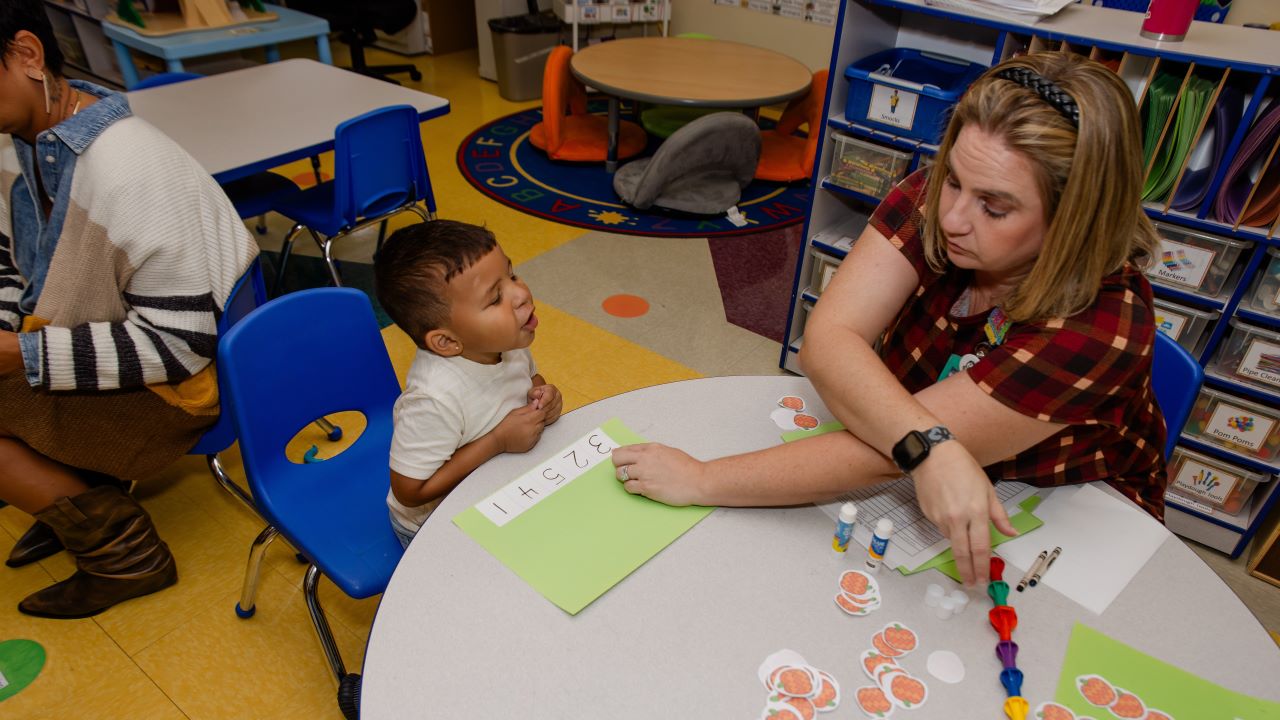
  • Children learning and engaging
  • An explanation of why this week and your work matter

Post your photos on Facebook or Instagram and describe the activities taking place at your center as well as why the Month of the Young Child is important. In your post, tag your state House representative, state senator, and Trying Together.

MOYC and Week of the Young Child

Trying Together celebrates the Month of the Young Child every April in conjunction with the National Association for the Education of Young Children’s (NAEYC) yearly observance of the Week of the Young Child.

This year, the Week of the Young Child will be observed April 11 through 17.

More information on how Trying Together and providers are celebrating the Month of the Young Child can be found on Trying Together’s website.

News

March 17, 2026

How Providers Can Celebrate the Month of the Young Child

Trying Together celebrates the Month of the Young Child (MOYC) every April in conjunction with the National Association for the Education of Young Children’s (NAEYC) yearly observance of the Week of the Young Child. 

This year, the Week of the Young Child will be observed April 11 through 17.

There are several events taking place in Southwestern Pennsylvania during both the Month of the Young Child and Week of the Young Child.

Month of the Young Child

On Thursday, April 9, Carlow University and Westmoreland County Community College will host the 2026 Early Childhood Educator Student Affiliate Dinner on WCCC’s campus. This year’s theme is “Every Person, Every Path, One Passion,” which celebrates the work of educators to build inclusive education spaces for all learners. Tickets for the event can be purchased online.

Trying Together will hold its annual event to honor the Month of the Young Child and the work of early childhood educators – Celebrating Together – on Thursday, April 30 at Rivers Casino. The event will include a VIP Reception and the 30th Annual Celebration of Early Childhood Educators Dinner. Those interested in attending can purchase tickets online.

NAEYC’s Week of the Young Child

To celebrate the Week of the Young Child, NAEYC has set themes for each day between April 11 and 17. The week’s themed days include Kick-Off Saturday, Music Monday, Tasty Tuesday, Work Together Wednesday, Artsy Thursday, and Family Friday. NAEYC has provided a number of suggested activities for providers during the Week of the Young Child. The full list is available on NAEYC’s website. Some of the activities include:

  • Kick-Off Saturday: Share a video, blog, or social media post about why you celebrate Week of the Young Child, host a virtual event to share your proclamation, and create a plan for the week (for example, a playlist for Music Monday or restocking art supplies for Artsy Thursday).
  • Music Monday: Join the chorus for change by working with state affiliates to secure proclamations honoring early childhood educators.
  • Tasty Tuesday: Engage families by exploring culturally meaningful foods, sharing stories or recipes, and creating a community recipe book illustrated by children.
  • Work Together Wednesday: Help promote teamwork among children to develop their social and early literacy skills, or connect with elected officials.
  • Artsy Thursday: Find ways to display your classroom’s art projects for the community to see – for example, set up a gallery at a local business or public library.
  • Family Friday: Connect families with NAEYC, your local affiliate, and advocacy opportunities. Share resources that help families support learning and engage with policymakers.

Two great resources to celebrate the Week of the Young Child are NAEYC’s page, which lists a number of activities and provides information on the week’s history, and Discovery Building Sets’ 80 Ways to Celebrate NAEYC’s Week of the Young Child.

The Homewood Early Learning Hub and Family Center’s Week of the Young Child

The Homewood Early Learning Hub & Family Center, located at 7219 Kelly Street, has scheduled events each day of the Week of the Young Child that mostly correspond with NAEYC’s themes.

For Musical Monday, families are invited to an open house that features musical activities courtesy of Playnotes Pittsburgh, food, refreshments, and other activities. On Tasty Tuesday, visitors can listen to a dinosaur-themed Storytime at the Hub event that includes food, while the Hub will team up with the Holy Cross Homewood & Reading is Fundamental Storymobile for a joint storytime and activity on Work Together Wednesday.

Then, on Family Collage Thursday, the Hub staff will help visitors to create a special collage featuring artistic creations and family photos. Visitors should bring printed photos of their families for the activity. The finished collage will be displayed in the center.

Finally, on Family Fun Night Friday, visitors will be able to take part in an evening full of activities, food, and line dancing featuring special guest Attack Theatre. More information about the Hub’s Week of the Young Child events is available online

Indiana County’s Week of the Young Child

The Week of the Young Child will kick off in Indiana County at 10 a.m. on Saturday, April 11 with a proclamation at the Indiana County Courthouse. This will be followed by a walk to the Indiana Free Library.

Children’s activities at the library will include storytime at 10:30 a.m., crafts in the library’s Community Room from 10:30 a.m. to 12:30 p.m., and a STEAM Play Day from 1 p.m. to 3 p.m.

For more information on the event, check out this flyer from the Children’s Advisory Commission of Indiana County.

News

January 26, 2026

NAEYC Opens Its 2026 ECE Workforce Survey

The National Association for the Education of Young Children (NAEYC) has opened its 2026 ECE Workforce Survey. 

Learn More

Participation in the survey ensures that the realities educators face is visible to policymakers, advocates, and leaders making decisions that affect providers’ work and programs. The survey is intended to shed light on challenges related to staffing, compensation, and working conditions, and reflect what is taking place in early childhood education today.

Responses to the survey help to:

  • Surface challenges that affect educators
  • Strengthen advocacy for improved policies and investment
  • Ensure that state and local experiences are represented and not overlooked

The survey is open to all early childhood educators and is available in English and Spanish. It takes about 10 to 15 minutes to complete.

State data will be available in February. Respondents to the survey will be entered for a chance to win one of 10 $100 gift cards.

Those interested can take the ECE Workforce Survey online.

News

December 17, 2025

Registration Open for NAEYC’s 2026 Public Policy Forum

Registration is now open for the National Association for the Education of Young Children’s 2026 Public Policy Forum that takes place from February 22 to 24 in Washington, D.C.

Learn More

The event will draw early childhood educators, advocates, and leaders from across the country for an in-person event that will focus on:

  • Expanding policy knowledge
  • Strengthening advocacy skills
  • Building relationships with other educators, advocates, and allies
  • Engaging with national and state policymakers and fellow advocates on relevant early childhood education issues
  • Deepening relationships with congressional offices

The event’s agenda includes workshops, keynote speakers, panels, strategy sessions, and conversations with policymakers on Capitol Hill.

Those interested in attending can register online.

News

September 22, 2025

NAEYC Provides Tips for Helping Children Transition to Classroom Setting

The National Association for the Education of Young Children (NAEYC) has shared tips for caregivers on how to help children get used to transitioning into a classroom environment.

Learn More

It can be challenging for children to say goodbye to their caregivers when they are dropped off at child care in the morning. To help children transition into their new setting, NAEYC has compiled a list of 11 tips to help with this transition.

Methods recommended in NAEYC’s article include everything from discussing a child’s daily schedule or talking about feelings to establishing a goodbye routine. 

The full list of tips includes:

  • Find out how the program makes children feel comfortable as they start by asking for the name of the child’s primary caregiver and how you can share information about your family or routines.
  • Review the daily schedule with your child.
  • Help your child get to know the primary caregiver first before you leave them at the program.
  • Establish a predictable goodbye routine – for example, wave from the window or share a hug.
  • Give your child tools to use when missing family – such as a photo of the family or a special toy.
  • Share at least a few words of your home language with your child’s teacher.
  • Share your child’s favorite things to do with the teachers.
  • Make homemade books for your child about the daily routine – including the transition from home to school – so they can rehearse the day’s plan to cope.
  • Talk about feelings and don’t be offended if your child is upset with you; it’s common for children to feel angry at parents for leaving them.
  • Create a reunion ritual, checking in with your child’s teacher about the day.
  • Be timely. Returning at the same time each day prevents your child from worrying and makes drop off the next day easier.

For the entire list and their descriptions, read NAEYC’s article.

News

August 27, 2025

Trying Together Asks Caregivers and Educators to Write Letters Advocating for the Importance of Play

In recognition of the upcoming National Day of Play championed by the USA Affiliate (IPA USA) of the International Play Association on Sept. 20, Trying Together is asking caregivers and educators to take part in a letter-writing campaign to advocate for the importance of play for children in early childhood settings.

Be an Advocate for Playful Learning

Play-based learning and adequate recess time have been shown to support children’s health and holistic well being, aid in the development of executive function skills, improve behaviors, and increase academic knowledge acquisition. 

The National Association for the Education of Young Children (NAEYC) and the World Health Organization recommend one to three hours of vigorous activity for children each day and play-based learning as the primary instructional model for all of early childhood, birth to age 9, yet no state in the United States requires recess and most children in U.S. schools receive 40 minutes or less of recess per day. 

How Can You Help? 

Trying Together’s Advocacy Team recommends sending a letter to school principals, school board members, or other district leaders and mobilizing other members of the community to do the same. 

The Advocacy Team has put together a toolkit of sample letters to get started. Writers should be sure to include their own story and discuss why play matters to them. 

Letters can be sent by mail or email.

Sample letters include ones for caregivers or teachers to administrators, ECE providers to school districts, formal memos to districts or birth to age 5 programs, and students. Another resource is a list of recommendations on physical activity by age.

Play is often talked about as if it were a relief from serious learning. But for children, play is serious learning. Play is really the work of childhood

-Mr. Rogers 

News

July 1, 2025

OCDEL Releases Announcement on NAEYC Accreditation Standards, Keystone STARS Alternate Pathways

The Pennsylvania Office of Child Development and Early Learning (OCDEL) has released an announcement regarding changes to the National Association for the Education of Young Children (NAEYC) accreditation standards and system and implications for Keystone STARS Alternate Pathways.

Learn More

The announcement shares information on how changes to NAEYC will affect early care and education providers using NAEYC accreditation as a Keystone STARS, OCDEL-approved, Alternate Pathway to a STAR 4 designation.

As of March 3, NAEYC began using a new tiered system of accreditation. The three tiers included:

  • Recognition: NAEYC defined this as the first step to high quality. It requires a documentation review, and a one-year term is renewed annually.
  • Accreditation: Requires a documentation review and there is potential for a random site visit. It has a five-year term with annual reporting required.
  • Accreditation +: This requires a documentation review and site visit, and there’s potential for a random site visit. This has a five-year term with annual reporting required.

Impact of Accreditation Changes on STARTS Designation

Following an internal review of NAEYC’s new accreditation standards and tiers, OCDEL established that the Accreditation + tier will be acknowledged as an approved Alternate Pathway to a STAR 4 designation.

The NAEYC tiers of Recognition or Accreditation will not serve as OCDEL-approved Alternate Pathways to higher STARS designations.

Programs that are currently NAEYC accredited will transition to the Accreditation + tier and will not see any impact on their STAR 4 Alternate Pathway designation. If these programs experienced a drop in their NAEYC accreditation status to one of the lower tiers, they would also be designated as a STAR 1.

Programs that want to move up in STAR levels can do so by using the Keystone STARS Performance Standards or achieving the highest NAEYC accreditation tier of Accreditation +. Programs using an OCDEL-approved Alternate Pathway to a higher STAR level must complete all requirements for Keystone STARS as explained in the ELRC Policy Announcement 21 #08.

Next Steps

All programs currently using or planning to use NAEYC as an Alternate Pathway to a STAR 4 designation should:

  • Review the information contained in the OCDEL announcement.
  • Complete any upcoming Keystone STARS designation renewals as required.
  • Review their current Accreditation VUD to determine their NAEYC renewal status. For questions regarding NAEYC standards, assessments or processes, email accreditation.information@naeyc.org or call 1-800-424-2460.
  • Programs are encouraged to discuss their Keystone STARS designation with their quality coach.

ELRCs should review the information in the OCDEL announcement and direct any questions to their program representative. 

News

March 17, 2025

Week of the Young Child Kickoff in Indiana County

Indiana County will kick off the Week of the Young Child in April with an event that includes a movie screening and other activities.

Learn More

The Early Childhood and Education Committee of the Children’s Advisory Commission of Indiana County’s Week of the Young Child kickoff will take place on Saturday, April 5 and will begin with a proclamation at the Indiana County Courthouse. This will be followed by a march to the Indiana Theater for Family Day.

Participants will be able to take part in free crafts and a screening of the film “The Wild Robot” for $3. Concessions will be available.

The proclamation will be read at 9:30 a.m. at the courthouse, while crafts will commence at the theater at 10 a.m. Movie screenings will be at 11 a.m. and 1:30 p.m. and there will be an additional craft activity at 12:30 p.m.

News

December 30, 2024

Registration Open for NAEYC’s 2025 Public Policy Forum

Registration is now open for the National Association for the Education of Young Children’s (NAEYC) 2025 Public Policy Forum.

Learn More

The annual forum will be held in Washington, D.C. from Sunday, February 23 to Tuesday, February 25. The forum is expected to bring together hundreds of early childhood educators and stakeholders. 

The event aims to strengthen advocacy skills, expand policy knowledge, deepen relationships with congressional offices, and build a movement across states and communities. Each state will have a state team lead who will coordinate congressional meetings with state team members.

After registering, keep an eye out for emails from state team leads with more information about meetings and opportunities to engage.

The forum will begin at 1 p.m. EST on Sunday, February 23. Registration is now open. The registration fee for the forum is $150 per registrant, and the cutoff date to register is Friday, January 24.

Any questions should be directed to naeycppfsupport@cmrus.com or 800-450-5185.

News

December 19, 2024

Registration Open for Trying Together’s Annual Celebration of Early Childhood Educators Dinner

Trying Together will host its Annual Celebration of Early Childhood Educators Dinner on April 10. Registration is now open for the event.

Learn More

The dinner is held to celebrate early childhood educators during April’s Month of the Young Child. The event includes a dinner, photo booth, prizes, and more.

This year’s dinner will run from 6 p.m. to 8:30 p.m. on Thursday, April 10 at Acrisure Stadium, located at 100 Art Rooney Ave. in Pittsburgh.

Individual tickets are $15 and groups of 10 may purchase tickets at a discounted rate of $135. Registrants are encouraged to consider the value of individual and group rate tickets – $140 and $1,400, respectively – and contribute more if they are willing and able to do so. 

This is a high-demand event, so seating will be based on a first-come, first-served basis that evening and reserved tables will not be available. Free parking will be available for guests.

Registration will close when capacity is met or by March 28.

Businesses, organizations, and individuals can recognize early childhood caregivers by purchasing full-color advertisements to appear in the 2025 Annual Celebration of Early Childhood Educators Dinner program book. The deadline to reserve an ad or name in the recognition list is Friday, January 17.

Those interested in attending can register now. Any questions should be emailed to info@tryingtogether.org

Month of the Young Child

First established in 1971 by the National Association for the Education of Young Children (NAEYC), the Week of the Young Child was an opportunity to focus public attention on the needs of young children and their families and to recognize the early childhood programs and services that meet those needs.

Due to growing interest and focus, Trying Together later designated the entire month of April as the Month of the Young Child. It is recognized as a time during which the dedicated work of early educators is promoted for the essential role that it plays in society.