News

November 12, 2025

PA State Budget Includes ECE Investments

Pennsylvania lawmakers passed a $50.1 billion budget on Wednesday that includes continued and new investments focused on children and the early education workforce.  

Emily Neff, director of public policy for Trying Together, emphasized that this is a huge win for the early care and education workforce. 

“During a tough budget year that is four months past the deadline, policymakers prioritized child care teachers in the budget through the establishment of a new line item for early childhood education,” she said. “It’s been nearly 20 years since we’ve had a new line item, and it’s significant that a bipartisan group of legislators and the governor’s office prioritized this new investment. This demonstrates that policymakers heard our stories and are taking steps to solve the child care crisis and invest in the workforce.”

Early Learning PA Applauds Investments

Early Learning PA (ELPA), of which Trying Together is a principal partner, released a statement following the budget’s passage that praised investments that will stabilize and reverse the exodus of early educators and directly benefit tens of thousands of teachers and other professional staff as well as help provider businesses stay open. 

Recruitment and Retention

In the statement, the Start Strong PA campaign “celebrates the Shapiro administration and General Assembly for the establishment of a new child care teacher recruitment and retention program that will help keep teachers in the classroom, so that working families have access to the care they need.”

Start Strong PA noted that a $25 million recurring investment in the budget would benefit the teachers and other paraprofessionals who are directly responsible for the care of children in licensed child care programs throughout the state that are participating in the child care subsidy program.

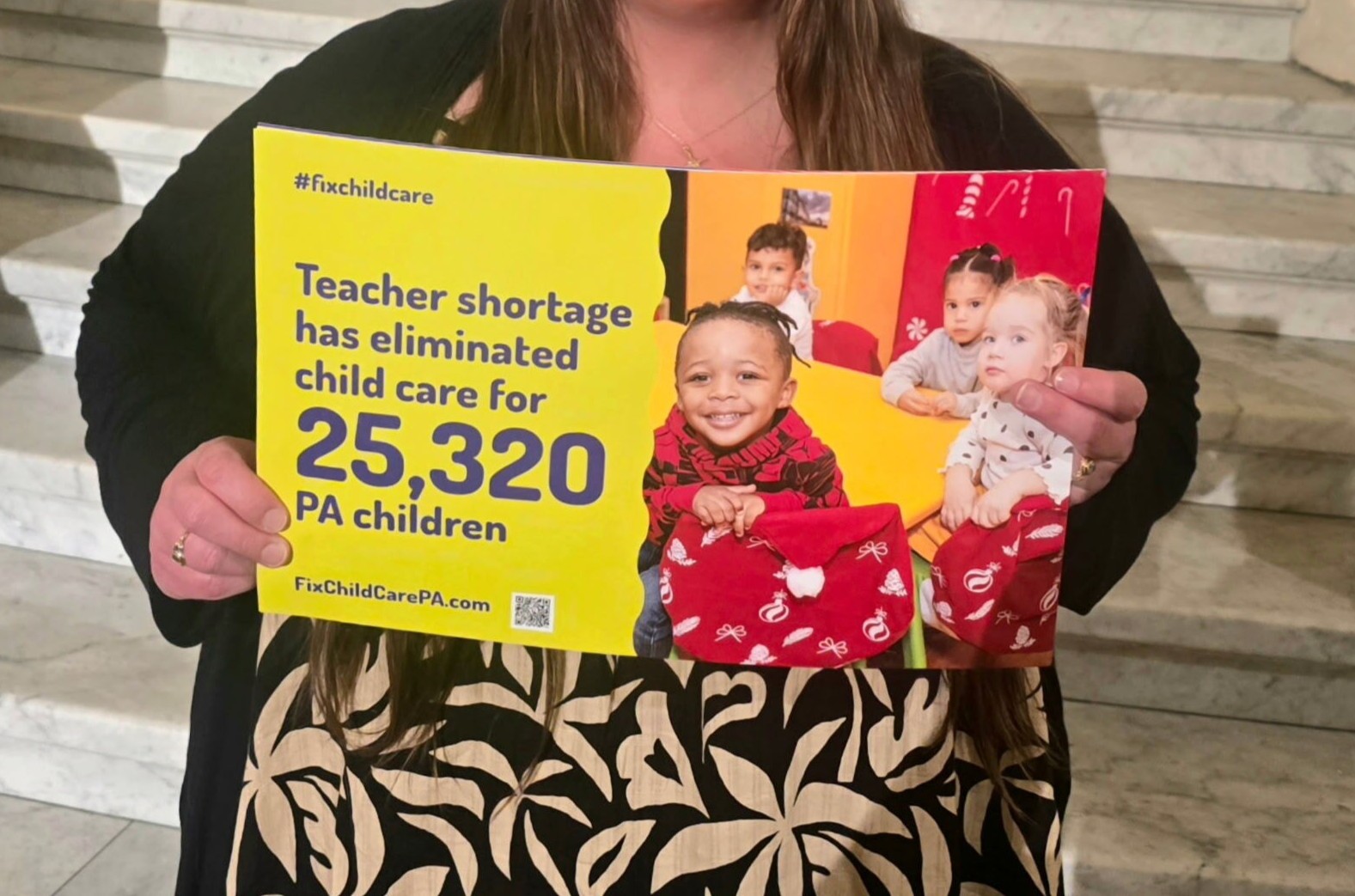
A September 2024 survey of 1,140 child care providers showed that 92% of child care programs reported challenges in recruiting staff with 85% struggling with teacher shortages, leaving more than 3,000 unfilled positions statewide. This resulted in eliminating child care for more than 25,000 Pennsylvania children.

Additionally, recent estimates show that gaps in the state’s child care system cost working families, employers, and taxpayers a total of $6.65 billion annually in lost earnings, productivity, and tax revenue. These new investments are aimed at helping to reverse the billions of dollars in lost productivity and earnings suffered by working families and employers when families don’t have the care they need.

Pre-K Counts

Additionally, Pre-K for PA shared that $9.5 million in new state funding in the budget for Pre-K Counts will help stabilize early learning providers by increasing per-child rates, a measure that would counter costs and staffing challenges driven by low wages.

“In recent years, opportunities for higher salaries in k-12 education and other sectors have made it increasingly difficult for Pre-K Counts providers to retain qualified teachers, forcing some programs to reduce enrollment or close classrooms,” the campaign said. “This new investment represents a critical step in ensuring that state-funded kindergarten programs remain strong, sustainable, and accessible for Pennsylvania’s youngest learners.”

However, they also expressed disappointment that the final budget failed to offer support for the state’s Head Start Supplemental programs that are also facing staffing challenges.

Other Investments

The budget also includes an increase of $41.7 million for early intervention services, of which $13.2 million is allocated for the Part C (infants and toddlers) program in the state Department of Human Services budget. A total of $10 million of those funds will be directed to increase provider rates to address key challenges, including workforce shortages.

See the full statement from ELPA. 


2025-2026 PA State Budget Includes:

  • $25 million in additional funding for child care ($25 million in the new Child Care Recruitment and Retention line with level funding in the Child Care Services and Child Care Assistance line items)
  • $9.5 million in additional funding for the state’s Pre-K Counts program
  • Level funding for the Head Start Supplemental Assistance Program
  • $13.2 million increase for the Early Intervention Part C (infant and toddler) program through DHS, with $10 million of these funds allocated for a rate increase for providers
  • $28.5 million increase for the Early Intervention Part B (age three to five) program through PDE
  • Level funding for evidence-based home visiting in the Community-Based Family Center line item and a small reduction in the Nurse-Family Partnership line due to a change in federal matching rates

News

September 29, 2025

PA Budget Impasse Hurts Providers, Families, and Businesses

The Pennsylvania state budget is now months overdue, and early learning programs across the state face an impossible situation because of this delay. 

Currently, 3,200 pre-k providers are being denied payment for over 66,500 slots, leading to closed classrooms or programs forced to self-fund with costly loans.

“We are seeing the ripple effects of this budget impasse on working families in Pennsylvania,” explains Emily Neff, director of public policy for Trying Together. “Children are not just losing out on critical early learning opportunities –  families are also suffering because they are unable to find the care they need in order to work. Child care businesses are making hard decisions to let go of teachers or take out high interest loans. Employers then experience workforce disruptions, which hurts their bottom line.” 

To effectively advocate for a solution and show the real-time impact of this impasse, the Pre-K for PA and Start Strong PA campaigns are collecting crucial information from Pre-K Counts and Head Start Supplemental Assistance Program grantees. These campaigns ask those impacted by the impasse to complete a survey to share how their program has been affected by October 9. 

The collected data will be instrumental in their efforts to urge state lawmakers to pass a budget that funds pre-k immediately, and data will be shared with lawmakers in real time. These first-hand accounts will help illustrate the urgent need to support early educators and the children and families who depend on these vital programs.

Take Action Now

We appreciate your support and collaboration year after year. Here are some other concrete ways you can help us elevate ECE as the budget impasse continues.

  1. Register for and attend the Working Together Webinar on Wednesday, November 5, 2025 at 1:00 p.m. focusing on a state budget update; advocating for early learning; the 2025 Market Rate Survey; and federal advocacy updates and opportunities
  2. Complete our current action alert and share with your networks
  3. Call your state lawmakers and urge them to include early childhood investments in the final deal. Use the SSPA Budget Impasse Fact Sheet to guide your conversation 
  4. Do you know a provider, family, or business who is feeling the impact of the state budget impasse? Maybe YOU have a story! Take a few minutes to record a quick video explaining how this hurts providers, families, and businesses. Please share with your networks. 

News

June 13, 2025

Ciminillo, Davis Discuss Child Care Workforce Investments on Podcast

Trying Together’s executive director recently discussed child care and its impact on the workforce and economy with Pennsylvania’s lieutenant governor on the Insight and Influence podcast.

Learn More

Executive Director Cara Ciminillo joined Lieutenant Governor Austin Davis and Rob Vescio of C & G Strategies for a conversation about child care in Pennsylvania and its effect on our workforce and economy.

When asked about the current state of the child care system in Pennsylvania, Ciminillo shared both the strengths and strains. She highlighted the various programs and resources available aimed at improving quality and praised the educators who are doing the heart-centered and emotionally laborious work.

Ciminillo also outlined widespread challenges, including availability and affordability. “We’ve got the foundation, but we don’t have the sustainability piece figured out yet until we invest in it.”

“The reality is, Pennsylvania’s economy doesn’t work without child care, period,” said Ciminillo as the discussion shifted to the workforce and the economy. “We’re seeing parent having to reduce hours, turn down promotions, or leave the workforce altogether.”

Lt. Governor Austin Davis shared his own experience as a father and the co-chair of the Early Learning Investment Commission. He highlighted the proposed $55 million dollar investment in recruitment and retention included in Governor Shapiro’s budget, saying, “We have to send a message that these workers are valued, that we value the work that they do, that they’re important and necessary to the functioning of our economy.”

Listen to the full conversation on Apple Podcast or Spotify.


The Insight & Influence podcast, presented by C & G Strategies, brings insightful conversations from influential people including government officials, industry leaders, and advocates from across the state.

News

February 24, 2025

Trying Together to Be Pittsburgh Pirates Nonprofit of the Game

Trying Together will be spotlighted as the Nonprofit of the Game at the Pittsburgh Pirates game against the New York Yankees in early April. A portion of each ticket benefits Trying Together.

Details

The Pittsburgh Pirates will take on the Yankees at PNC Park at 1:35 p.m. on April 6. All tickets include a $5 food and beverage credit. A portion of each ticket purchased goes towards Trying Together’s mission of supporting high-quality care and education for young children by providing advocacy, community resources, and professional growth opportunities for the needs and rights of children, their families, and the individuals who interact with them.

Nonprofit of the Game tickets cost $41.47 – $49.70 and can be purchased online. Purchase tickets by March 30, 2025. Ticket prices include fees.

Don’t forget to wear your Trying Together gear to show support when you attend the game. Direct any questions about attending or sponsoring the event to Kerry Chapman, Trying Together’s Assistant Director of Development, at 412-206-1053 or by email at kerry@tryingtogether.org.

Download flyer

Become a Nonprofit of the Game Sponsor

Looking to support Trying Together in a bigger way? Become a sponsor! Choose from three different tiers which include level-dependent benefits such as tickets to the game, email and/or social media promotion, logo display, etc. Supporters can also choose to sponsor a child care program to attend the game!

See sponsorship flyer for full details.

News

February 4, 2025

ELPA Responds to Governor Shapiro’s 2025-26 Pennsylvania Budget Proposal

On February 4, 2024, Pennsylvania Governor Josh Shapiro released his 2024-25 state budget proposal.

The principal partners of Early Learning Pennsylvania (ELPA), a statewide coalition of advocates focused on supporting young Pennsylvanians from birth to age five, applauded the early education workforce investments included in the Shapiro Administration’s 2025-26 state budget proposal. 

“Investments that will stabilize and reverse the exodus of early educators will directly benefit tens of thousands of  teachers and other professional staff and help provider businesses remain open,” the ELPA partners said in a statement issued Tuesday afternoon. “Additionally, these investments will help reverse the billions of dollars in lost productivity and earnings suffered by working families and employers when families don’t have the care they need.  ”

ELPA operates four issue-based advocacy campaigns: Pre-K for PA, Start Strong PA, Childhood Begins at Home, and Thriving PA.

Governor Shapiro’s state budget proposal includes:

  • $57.7 million in additional funding for child care ($55 million in the proposed new Child Care Recruitment and Retention line item as well $1.6 million in Child Care Services and $1.1 million in Child Care Assistance line items)
  • $17 million in additional funding for the state’s Pre-K Counts program
  • Level funding for the Head Start Supplemental Assistance Program
  • Level funding for evidence-based home visiting in the Community-Based Family Center line item and a small reduction in the Nurse-Family Partnership line due to a change in federal matching rates
  • $16.2 million increase for the Early Intervention Part C (infant and toddler) program through DHS
  • $14.6 million increase for the Early Intervention Part B (age three to five) program through PDE

Learn More

Budget proposal takes direct action to address PA’s child care teacher crisis

  • A $55 million recurring investment estimates an additional $1,000 per educator increase for licensed child care programs participating in the child care subsidy program.

Start Strong PA “celebrates the Shapiro Administration’s proposal to directly invest in a child care teacher recruitment and retention program that will help keep teachers in the classroom so that working families have access to the care they need.”

With this investment, Pennsylvania is joining 18 other states that are directly investing in teacher recruitment and retention efforts to keep child care classrooms open for the benefit of working parents and the economy at large. Recent estimates show that gaps in Pennsylvania’s child care system cost working families, employers, and taxpayers a staggering $6.65 billion annually — in lost earnings, productivity, and tax revenue.

“Start Strong PA looks forward to working with the House and Senate to ensure these urgently needed funds are included in the final budget and to the extent that state budget resources are available, increasing the investment so we can more fully address the child care crisis and its impact on working families and employers.”

Shapiro proposal increases Pre-K Counts rates to address continuing teacher shortage; additional action needed for Head Start

  • $15 million in new state funding to help stabilize early learning providers by boosting per child rates to help combat inflationary pressures and staffing shortages caused by low wages.

Pre-K for PA “applauds the Shapiro Administration’s continued commitment to address the historic teacher staffing shortage in the Pre-K Counts program.”

“Opportunities for teachers to earn more in the K-12 system and other sectors have challenged Pre-K Counts providers to keep classrooms open and operate at full capacity. This investment is a critical next step in preserving state funded pre-k programs for our commonwealth’s youngest learners.”

Because the commonwealth’s Head Start Supplemental programs face similar staffing challenges, Pre-K for PA expressed disappointment that the budget proposal did not offer similar support and urges urges lawmakers to include increased funding in the final state budget to stabilize the Head Start workforce.

“Mitigating teacher shortages in Pennsylvania’s publicly funded pre-k programs is a necessary first step in ensuring that all children have access to this once-in-a-lifetime opportunity,” their statement read. “Currently, 78,000 three- and four-year-olds in the commonwealth are eligible but do not have access to high-quality pre-k programs.”

Budget proposal also gives nod to significant workforce challenges in Early Intervention

  • Inclusion of a proposed $16.2 million increase for Early Intervention Part C (infants and toddlers) in the Department of Human Services budget
  • Increase of $14.6 million for Early Intervention Part B (age three to five) in the Department of Education budget.

Thriving PA expressed appreciation for the investment. “Early Intervention is a critical part of the Thriving PA campaign, as all children from birth through age five with developmental delays, regardless of family income level, must be identified, referred to, and provided necessary services to help them and their families reach their fullest potential.”

However, they also noted that significantly more dollars are needed to adequately deliver Part C EI to children in Pennsylvania.

A total of $10 million of this overall investment aims to address key challenges in the sector including workforce shortages, and they urge policymakers to build on this momentum.

Fewer young children, families and pregnant women will be served by home visiting services due to continued flat funding and loss of federal funds

The Childhood Begins at Home campaign expressed concern that the proposed 2025-26 budget does not account for the loss of federal funds expiring in June nor the continued rising costs of providing these life-changing services. “Without any assurance that the state will account for rising costs and backfill federal dollars, this ultimately will mean fewer home visiting services for Pennsylvania families impacted by economic and social disparities,” they said.

“Home visitors are supportive partners who build a trusting relationship with families and help guide them through the early stages of having and raising a child. The evidence-based models show positive outcomes, from improving health for both children and adults to achieving economic self-sufficiency to reducing child maltreatment. Childhood Begins at Home will continue to work with policymakers in the legislature and the administration to ensure Pennsylvania does not unnecessarily see a reduction in families receiving and benefitting from evidence-based home visiting services.”