The PA Keys Offer No Cost Social-Emotional Professional Development

News

November 3, 2023

The PA Keys Offer No Cost Social-Emotional Professional Development

Professional development courses from the Pyramid Model Consortium are now available at no cost for Pennsylvania professionals and partners.

About

These courses will teach how to enhance social-emotional development in young children without ever leaving the classroom. Participants can earn between 2-18 hour credits per completed course.

These courses are ideal to onboard new early childhood staff, especially staff who have little or no previous early childhood experience, and staff who need to meet the requirement for Child Development Training in the Keystone STARS Performance Standards.

The following classes are offered:

  • ePyramid Birth to 5 Course (365-day access)
  • ePyramid-Trauma-Informed Care & the Pyramid Model (180-day access)
  • ePyramid-Wellness: Taking Care of Yourself (90-day access)
  • ePyramid-Culturally Responsive Practices to Reduce Implicit Bias, Disproportionality, Suspension & Expulsion (90-day access)
  • ePyramid Prevent-Teach-Reinforce for Families (365-day access)

Learn More

To read full course descriptions, please visit the Pennsylvania Keys website.

Source

Information for this post was taken directly from The Pennsylvania Keys “No Cost Social-Emotional Professional Development Opportunities Now Available.” Some text may have been added, paraphrased, or adapted for readability and comprehension.


How To Address War and Traumatic Experiences With Children

News

November 2, 2023

How To Address War and Traumatic Experiences With Children

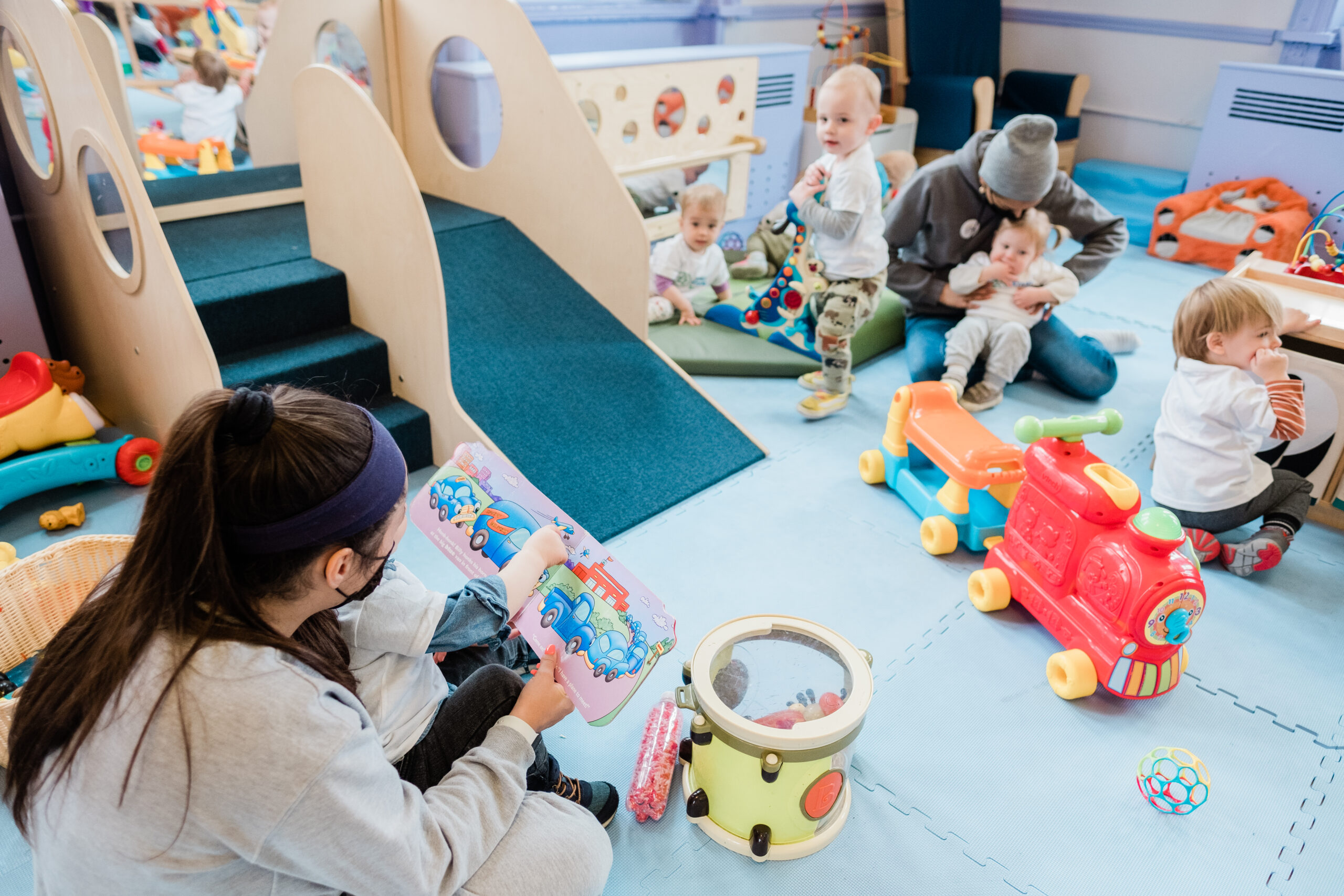
Children always look to their caregivers for a sense of safety during scary and vulnerable times. Oftentimes, the caregivers are informing their children how to respond in these situations. Therefore, parents and caregivers must have the right resources to help their children process and work through these big emotions.

Between war, conflict, and traumatic experiences happening in and out of the home, there are several new and scary experiences children are being exposed to.

ZERO TO THREE has free resources for families and caregivers, and professionals who support them, that offer guidance on helping young children grieve and process traumatic experiences.

Learn More

Related Resources


Apply for the 2024 Early Childhood Education Advocacy Fellowship

News

Apply for the 2024 Early Childhood Education Advocacy Fellowship

Trying Together invites early care and education providers, families, and other caregivers of young children to apply for the 2024 Early Childhood Education (ECE) Advocacy Fellowship to become a catalyst for change as an early childhood advocate.

During the 12-month program, ECE Advocacy Fellows will:

  • strengthen advocacy skills;
  • develop leadership skills that drive positive change;
  • gain expertise in utilizing research-based communication strategies; and
  • receive a stipend for their time.

Who Should Apply:

  • Families and caregivers of young children 
  • Relative Care Providers
  • Family Child Care Home
  • Group Child Care Home
  • Child Care Center administrators and teachers
    • Head Start teachers
    • Pre-k teachers
    • PK-4 teachers and principals
  • Home Visitors
  • School-age Child care providers
  • Trainers
  • Professors in higher education
  • Child care resource and referral professionals.

Fellowship Details

The program involves monthly in-person meetings, as well as dedicated small group and individual work time between these meetings. At each workshop, an informed early childhood, public policy, or community leader will facilitate, drawing on information from regional or national experts to share the latest news, research, and strategies to improve early childhood public policy. Workshops will include opportunities for networking, professional growth, and community development.

Fellows will receive a stipend for their dedicated time. Trying Together offers the fellowship program at no cost to the participant and will provide lunch and snacks at each session. Travel stipends will be provided on a case-by-case basis.

Application Details

Apply online by December 22, 2023. Chosen participants will be notified in early January 2024. For more information or to ask questions, contact Hailee B. Roye at hailee@tryingtogether.org or 412.213.8870.

Deadline Extended for RFP: Early Intervention Gap Analysis

News

November 1, 2023

Deadline Extended for RFP: Early Intervention Gap Analysis

Trying Together is requesting proposals from qualified and experienced consulting firms to conduct a comprehensive gap analysis of the early intervention system (birth to three and three to five) in Allegheny County.

(This news post was updated on November 1, 2023 to reflect a new deadline RFP deadline of December 1, 2023).

About

Trying Together seeks an external consulting firm to conduct an early intervention gap analysis in Allegheny County with the goal of identifying areas in which the system is not equitable for young children and families based on but not limited to race, ethnicity, geography, and income. This will include examining outreach, referral, enrollment, and support for Black and Brown families and those who speak a language other than English in the home.

Results and recommendations will be shared with community stakeholders starting with families as well as regional system partners and the Office of Child Development and Early Learning (OCDEL). Trying Together will use the recommendations of the gap analysis to develop potential solutions to address inequities and improve outreach, referral, enrollment, and support for Black and Brown families with young children.

The ideal candidate seeks to understand the Part B and Part C early intervention systems in Allegheny County and has an experienced track record of completing evaluations of education and human services programs.

Interested applicants should review the entire Early Intervention Gap Analysis RFP and RFP Q&A. Proposals should be submitted via email to info@tryingtogether.org and are due no later than December 1, 2023. Phone call inquiries will not be accepted. Please email if you have questions.

Supporting Breastfed Children in Child Care Settings

News

Supporting Breastfed Children in Child Care Settings

The Pennsylvania Chapter of the American Academy of Pediatrics is offering professional development credits for child care providers who complete the Breastfeeding Evaluation.

Learn More

The 1.5-hour recorded webinar discusses breast milk storage and handling, provides practice guidance on paced-bottle feeding, and offers resources needed to promote breastfeeding in early education and child care settings.

At the conclusion of the webinar participants will be able to:

  • Identify reasons to support chest/breastfeeding

  • Explain the safe handling and storage procedures for human milk

  • Describe the rationale and practice for paced bottle feeding

  • Explain the benefits of the program when chest/breastfeeding is supported

  • Describe and apply supportive policies for chest/breastfeeding

Listen to the recording and download the evaluation form. The password is “Ecels”. Completed evaluation forms should be emailed to ecels@paaap.org or faxed to 484-446-3255. The webinar will be free until December 31, 2023.

Proposed Legislation Could Reduce Zoning Burdens on Pittsburgh Child Care Facilities

News

October 31, 2023

Proposed Legislation Could Reduce Zoning Burdens on Pittsburgh Child Care Facilities

Proposed legislation introduced last week would amend the City of Pittsburgh’s Zoning Code to allow for child care facilities within single-family residentially zoned neighborhoods and accessory structures and to eliminate parking requirements for such facilities. 

Learn More

The Zoning Code defines a child care facility as “an establishment that provides care,  protection and supervision for children on a regular basis away from their primary residence for less than 24 hours per day.” It currently requires a “Special Exception,” to be reviewed by  the Zoning Board of Administration, to allow for child care facilities in single-family  residentially zoned neighborhoods.  

The proposed legislation will: 

  • Allow facilities that will care for up to six children to be permitted by-right within R1D (single-unit detached residential) and R1A (single-unit attached residential) zoning districts. 
  • Exempt child care accessory units from current home occupation standards when they take care of three or fewer children and where the home is the primary residence of the child care provider.
  •  Remove off-street parking minimums and maximums for child care facilities.
  • Add accessory in-home child care for three or fewer children where the home is the primary  residence of the child care provider to the list of exemptions for a record of zoning approval. 

Emily Neff, Director of Public Policy at Trying Together, applauded this effort by the Pittsburgh  City Council to make these crucial changes to the Zoning Code.

“Home-based providers play a  critical role in the early care and education landscape—offering smaller group sizes, more  flexible schedules, and usually, more affordability,” Neff said in a news release. “Often home-based providers serve the  families in their neighborhood, providing a safe, nurturing, and inclusive environment for  children while families go to work. The proposed changes to remove barriers in the Zoning Code will allow for more home-based providers to open and operate. This will help the city increase access to quality child care and expand the options available to families.” 

For details, read the full news release distributed by the City of Pittsburgh.

Whole Home Repairs Program Application Period Open

News

Whole Home Repairs Program Application Period Open

Action Housing Inc. is providing funds for low-income homeowners in Allegheny County to make whole-home repairs to severely damaged households through the federal Whole-Home Repairs Program.

Learn More

The Whole-Home Repair Program is a federal program and available in counties across the Commonwealth.

Through the program, homeowners could receive up to $50,000 in funds to fix critical issues that pose safety issues to residents, like damage to the roof, windows, or foundation of a home. Money is also available to make modifications for someone managing a disability.

The deadline to apply is 4 p.m. on Friday, November 17. No applications will be accepted after this time.

Who can apply? Who is eligible for a whole-home grant?

To qualify, an applicant must:

  • own and live in a house needing repairs in Allegheny County.

  • be living in a home with significant habitability issues like roof damage, unsafe electric wiring, or accessibility concerns.

  • have a total income that doesn’t exceed 80% of the Area Median Income (AMI) for Allegheny County. Please refer to the AMI chart to find AMI data.

How does the application process work?

  1. Apply online on the Allegheny County Whole-Home Repair Program website.

  2. If you are eligible and selected for a home inspection, someone from the Whole-Home Repairs Program will contact you to schedule it.

  3. A Whole-Home Repairs inspector will visit your home to determine if the repairs qualify for funding.

  4. If the inspector approves the repairs, Action Housing will connect you with a contractor certified by the Whole-Home Repairs Program to do the work.

To find a full list of FAQs, visit the Action Housing Inc. website.

Apply

If you meet the eligibility requirements and need financial assistance for whole-home repairs, apply now on the Allegheny County Whole-Home Repair Program website by Friday, November 17.

Learn More

The Whole-Home Repair Program is a federal program and available in counties across the Commonwealth. If you do not live in Allegheny County but are in need of financial assistance for home repairs, you can apply through an agency within your county. Find a list of agencies supporting the Whole-Home Repair Program on the Pennsylvania Department of Community and Economic Development website.

Resources for November Observances

News

October 26, 2023

Resources for November Observances

Various organizations, states, and nations recognize a number of observances each month. Resources help parents, caregivers, and child care professionals acknowledge and navigate them.

Here is a list of resources for November observances:

Month-Long Observances

Child Safety and Protection Month

Family Stories Month

National Adoption Awareness Month

National Family Caregivers Appreciation Month

Native American Heritage Month


Week-Long Observances

November 6 – 12 is National Children’s Book Week

November 11 – 18 is National Hunger & Homeless Awareness Week

November 13 – 17 is National Young Readers Week 

November 20 – 26 is National Family Week

Days of Recognition

November 2 is International Stress Awareness Day

November 8 is National STEM/STEAM Day

November 8 is World Adoption Day

November 13 is World Kindness Day

November 18 is International Stand Up to Bullying Day

November 20 is Universal Children’s Day

Low-Income Home Energy Assistance Program Application Period Opens November 1

News

October 25, 2023

Low-Income Home Energy Assistance Program Application Period Opens November 1

The application period for the Low-Income Home Energy Assistance Program (LIHEAP), which helps low-income households pay some energy costs associated with heating their home, opened November 1, 2023.

LIHEAP is administered by the Pennsylvania Department of Public Welfare. LIHEAP provides a cash grant during the heating season to help families pay their electric bills.

Households in immediate danger of being without heat can also qualify for crisis grants. The cash grant is a one-time payment sent directly to the utility company/fuel provider to be credited to a family’s bill. These grants range from $200 to $1,000 based on household size, income, and fuel type.

Eligibility

Applicants must meet income guidelines for 2022-2023.

  • One-person household: $21,870

  • Two-person household: $29,580

  • Three-person household: $37,290

  • Four-person household: $45,000

  • Five-person household: $52,710

  • Six-person household: $60,420

  • Seven-person household: $68,130

  • Eight-person household: $75,840

Applicants must have proof of income for each adult in the household, a copy of their most recent utility bill, and the social security number of each adult in the household (and child, if possible).

Apply

Applications can be submitted:

The LIHEAP application period for both cash and crisis grants will remain open until April 28, 2024. For additional information, please visit the PA Department of Human Services website.

October Recalls on Children’s Products

News

October 24, 2023

October Recalls on Children’s Products

Parents and caregivers should be aware of several child-related product recalls.

Learn More

Here is a list of October recalls collected from the following major federal agencies: the Consumer Product Safety Commission, the Food and Drug Administration, and the National Highway Traffic Safety Administration.

More Information

For recall details, visit the links above or review the Consumer Product Safety Commission, the Food and Drug Administration, and the National Highway Traffic Safety Administration websites.

More Resources

To read more recall reports: