News

April 23, 2021

Emergency Reference Guide for Babysitters, American Red Cross

This easy-to-carry, compact booklet provides step-by-step instructions to handle common emergencies for babysitters such as bee stings and asthma attacks.

About

It’s important for children to be safe, no matter who is taking care of them. The American Red Cross’ Emergency Reference Guide for Babysitters outlines steps babysitters can take for common injuries and emergency situations such as choking, poisoning or sudden illnesses. Download it now.


News

Summer Safety Brochure, Allegheny County Health Department

Summer offers plenty of opportunities to get outside, get active, and enjoy family activities. By heeding some simple tips, parents and caregivers can ensure that summer is both safe and fun. 

About

The Allegheny County Health Department and Allegheny County Department of Human Services developed a Summer Safety brochure, featuring important information and tips on how families can enjoy summer while staying safe.

The Summer Safety brochure includes tips on the following topics:

  • bug bites and stings
  • sun safety
  • safety on wheels
  • water safety
  • car safety
  • chemical and poison safety

To view the full list of tips, download the brochure.

News

A Guide for Families: Creating An Emergency Kit

Be prepared for an emergency situation.

Emergencies like natural disasters, fires, injuries, and other crisis situations can happen in the blink of an eye, so it is important to be prepared.

When children and their families prepare for an emergency situation together, children learn the basics of staying safe, and it can make emergencies less stressful because they will feel empowered.

Create an Emergency Kit

Take some time to create an emergency kit box with your child — turn it into a treasure hunt or a game to keep your child engaged. As you put items in the box, explain how they would help during an emergency.

Prepare kits for your home, work, and vehicle and review them every six months to a year to replace expired food items or clothing your child has outgrown.

Use this checklist to prepare kits for your family.

Basic Needs

  • Water (one gallon per person per day for several days, for drinking and sanitation).
  • Food (at least a three-day supply of non-perishable food).
  • Can opener for food.
  • Emergency lighting, such as a flashlight, head lamp, or battery-powered lantern.
  • Extra batteries in common sizes and batteries for any other devices such as hearing aids.
  • Car chargers, power banks, and adapters for home use equipment and devices.
  • A battery-powered or hand-crank National Oceanic and Atmospheric Administration (NOAA) weather radio with USB port(s).
  • Battery-powered or backup smoke alarms and carbon monoxide (CO) detectors.
  • Appliance thermometers for your refrigerator and freezer.
  • A surge protector power strip.
  • Matches in a waterproof container.
  • Warm clothes, blankets, sleeping bags, and emergency blankets to keep you warm in cold temperatures.

Personal Needs

  • Moist towelettes, garbage bags, and plastic ties (for personal sanitation).
  • Feminine supplies and personal hygiene items.
  • Infant formula, bottles, diapers, wipes, and diaper rash cream.
  • Pet food and extra water for your pet.
  • Cash.
  • Sleeping bag or warm blanket for each person.
  • Complete change of clothing appropriate for your climate and sturdy shoes.
  • Books, games, puzzles, or other activities for children.

Medication

  • A list of your prescription medicines. Include information about your diagnosis, dosage, frequency, medical supply needs, and allergies.
  • Medical equipment such as inhalers, hearing aids, glucose meters and test strips, eyeglasses, etc.
  • First aid supplies:
    • Bandages.
    • Antibiotic ointment.
    • Antiseptic wipes.
    • Latex gloves.
    • Oral thermometer.
    • Hand sanitizer.
    • Tweezers and scissors.
  • Nonprescription drugs, like pain and fever relievers, antihistamines, and antidiarrheal medicines.
  • A cooler and chemical ice packs to chill medicines that need to be refrigerated.

Paperwork

  • Copies of insurance cards (home, car, health).
  • Personal identification.
  • Vital records.
  • Photocopied veterinary records and registration information.
  • Personal care plans.

More Information

For more information about preparing for an emergency with your family, visit the Federal Emergency Management Agency’s (FEMA) Ready Campaign website: ready.gov.

Print This Resource

This resource is available as a printable PDF (English) (Spanish).

News

Directory for Emergency and Safety Services

Keep information for emergency and safety services on hand with this printable resource.

Emergency Services


Personal/local contacts:

  • Police department
  • Fire department
  • Pediatrician

Battery Ingestion Hotline:

  • Call 202.625.3333.

Pittsburgh Poison Center:

  • Call 1.800.222.1222.
  • Text “poison” to 797979 to add the poison center number as a contact in your mobile phone.

UPMC Children’s Hospital of Pittsburgh Emergency Department:

  • Call 412.692.5555.

webPOINSONCONTROL:

The first fully-automated virtual poison center. As an interactive tool, it guides you through a specific poison exposure situation just as poison control centers would do if you called.

Safety Services

Allegheny County Health Department’s Safe and Healthy Homes (SHHP) Program:

Provides free in-home health and safety assessments to qualified participants in Allegheny County as well as Beaver, Washington, and Westmoreland counties.

Allegheny Lead Safe Homes Program:

Offers qualifying homeowners and renters in Allegheny County with free lead-paint testing throughout their homes and hires a certified lead abatement contractor to repair any lead hazards found up to $12,000.

Cribs for Kids:

Provides portable cribettes to families who, otherwise, cannot afford a safe place for their babies to sleep.

PA Car Seat Loan Program:

The PA Traffic Injury Prevention Project (PA TIPP) is funded by the Pennsylvania Department of Transportation and offers a car seat loan program for families in need.

The National Child Identification Program Inkless Fingerprint I.D. Kit:

The ID Kit allows parents to collect specific information by easily recording the physical characteristics and fingerprints of their children on identification cards that are then kept at home by the parent or guardian.

Print This Resource

This resource is available as a printable PDF (English) (Spanish).

News

Family Guide for Early Intervention and Inclusion in Allegheny County

A Guide for Families: Early Intervention In Allegheny County

Early Intervention programs employ professional, degreed therapists who are expert at helping a child reach their full potential.

If a parent or caregiver has concerns, they can request an early intervention evaluation. An evaluation can cover one or more areas of development and will help to determine if your child can benefit from early intervention services. Parents and caregivers may elect to participate in an evaluation to put their mind at ease about the development of their child.

If your child qualifies for services, you will acquire strategies and tactics that work with your family’s daily routines, at a time and pace that is appropriate for you. There is no judgement and no predetermined solution, but rather an individualized approach for your child.

The Benefits of Early Intervention

Early intervention services are important to improving a child’s development, both in how they directly impact the child and how they benefit the family by strengthening and empowering a nurturing environment. There are a number of benefits to receiving early intervention services, including that it:

  • improves and enhances the development of a child with developmental delays, special needs, or other concerns;
  • provides assistance and support to empower families of children with developmental delays, special needs, or other concerns; and
  • lays a foundation that will improve the life of the child and offer greater opportunities. 

Information via TEIS

Statewide Resources

Pennsylvania’s Early Intervention program provides support and services to families with children, from birth to age five, with developmental delays and disabilities. Additionally, infants and toddlers who have a high probability of developmental disabilities may also be eligible for EI Services or for developmental tracking based on recognized risk categories.

Under the federal Individuals with Disabilities Act (IDEA), Part C Early Intervention provides services to eligible infants and toddlers from birth through age two (up until a child’s third birthday) and Part B Early Intervention serves pre-school children ages three through five.

Early intervention builds upon the natural learning opportunities that occur within the daily routines of a child and their family.

Early Intervention supports services and resources for children that enhance daily opportunities for learning and are provided in settings where a child would be if they did not have a developmental delay or disability. Additionally, these services and resources provide families with independence and competencies, and respect families’ strengths, values, and diversity. Supports and services are designed to meet the developmental needs of children with a delay or disability, as well as the needs of the family related to enhancing the child’s development in one or more of the following development areas:

  • physical (including vision and hearing);
  • cognitive;
  • communication;
  • social or emotional; and
  • adaptive.

Parents who have questions about their child’s development may call the CONNECT Helpline at 1-800-692-7288. The CONNECT Helpline assists families in locating resources and providing information regarding child development for children ages birth to age five. In addition, CONNECT can assist parents by making a direct link to their county Early Intervention program or local pre-k Early Intervention program. If you are unable to connect with your EI program, or you have difficulty starting tele-intervention services, please email the Office of Child Development and Early Learning at ra-ocdintervention@pa.gov.

The Pennsylvania Department of Education also provides a digital introduction guide to early intervention in both English and Spanish.

Families can also find additional resources online at the Early Intervention Technical Assistance Online Learning Portal for Families. 

Local Resources

Part C Early Intervention (Infant and Toddler EI)

For Allegheny County families with children birth through age 2 (up until a child’s 3rd birthday), early intervention (EI) services are coordinated through The Alliance for Infants and Toddlers. To learn more, visit www.afit.org or call 412.885.6000. 

When infants and toddlers qualify for services, families have the right to choose a specific EI provider to provide their child’s ongoing services. Services are provided through coaching and collaboration in the child’s home or other natural environments. Below is a list of Infant and Toddler EI service providers in Allegheny County (subject to change):

Part B Early Intervention (Pre-School EI)

For Allegheny County families with children ages three through five, early intervention services are provided by one of two establishments, depending on the location of your home. If you live within the City of Pittsburgh, please call Pittsburgh Public School District at 412.529.4000 to schedule a screening for your child. If you live within Allegheny County but outside the City of Pittsburgh, please call the Allegheny Intermediate Unit at 412.394.5904 to schedule a screening for your child. 

Pre-school EI services are most often provided in a pre-school classroom or early learning program. Learn more about services below: 

 

News

Family Guide for Navigating Early Intervention Services

Navigating Early Intervention Services

According to Moms Rising, parents and caregivers should keep the following tips in mind when navigating early intervention services:

  • Trust your instincts about your child’s early development.
  • Seek out knowledge and information on early development and document your concerns.
  • Keep a record of all important information.
  • Prepare for meetings with your early intervention team and don’t be afraid to ask questions.
  • Build positive Relationships and communicate regularly with the professionals on your early intervention team.
  • Understand the policies and regulations governing early intervention services.

Parents and caregivers should be aware of their risk for burnout when navigating the processes for early intervention. Consider joining a support group or practicing self care regularly. Parents and caregivers may also want to consider the feelings of non-disabled siblings and encourage discussion with them to ease any tension within the family.

Parents and caregivers who are interested in learning more about advocating for their child’s wellbeing may participate in educational opportunities from the PEAL Center. PEAL is an organization of parents of children with disabilities and/or special health care needs who bring knowledge and experience as a resource for education and special healthcare information and resources in Pennsylvania.

More Information

To learn more about navigating the early intervention process, access this comprehensive guide from the Pennsylvania Department of Education (available in both English and Spanish).

News

Navigating Difficult Emotions as Caregivers: A Guide for Families

About

From the moment a parent or caregiver meets their child, they experience a shift in their daily lives, expectations, and roles. Navigating these changes can be difficult, but as many caregivers have said: “The experience of watching your child learn, develop, and grow is well worth it.”

To support families, Trying Together developed the following guide on navigating emotions as a parent or caregiver. Although the strategies and support services included will not eliminate the challenges families face entirely, they can help make the journey a little easier.

Strategies for Navigating Difficult Emotions

Stay In Tune With Your Emotions

  • Recognize that it is natural to experience difficult emotions. There is no shame in feeling angry, sad, or upset. However, it does matter what you do with those emotions.
  • Take 10 minutes to reflect on your thoughts and emotions. You can do this silently or by writing your reflections in a journal. Think through the following questions:
    1. How am I feeling today?
    2. Why am I feeling this way? Did something specific cause this feeling?
    3. Is this feeling temporary or have I felt this way for a long time?
    4. Have I told anyone about this feeling? Why or why not?
    5. Where am I holding those feelings in my body? Am I tensing my shoulders? Clenching my jaw? Overthinking?
    6. How am I interacting with others? Are my emotions impacting my interactions?
    7. What can I do to relax, cope with this feeling, or get into a better headspace?
    8. Who can I reach out to for support? What time should I reach out to them?
    9. What am I grateful for today? What am I proud of?

Managing Emotions In The Moment

  • Take a pause before you respond to someone or a situation. When we experience big emotions, those emotions can influence our reactions. Taking a moment allows you to recognize how you are feeling and implement strategies to cope.
  • Inhale slow, deep breaths through your nose and exhale slowly through your mouth. Rather than breathing into your chest cavity, imagine that you are breathing into your stomach. Place your hands on your stomach and feel it rise and fall. This will decrease your heart rate, slow your breathing, and make you more present in your body.
  • Take a moment to observe the situation without the influence of your emotions. What is happening? What could have caused this situation? How is someone feeling? What did someone say or do? Finding the answers to these questions can help you identify what steps to take to resolve the situation.
  • Focus your mind on something specific, like the feel of your shirt or the scent of something in the area. This can help to keep you grounded in the moment.
  • See this Mindfulness Guide from the New York Times for more mindfulness ideas.

Managing Daily Stress

  • Managing stress looks different for everyone, so find a method that works for you. Start off by identifying what causes you stress on a daily basis and brainstorm ways to either eliminate or reduce that stress.
  • If you have many tasks or activities to keep track of, create a daily, weekly, and/or monthly calendar to list your upcoming engagements. Make this calendar easily accessible in your home or consider using a phone calendar.
  • Add notes around your house that remind you to take a deep breath, drink some water, and relax your body. Those little reminders can help you get into the practice of using these strategies on a regular basis.
  • Know your limits and set boundaries. If you are feeling overwhelmed, let the people around you know and say no to things that you cannot take on at that moment.

Ask for Support When You Need It

  • Ask if a friend, family member, or loved one would be able to take over caregiving responsibilities for a period of time, even if it is only for 10 minutes. Having some time alone can help you process your emotions and give you time to refresh your mind.
  • If no one is available at home, consider using a crisis child care center such as Jeremiah’s Place for temporary respite care.
  • Reach out to a loved one, family member, or trusted person to let them know what you are struggling with. Never feel as if you have to suffer alone.
  • When you feel uncomfortable sharing with a loved one, reach out to the Family Resources of Pennsylvania Parenting Warmline at 412.641.4546.
  • Join a support group such as Fathers Trying Together, Single Mom Defined, or Women’s Rap.
  • Reach out to your local Family Support Center to access a range of services, including parent support groups, parenting skills programs, family activities, and more.
  • If you live in Pennsylvania and need help accessing mental health services, call 2.1.1 or text your zip code to 898.211 to talk with a resource specialist for free. For individuals outside of Pennsylvania, call the SAMHSA National Helpline at 1.800.662.4357.

Prioritize Self-Care

  • Take time to identify what makes you feel better in difficult situations. Do you like taking a warm bath? Drinking a cup of hot tea? Taking a short walk? Identify the things that help you recharge and schedule time for them into your daily schedule. If you need a place to start, check out these Self-Care Planning Resources from the University of Buffalo School of Social Work.
  • Create joyful moments by trying something new. You can try a new food combination, a new scented candle, hairstyle, or activity. The best part about this is that you can include your child in these things as well. Take time to be playful and creative together.

Take Time to Celebrate

  • When surrounded by stress, it can be easy to focus on the bad. Escape this cycle by taking time to celebrate your personal or parenting wins, or identify what you are thankful for that day. Whether it is a funny joke that you told earlier in the day or simply getting a meal on the table, celebrate those wins.

Resources

Developmentally Appropriate Parenting Series

Developmentally Appropriate Parenting is a family resource content series developed by Trying Together as an effort to empower caregivers to create high-quality experiences at the earliest stages of their child’s life.

Family Resources of Pennsylvania Parenting Warmline

The Family Resources of Pennsylvania Parenting Warmline is a free, confidential hotline for parents and caregivers with non-medical parenting concerns and questions. If you live in Allegheny County, call 1.877.927.6596. If you live outside of Allegheny County, call 1.800.641.4546.

PA 2.1.1 Southwest

PA 2.1.1 Southwest provides access to an extensive list of resources for families in Southwestern Pennsylvania. Specialists provide referrals to human needs resources, physical and mental health resources, child care programs, and more. For more information, call 2.1.1 or visit their website.

SAMHSA National Helpline

SAMHSA’s National Helpline is a free, confidential information service (available in English and Spanish) for individuals and family members facing mental and/or substance use disorders. This service provides referrals to local treatment facilities, support groups, and community-based organizations.

Jeremiah’s Place

Jeremiah’s Place is Pittsburgh’s only crisis child care center that provides a safe haven of respite, health, renewal, and support for children and families during times of crisis. Services are provided for free and are available 24 hours a day, seven days a week.

Hello Baby

Hello Baby supports parents with newborn children in Allegheny County by making it quick and easy to find local resources.

Print This Resource

Download this resource as a printable PDF document (English)(Español).


News

Strategies to Support Social-Emotional Development: A Guide for Families

About

From infancy through adulthood, social-emotional skills are intertwined with every aspect of our daily lives. These skills enable us to communicate our needs, wants, and ideas; build relationships; communicate emotions; and handle conflict effectively.

To assist families in understanding the importance of social-emotional development, Trying Together created a family guide. Continue reading to explore the meaning of social-emotional development and strategies caregivers can use at home to support their child’s development.

What is Social-Emotional Development?

Social-Emotional Development is the process of learning mental and behavioral patterns that impact a person’s ability to work through social and emotional situations. These patterns can be broken down into individual skills such as:

    • building and maintaining positive relationships;
    • working productively in a team;
    • recognizing, coping with, and empathizing with emotions;
    • resolving conflicts with others; and
    • building confidence in oneself and others.

In addition to the skills listed above, there are several others. To view lists of social-emotional skills, view the Center for Disease Control and Prevention’s Developmental Milestones resource.

When are Social-Emotional Skills Developed?

Because social-emotional skills are introduced in early childhood, a child’s early relationships and experiences play influential roles in determining which social-emotional patterns they develop. While these patterns can be difficult to break, individuals continue to develop and fine-tune their social-emotional skills throughout adulthood.

If a child regularly screams during difficult situations, they may develop a long-term pattern of responding to tense situations with an outburst of anger. While caregivers should not demand their children to withhold their natural emotional responses, teaching children strategies to express and cope with their emotions effectively can help. Caregivers should strive to create a safe, nurturing environment in which children feel safe in expressing their thoughts and emotions.

Strategies for Caregivers

    • If you find yourself struggling with your own social-emotional responses as a caregiver, these strategies can guide you in further developing your toolkit and modeling these strategies.

Children practice social-emotional skills during play.

    • Provide your child with opportunities to play independently, with caregivers, and with children. Include different types of play, such as nature play, imaginative play, cooperative play, etc.

When your child is experiencing a big emotion, avoid saying “calm down” or “don’t be sad/mad.”

This teaches children that certain emotions are “bad” and should not be expressed or shared. Instead, help them recognize, name, and work through what they are feeling. Examples:

    • “When Mya took your toy, you started crying. It must have been hard for her to take that toy from you. How are you feeling? Did you feel sad?”
    • “I see that Juan stepped on your favorite shirt. It doesn’t feel nice when someone steps on something you like, huh? How did you feel when that happened?”
    • Explore different emotion/feeling words together so your child can better identify and express what they are feeling.

No matter what age your child is, have back and forth interactions with them.

    • Make eye contact with your child and show them different facial expressions.
    • If a baby coos at you, reciprocate that interaction with your own sound, a smile, or whatever feels right in the moment.
    • If a toddler shows you something, pay attention and ask questions about it.
    • If your child is having a hard time writing letters or adding numbers, empathize with what your child may be feeling (anger, frustration, sadness, shame), help them recognize those emotions, and help them practice the task at hand.
    • Model the social-emotional skills you would like your child to develop. If you would like your child to share with others, make sure they see you sharing with others. If you would like them to wait for their turn, show them situations where you are waiting patiently (in a grocery store, to use the restroom, etc.)
    • Talk through situations where you are practicing a social-emotional skill in front of your child. Think of it as narrating the situation and the thoughts you have about sharing your favorite snack, resolving a conflict, etc.
    • Create a safe space in your home where your child can go to relax. While children should feel safe to come to you with their emotions, they also need a place to go to process their emotions alone. Add their favorite items in their safe space. Children should never be forced to go to their safe space.

Practice mindfulness techniques with your child.

    • Tell them that it is okay to take a pause to process their feelings and help them practice this skill. They can take a few deep breaths, drink some water, count to five, or hug a stuffed animal. See this Mindfulness Guide from the New York Times for more mindfulness ideas.

Do not solve all of your child’s problems.

    • To develop independence and self-confidence, children need to work through their challenges independently (reaching a toy that is too far away, resolving a conflict, etc.). If the situation is unsafe, step in. But if it involves lower levels of risk, give your child a chance to solve the issue.

Help children share their ideas and opinions.

    • One way to encourage respect and shared decision-making is by introducing the concept of voting. If a decision needs to be made about a shared experience (play, snack, etc.), have children share their ideas and vote to decide the outcome. Ideas that do not win can be incorporated during the next play session.

Praising children for their effort, not the outcome.

    • This builds their self-confidence, persistence, and resiliency to challenges or failure. You communicate that their effort matters and, regardless of the outcome, you are proud of them.

Resources

If you are interested in learning more about social-emotional development and other early childhood topics, consider utilizing the resources listed below.

Developmentally Appropriate Parenting Series

Developmentally Appropriate Parenting is a family resource content series developed by Trying Together as an effort to empower caregivers to create high-quality experiences at the earliest stages of their child’s life.

ZERO TO THREE

ZERO TO THREE works to ensure that all babies and toddlers have a strong start in life. Visit their website to access their online resources to learn more about empathy development, self-esteem, developing social-emotional skills, and more.

NAEYC

The National Association for the Education of Young Children (NAEYC) works to promote high-quality early learning for all young children, birth through age eight, by connecting early childhood practice, policy, and research. Their website includes resources on building social-emotional skills at home, working through challenging behaviors, and more.

Fred Rogers Productions

In the television series “Mister Rogers’ Neighborhood,” Fred Rogers explores several social-emotional skills such as empathy, imagination, self-esteem, and self-control. Watch recordings of the episodes on the Fred Rogers Productions website.

Print This Resource

Download this resource as a printable PDF document (English)(Español).


News

Supporting Social-Emotional Development Through Play: A Guide for Families

Why does it matter?

As the caregiver of a young child, you may have heard of physical skills such as crawling and running; cognitive skills such as long-term memory and pattern recognition; and academic skills such as reading and subtraction. However, have you heard of social-emotional skills?

Social-emotional skills act as the backbone for conversations, relationships, and a person’s ability to work through emotions in a healthy, productive way. To succeed in school, the workplace, and their personal lives, children need to develop social-emotional skills. Without them, children are more likely to experience difficulties maintaining relationships, self-regulating their emotions, and demonstrating self-control throughout their lifetimes.

Children’s early experiences with their loved ones have a big influence on what skills they develop. Because of this, caregivers must consider what social-emotional skills or patterns they are modeling or practicing themselves. Children develop skills and patterns based on what they were taught or exposed to in early childhood. While these patterns can change over time (in childhood and adulthood), the earlier a child practices these skills, the better.

Trying Together created this family guide to define social-emotional skills and highlight at-home activities caregivers can use to support their child’s development.

Social-Emotional Skills

Examples of social-emotional skills include, but are not limited to, the following:

    • building positive relationships with other children and adults;
    • being able to recognize non-verbal cues and maintain eye contact;
    • displaying confidence in themselves and others;
    • displaying respect for other people’s feelings, ideas, and opinions;
    • displaying self-control and patience;
    • listens and pays attention to others;
    • recognizing their own and other people’s emotions;
    • sharing toys or materials with other children; and
    • working together with other children or adults.

By practicing these skills, young children will develop a toolkit of social-emotional skills that will help them navigate interpersonal (with others) and intrapersonal (with self) situations. For information about social-emotional developmental milestones by age, visit the Centers for Disease Control and Prevention (CDC) website.

At-Home Activities

    • A simple game of peekaboo provides a chance for children to make eye contact and exchange facial expressions with their caregiver. Try out different facial expressions each time you reappear to see how your baby responds.
    • Read at least one picture book per day with your child. While reading, bring characters (and their emotions) to life by changing your voice pitch, tone, speed, or volume and facial expressions. If your child can read, ask them to read out the character’s lines themselves. If they cannot, ask them to mimic the emotion or repeat a line.
    • While reading, pause before you flip the page and ask your child what they noticed about the characters, what they think about what is happening, how they would feel, what they would do, or what they think is going to happen next. Make up your own questions as you go!
    • Let your child express themselves through art. Give them a piece of paper, a canvas, or any type of artistic material and let their imagination run free. When they are done creating, ask them what it is, what inspired them to create it, and how they felt during the process. If you have multiple children, have them work on a piece of art together.
    • If your child is experiencing big emotions, show them yoga poses they can do to practice their breathing and move their bodies.
    • Try activities like this printable Emotional Sorting Game or have them make Plastic Egg Faces to help your child learn about different emotion and feeling words. Puppets can be used as a tool for children to explore or express their emotions.
    • Schedule a playdate at your house to help your child practice sharing, teamwork, creativity, and independence. If multiple children live in your household, that works too. Gather items like clothes, child-safe dishes, books, and more and let the children determine how they will use them. Card and board games can be used as well.
    • Create a safe space in your home where your child can go to relax alone. Ask your child what items, colors, smells, tastes, or materials make them feel better. Walk around the house, help them collect the things they mentioned, and spend time together creating their new safe space. Take time each month to ask these questions and redesign. Children should never be forced to go to their safe space.

Resources

If you are interested in learning more about social-emotional development and other early childhood topics, consider utilizing the resources listed below.

Developmentally Appropriate Parenting Series

Developmentally Appropriate Parenting is a family resource content series developed by Trying Together as an effort to empower caregivers to create high-quality experiences at the earliest stages of their child’s life.

NAEYC

The National Association for the Education of Young Children (NAEYC) works to promote high-quality early learning for all young children, birth through age eight, by connecting early childhood practice, policy, and research. Their website includes resources on building social-emotional skills at home, working through challenging behaviors, and more.

Playful Pittsburgh Collaborative

The Playful Pittsburgh Collaborative is a group of organizations dedicated to advancing the importance of play in the lives of children, families, and communities in the Pittsburgh region. Read their blog to learn about playful activities for children of all ages.

Fred Rogers Center

The Fred Rogers Center works to extend the legacy of Fred Rogers to today’s generation of children and the adults who love and care for them. Visit their website to access resources on simple interactions, child wellness, and digital learning.

Print This Resource

Download this resource as a printable PDF document (English)(Español).


News

April 16, 2021

Fatherhood Support Programs in Allegheny County

About

Are you a father in need of support? Support services are available in Allegheny County to help. Most centers are open Monday through Friday, 9 a.m. to 4 p.m. Please call a center near you for more information about their daytime and evening hours.

Fatherhood Programs

The Allegheny County Department of Human Services offers programs to support fathers, including Fatherhood Programming at Family Support Centers. While all Family Support Centers provide programs for all parents, the following centers have programs for fathers:

Sign Up

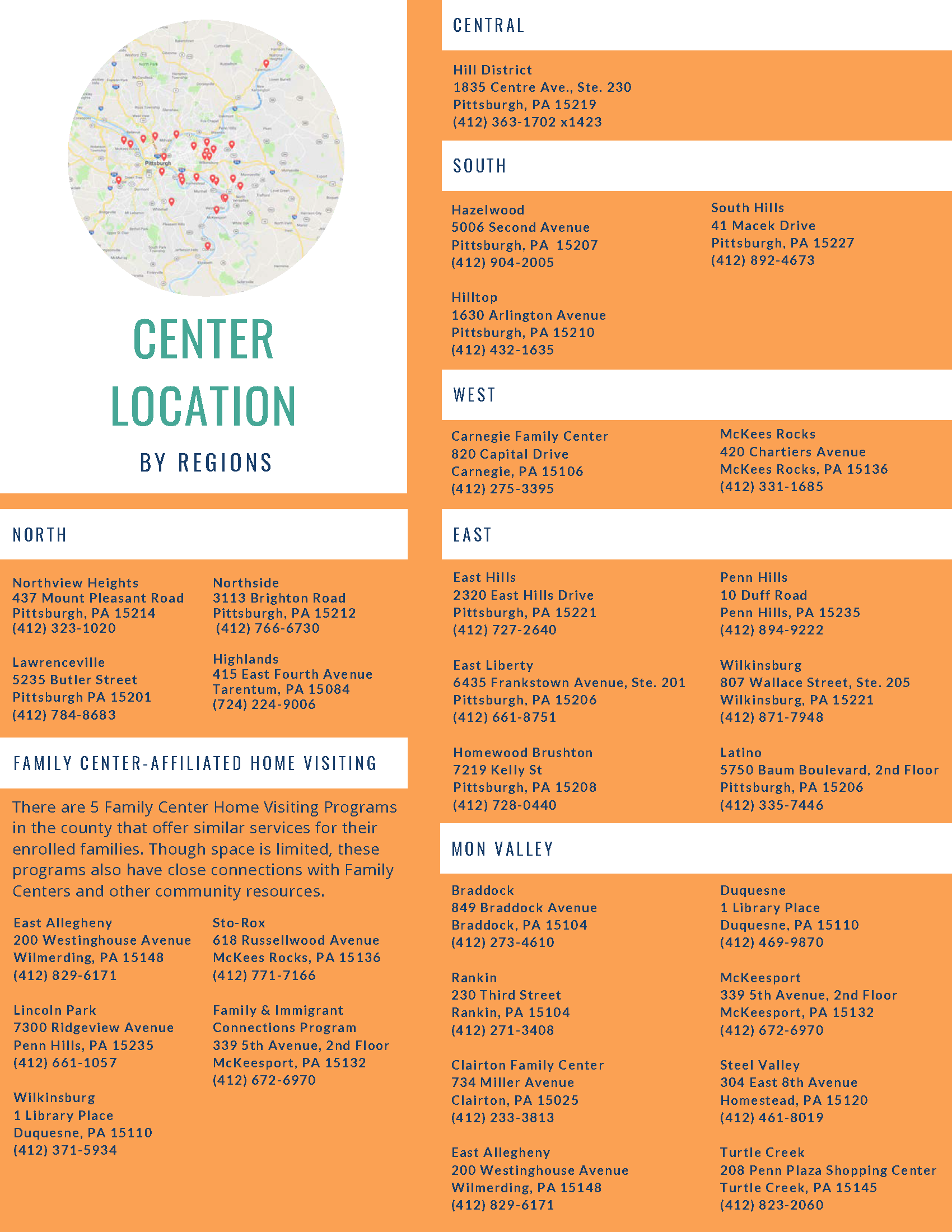
To sign up for a program, call the Family Support Center nearest to you. Center contact information can be found on the Family Centers of Allegheny County website or by viewing this flyer. (PNG).

Resources

For more information about additional fatherhood programs, check out the following resources: