News

April 10, 2026

Rep. Lee Hosts Roundtable Discussion on the Importance of Head Start

U.S. Rep. Summer Lee (D-12th) hosted a roundtable discussion Friday on the importance of Head Start with educators, parents, providers, and early childhood advocates. Emily Neff, Trying Together’s director of public policy, helped facilitate the discussion, which was held at the Allegheny Intermediate Unit at The Waterfront in Homestead.

Learn More

At the event, Lee discussed the need to expand access to high-quality early childhood education for working families and highlighted her recently introduced Head Start for America’s Children Act, which would dramatically expand the program nationwide, raise wages for educators, and strengthen support services for families. 

“Every child deserves not just a chance to survive, but a real chance to survive,” Lee said. “Head Start has opened doors for generations of children, giving them a strong start in the classroom and an even stronger foundation in life. In the richest country in the world, early childhood education cannot be a luxury for a lucky few. It must be treated like the public good it is.”

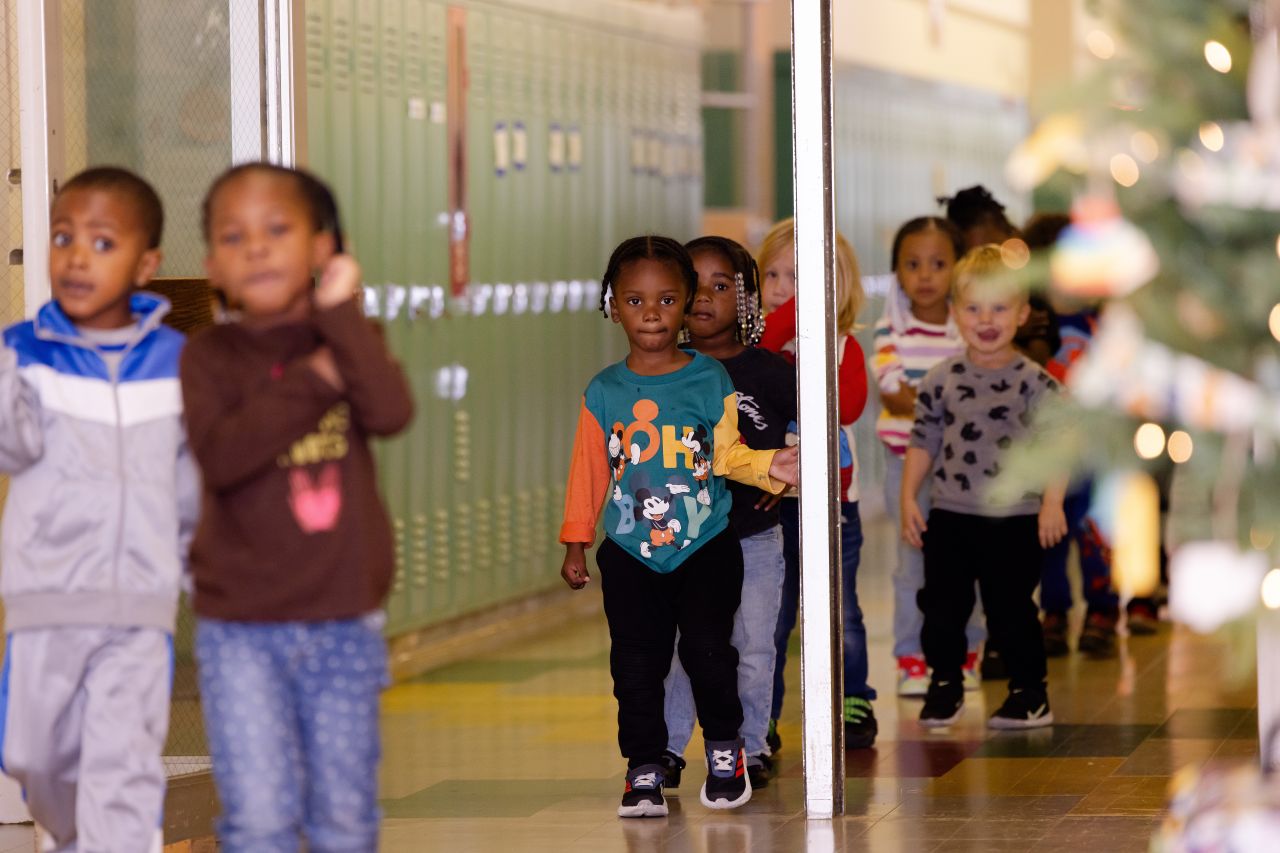
The event also included a tour of a local Head Start classroom.

The roundtable included representatives from early childhood education programs, public schools, advocacy organizations, and families directly affected by Head Start. Participants shared stories about the vital role the program plays in preparing children for school, connecting families to critical supports, and sustaining communities across the region.

“For 60 years, Head Start has served as a cornerstone program within the early childhood system, providing the essential education, care, and resources that families and young children need to thrive,” Neff said. 

Neff noted that Friday’s roundtable was timely as early childhood educators prepare for the Week of the Young Child and Trying Together celebrates the Month of the Young Child in April.

“It is vital that we honor the educators who create high-quality early learning experiences and take steps toward investing in the critical work they do for our youngest children,” said Neff, who added that Lee’s Head Start for America’s Children Act takes necessary steps to prioritize competitive compensation for early childhood professionals.

Over the past 60 years, Head Start programs have provided high-quality early education and comprehensive services to more than 40 million children and families nationwide. Today, nearly 800,000 children receive early education, health and dental care, and nutritious meals through the program, while families also gain access to referrals for job training, adult education, nutrition services, and housing support.

Lee’s bill – which was introduced with U.S. Rep. Rashida Tlaib (D-Mich.) as the House companion to legislation by U.S. Sen. Bernie Sanders (I-Vt.) – would expand the program to serve more than 11 million eligible young children nationwide.

The Head Start for America’s Children Act would:

  • Fully fund Head Start for eligible children
  • Align program hours with working families’ schedules
  • Raise Head Start educator pay to at least $60,000 per year
  • Strengthen recruitment and retention
  • Expand partnerships with child care providers and college campuses
  • Improve mental health services
  • Invest in facility upgrades, including the removal of lead contamination in paint and water

Lee serves on the House’s Committee on Oversight and Government Reform and the Committee on Education and Workforce.

News

April 7, 2026

Five Ways to Advocate for Early Childhood Education During Month of the Young Child

There are numerous ways to advocate for early childhood education during April, which is celebrated by Trying Together as the Month of the Young Child and includes a regional advocacy blitz. 

It is an important time to collectively work together to create systemic and policy change for young children, families, and the educators who serve them. No action is too small and can be part of your day. Think of advocacy as educating policymakers on the reality of early childhood education and the families of young children to ensure their needs are met and to receive the resources and investments necessary for a thriving early childhood education (ECE) system.

April Advocacy Blitz

The Trying Together Policy team supports an April Advocacy Blitz, a regional advocacy effort that aims to amplify the voices of early childhood educators, families, and community partners across the Pittsburgh region, said Emily Neff, Trying Together’s director of public policy.

“Last year, we celebrated a major win – a $25 million recurring investment (in the state budget) for child care recruitment and retention, the first of its kind in nearly 20 years,” Neff said. “While that was a huge step, we’re just getting started.”

Neff noted that as the 2026-2027 state budget is being negotiated, it is a critical time for early childhood advocates in the region to come together to ensure that their voices are heard.

Neff outlined five things to do during April’s Month of the Young Child (MOYC) to advocate for early learning: 

  • Sign Start Strong PA’s petition
  • Complete the 2026 child care staffing crisis survey
  • Contact legislators
  • Submit children’s artwork to legislators
  • Post on social media

Sign Start Strong PA’s Petition

The first action that advocates can take is to sign Start Strong PA’s petition to include a number of proposed investments for early childhood education in the 2026-2027 state budget. The proposals include:

  • A $10 million increase for the Child Care Staff Recruitment and Retention program
  • A $2 million increase for the Head Start Supplemental Assistance program
  • A $7.5 million increase for Pre-K Counts

Other recommendations include raising the child care subsidy limit, dedicating funds so programs can better serve children with special needs, and advancing targeted reforms to reduce unnecessary burdens on child care providers while preserving strong health and safety standards to keep children safe.

After signing the petition, share it with your friends, family, colleagues, and community members.

Complete the 2026 Child Care Staffing Crisis Survey

Help to gather real stories and data from the field to inform state policymakers and advocacy efforts by filling out Start Strong PA’s 2026 Child Care Staffing Crisis Survey.

Those who fill out the survey will have the opportunity to discuss staffing issues at their child care programs. The information collected from the 15-minute survey will be used to demonstrate the need for the 2026-2027 state budget to increase funding for the Child Care Staff Recruitment and Retention program, so that bonuses for the workforce grow.

Those who take out the survey should encourage fellow staff members and families who utilize the program to also participate.

Contact Your Legislator

Another way to make your voice heard on the state’s child care staffing crisis is to reach out directly to the decision-makers in your community. 

Start by looking up your state legislators, and then sending an email, making a call, or inviting them to visit your program. Show and tell them why investing in early childhood education is important to your community.

To find your state legislator, visit the Pennsylvania General Assembly’s website.

Submit Children’s Artwork

Another simple and powerful way to advocate is to submit children’s artwork to elected officials who represent your community.

Ask the children in your program to create artwork. If you are already having them create something for the Week of the Young Child, you can use that – or ask them to create something new. An optional step would be to ask them to include a short message, such as “My name is ___ and I love my school because ___.”

Then, find your state legislator’s district office by searching the state General Assembly’s page and then entering your program’s address on the artwork that you submit. Send some of the artwork to your state House representative’s office and some to your state senator’s office.

Post on Social Media

A final, simple way to advocate is to share what you are doing during the Month of the Young Child on social media and tag your legislator in the post. 

Information you might consider sharing in the post might include:

  • Activities taking place at your center
  • Teachers in action
  • Children learning and engaging
  • An explanation of why this week and your work matter

Post your photos on Facebook or Instagram and describe the activities taking place at your center as well as why the Month of the Young Child is important. In your post, tag your state House representative, state senator, and Trying Together.

MOYC and Week of the Young Child

Trying Together celebrates the Month of the Young Child every April in conjunction with the National Association for the Education of Young Children’s (NAEYC) yearly observance of the Week of the Young Child.

This year, the Week of the Young Child will be observed April 11 through 17.

More information on how Trying Together and providers are celebrating the Month of the Young Child can be found on Trying Together’s website.

News

February 23, 2026

Head Start Releases Food Insecurity Fact Sheet That Focuses on Pregnant Women and Children

In the wake of recent increases in demand for food assistance and disruptions in the systems that provide it, Pennsylvania’s Head Start Collaboration Office has released a fact sheet regarding food insecurity.

The fact sheet highlights key considerations for serving pregnant women, infants, toddlers, preschoolers, and individuals with special needs.

Learn More

The Head Start fact sheet notes that it is vital for community partners to connect to provide resources for pregnant women and children experiencing homelessness because their nutritional needs are unique and essential to their health and development.

Persistent hunger can affect immediate physical well-being, but it can also hinder learning and development and contribute to long-term trauma, potentially shaping an individual’s sense of safety and stability throughout life.

The fact sheet highlights considerations for serving pregnant women and children of various ages such as limited access to refrigeration and food storage. It is intended to serve as a practical tool to guide program actions, educate the community, and frame meaningful conversations about nutrition with staff and families.

Fact Sheet

The fact sheet notes that homelessness can result in:

  • Absence of ongoing access to child food items, snacks, and adaptations for special needs
  • Lack of kitchen facilities, such as sink, stove, refrigeration, storage, utensils
  • Barriers obtaining WIC/SNAP and medications, such as transportation, address changes, and technology

Homelessness during pregnancy, according to the fact sheet, increases the likelihood of prenatal and delivery complications and developmental delays due to inadequate nutrition.

For infants, homelessness during infancy negatively affects breastfeeding, access to formula, and understanding sensitivities, while for toddlers it can limit exposure to a variety of age-appropriate food items and opportunities for mastering body awareness, sensation, and preferences.

Homelessness during the preschool year is associated with persistent hunger, which affects growth, attention, engagement, and learning.

For more information, take a look at Head Start’s fact sheet.

News

February 4, 2026

OCDEL Offering Free Little Library for State-Certified Early Learning Providers

Pennsylvania’s Office of Child Development and Early Learning (OCDEL) is offering state-certified early learning providers the opportunity to request a Little Library at no cost for their program and community.

Learn More

The opportunity is voluntary and open to all Pennsylvania-certified providers, including child care centers, family child care homes, state Pre-K Counts, Head Start, and Early Head Start programs. Quantities are limited to one library per physical location.

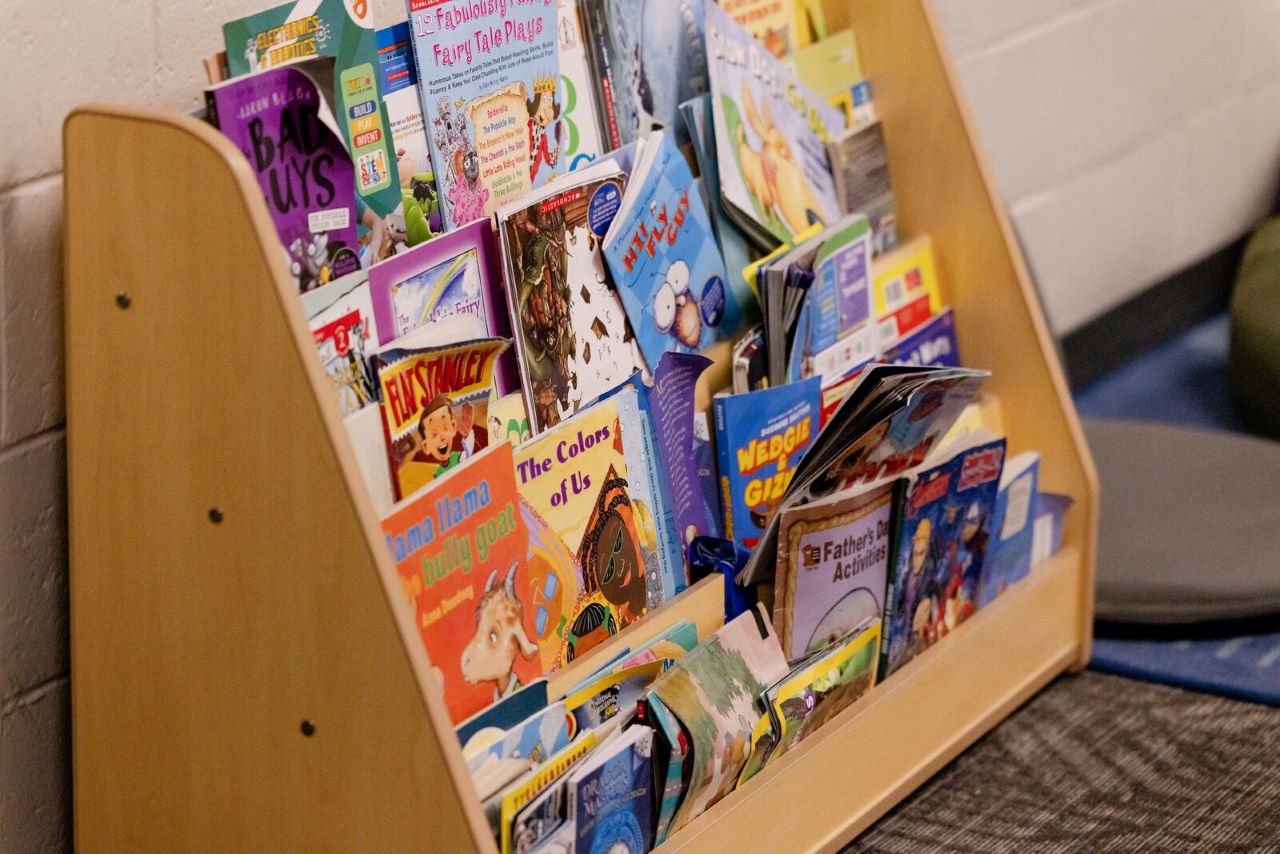
Little Libraries are small, free book-sharing boxes that allow community members to “take a book, share a book.” Their aim is to increase access to reading materials, encourage family engagement, and promote a love of reading.

For early learning programs, a Little Library can be an additional way to support early literacy while reinforcing the program’s role as a trusted community leader and resource.

While placement of the Little Library is up to each recipient, OCDEL encourages locations that allow for public access to maximize community impact. This could include placement near a program entrance, along a sidewalk, or in another visible, welcoming space.

Programs that receive a Little Library will be responsible for maintaining and restocking books over time. To help each program, OCDEL will provide the first nine books. In addition, the first 500 programs to submit a request will also receive a copy of the previous PA One Book selection.

Those interested in adding a Little Library to their program can do so online. To prepare to set up a Little Library, visit the Pennsylvania Key’s website for tips and additional resources.

News

February 3, 2026

Shapiro Announces Additional $10M for Child Care Workforce in Proposed 2026-27 Budget

Governor Josh Shapiro announced on Tuesday during a speech before the General Assembly in Harrisburg that he is seeking an additional $10 million in his 2026-27 budget for the child care workforce.

The principal partners of Early Learning Pennsylvania – a statewide coalition of advocates focused on supporting children from birth to age 5 – praised Shapiro’s budget proposal for its focus on children and early education workforce investments, while highlighting the need for additional support in areas such as infant and toddler Early Intervention and home visiting.

Learn More

Shapiro said the additional $10 million would bring the total investment to $35 million for the recurring Child Recruitment and Retention Program. The governor said the investment aims to stabilize and grow the child care workforce amid an ongoing teacher shortage.

“We need more early childhood educators and pre-k teachers – kind, gentle souls who want to get our kids started on the right path, but who have been paid too little for too long,” Shapiro said. “This budget delivers for them.”

Trying Together’s Executive Director Cara Ciminillo lauded this increased investment, saying, “I am pleased to see Governor Shapiro continue to prioritize the child care workforce in his proposed budget. This additional funding demonstrates to educators that their work is vital, valued, and worth investing in.”

The proposed budget also includes an additional $7.5 million for Pre-K Counts and $2 million for Head Start State Supplemental to help providers raise wages and retain staff. Shapiro said he is also calling for an additional $2.5 million for teacher professional development to ensure that educators have the training and tools needed to support students.

In a statement, Start Strong PA praised Shapiro’s budget proposal.

“Child care is an economic development strategy, workforce participation strategy, and education success strategy,” the statement read. “These investments will encourage teachers to remain in the field, allowing more parents to work, prepare more Pennsylvania children for school, and build a stronger and more prosperous commonwealth.”

However, Start Strong PA noted that the reduction in funding of $5.2 million for the infant and toddler Early Intervention program in the Department of Human Services’ budget failed to  recognize needed investments in those areas.

“Early Intervention is a critical and federally-required component of the early care and education continuum, as all children from birth through age 5 with developmental delays, regardless of family income level, must be identified, referred to, and provided necessary services to help them and their families reach their fullest potential,” Start Strong PA’s statement read. “The cut to infant and toddler Early Intervention in the Department of Human Services’ budget is deeply concerning. The reduction of funding will negatively impact the ability to adequately deliver services to more children in Pennsylvania.”

Start Strong PA also noted that stagnant funding reduces home visiting services for pregnant women and families with young children.

To read the governor’s full budget address, visit the governor’s office pressroom website.

Take Action – Thank Governor Shapiro for Prioritizing the ECE Workforce!

Start Strong PA has issued a new action alert encouraging people to send a message to Governor Shapiro thanking him for prioritizing the ECE workforce. See action alert.

News

December 17, 2025

Child Care Programs Still Recovering from Budget Impasse, Advocates Optimistic About New Investments

Some early childhood education centers are still recovering from the months-long state budget impasse, despite additional child care investments in the 2025-26 budget that Governor Josh Shapiro signed into law last month, according to a new report by the West Hills Gazette.

Several long-time partners of Trying Together discussed with the Gazette how they were forced to dip into their reserves during the impasse and how getting a $25 million early childhood education retention and recruitment line item in the budget is a great start for alleviating teacher shortages.

Presbyterian Day School

Mary Merryman, director of Coraopolis’ Presbyterian Day School, said that low wages in the early childhood education profession has made it challenging to find teachers and resulted in a shortage of child care centers. 

Merryman, an alum of Trying Together’s advocacy fellowship, said that Coraopolis is a “child care desert,” meaning there are not enough centers or programs to support the number of children under age 5 in the area.

Merryman, who has traveled to Harrisburg to advocate for early childhood education, said the state budget’s $25 million line item is a good start to combatting the shortages.

“That will definitely help,” she told the Gazette. “If we can retain teachers, we can offer more services to families.”

Riverview Children’s Center

Stephanie Heakins, director of Riverview Children’s Center in Verona, said she took over the reins at the center in the middle of the impasse. Earlier this month, Shapiro and Lieutenant Governor Austin Davis dropped by the center to discuss the recently-passed child care investments in the 2025-26 budget. Riverview has been a long-time partner of Trying Together and has a history of advocacy work.

Heakins told the Gazette that loans were not an option during the impasse because paying interest on them was “not feasible,” while laying off teachers was also not possible because she knew the center would never get them back.

Riverview receives about $55,000 per month from the state for its Pre-K Counts program, which provides free pre-kindergarten classes to low-income families, the Gazette reported. More than 50 students are currently enrolled and there is a waitlist.

Because Pre-K Counts and Head Start – which Riverview does not offer – did not receive state dollars during the impasse, programs like Riverview were forced to dip into their reserve funds.

“(The impasse) was a big thing, but now we are hoping we can get back on track and start planning for the future,” Heakins told the Gazette.

Data

According to PA Partnerships for Children, there were about 3,000 open staffing positions in the child care workforce, with an average salary of $29,480, as of September 2024. Kindergarten teachers, on the other hand, make an average $67,670.

The 2025-26 budget’s $25 million Child Care Staff Recruitment and Retention Program would provide about $450 annually to employed licensed Child Care Works providers. The bonuses would support approximately 55,000 child care workers.

News

November 18, 2025

PA Head Start Report Finds Children Experiencing Homelessness on the Rise

The Pennsylvania Head Start Collaboration Office has released a new report that found a 4% increase in homelessness for children from birth through kindergarten over a period of a year.

Learn More

According to the report, nearly 11,000 Pennsylvania children – from birth to kindergarten age – were identified to be experiencing homelessness during the 2023-24 school year. This represents a 4% increase over one year and a 13% increase over five years.

The largest increase in the report was for pre-school-aged children, with a 3% increase in children identified over one year, and a 32% increase over five years.

Although infants and toddlers accounted for 34% of the 10,601 children identified in 2023-24, this represented a negligible difference over the past year but a 6% decrease over five years.

However, in a section of the report titled “The Good News,” it mentioned that the number of children identified as experiencing homelessness increased in part because the education system has become more effective in identifying children experiencing homelessness since 2016 due to improved coordination with multiple human service systems at the county level and an infusion of resources from the American Rescue Plan that were not available prior to 2021.

Additionally, statewide collaboration expanded through the Pennsylvania Office of Child Development and Early Learning’s (OCDEL) McKinney-Vento Advisory Group, which likely contributed to the 32% increase in the identification of pre-schoolers and a 15% increase in their enrollment in prekindergarten programs over this five-year period.w

The report is the first installment in a series designed to inform state and local practitioners and policymakers about young children identified as experiencing homelessness in Pennsylvania.

The entire report is available on The Pennsylvania Key’s website.

News

October 7, 2025

Treasurer Announces Short-Term Funding Relief for Pre-K Counts Programs, Head Start Providers

The Pennsylvania Treasury Department’s Budget Bridge Loan program will now accept applications from Pre-K Counts programs and organizations that provide rape prevention and response services as well as domestic violence prevention and support services for survivors, state Treasurer Stacy Garrity announced this week.

Learn More

Eligible organizations must use the Budget Bridge Loan for immediate operating expenses as indicated by the loan agreement. Funds will be received shortly after an application is approved.

In late September, Garrity announced $500 million in Budget Bridge Loans for Head Start providers and county governments to help support vital human services. Treasury expects to be able to expand the program to Pre-K Counts and rape and domestic violence prevention programs without increasing the original program amount.

The Treasury Department will reach out directly to Head Start programs and county governments. Those who enter into a loan agreement will be required to pay back the initial investment along with a 4.5% annual interest rate within 15 days of state funds being released following the enactment of a state budget for Fiscal Year 2025-26. Providers eligible to apply for the loans will receive communication directly from the Treasurer’s Office with instructions on how to apply.

“The response to Treasury’s short-term funding solution has been positive, and I’m pleased to be able to expand this program to include organizations that provide critical services to more children and also to survivors of rape and assault,” Garrity said. “I’m using the tools available as state treasurer to make sure critical services can continue without interruption. These loans are a lifeline.”

For more information, read the Treasury Department’s announcement on the loan program.

While we continue to advocate for a final budget with early childhood investments, this is welcome relief for Pre-K Counts and Head Start programs. 

News

September 29, 2025

Resources for October Observances

Various organizations, states, and nations recognize a number of observances each month. Resources help parents, caregivers, and child care professionals acknowledge and navigate them.

Here is a list of resources for October observances.

Week-Long Observances

  • Anti-Poverty Week (Oct. 12 to Oct. 18)

  • Baby Loss Awareness Week (Oct. 9 to Oct. 15)

  • Fire Prevention Week (Oct. 5 to Oct. 11)

  • Mental Illness Awareness Week (Oct. 5 to Oct. 11)

  • National Friends of Libraries Week (Oct. 19 to Oct. 25)

  • National School Bus Safety Week (Oct. 20 to Oct. 24)

Month-Long Observances

HEAD START AWARENESS MONTH

DYSLEXIA AWARENESS MONTH

NATIONAL BOOK MONTH

Days of Recognition

• OCTOBER 3: KIDS MUSIC DAY

• OCTOBER 4: NATIONAL PLAY OUTSIDE DAY

• OCTOBER 5: WORLD TEACHER’S DAY

• OCTOBER 6: NATIONAL CHILD HEALTH DAY

• OCTOBER 8: NATIONAL WALK TO SCHOOL DAY

• OCTOBER 10: WORLD MENTAL HEALTH DAY

• OCTOBER 11: NATIONAL COMING OUT DAY

• OCTOBER 13: INDIGENOUS PEOPLES’ DAY

• OCTOBER 19: NATIONAL NEW FRIENDS DAY

• OCTOBER 20: NATIONAL YOUTH CONFIDENCE DAY

• OCTOBER 28: NATIONAL IMMIGRANTS DAY

• OCTOBER 29 : INTERNATIONAL DAY OF CARE AND SUPPORT

News

July 29, 2025

Former PA Governors Tout Importance of Pre-K in Op Ed

Five former Pennsylvania governors wrote an op ed that was published this week on Penn Live that extols the virtues of pre-k.

Learn More

Former governors Tom Ridge, Mark Schweiker, Ed Rendell, Tom Corbett, and Tom Wolf wrote the editorial, which was published on Penn Live on July 29.

In the editorial, the governors wrote that for years meaningful steps have been taken to grow access to Head Start and Pre-K Counts, and that votes to do so typically crossed party lines. The editorial notes that to let that progress slip away would be a major mistake.

“Research has long shown the importance of investing in high-quality pre-k education for young children to improve short- and long-term outcomes in academic achievement and even lifelong success,” the governors wrote. “This is especially true for children in low-income families, children of color, and others facing barriers to achieving academic success throughout their school years.”

The governors cite a poll that found that 98% of Pennsylvanians believe that early childhood education is important to help children lead healthy and productive lives. An additional 73% support increasing state funding, so more children can have access to pre-k.

“Pennsylvanians should be proud of how far our commonwealth has come in providing pre-k to our youngest learners with more than 66,000 three- and four-year-olds having access,” the governors wrote. “However, this represents only 44% of eligible children, leaving almost 85,000 children on the sidelines each year.”

The entire editorial can be read on Penn Live’s website.