News

May 29, 2020

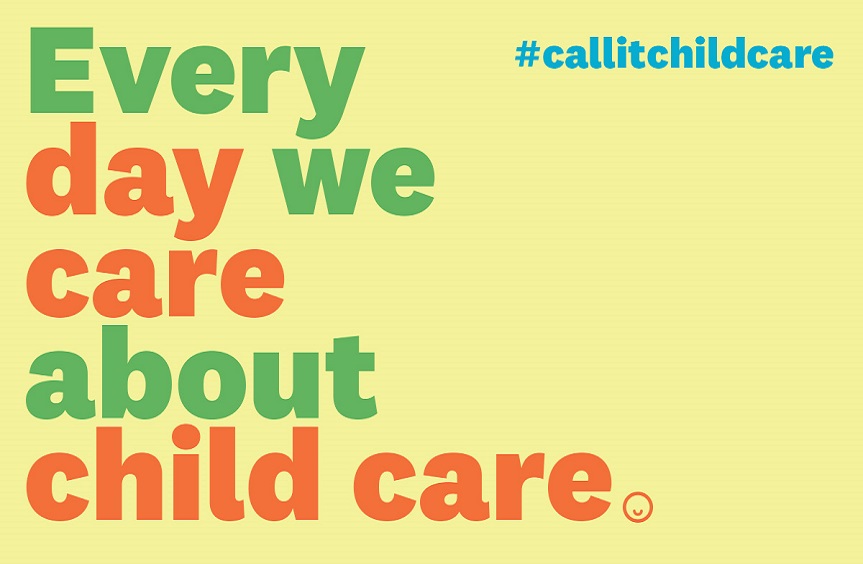
Call It Child Care

Child care supports children’s healthy development and a lifetime of learning.

That’s why we call it child care.

In June 2018, the Pennsylvania state legislature passed House Bill 1677 to update Pennsylvania’s regulations and code to use the term “child care” rather than “day care” to reflect the work of early learning programs more accurately.

Trying Together worked closely with the bill’s prime sponsor, Representative Jason Ortitay, who represents Allegheny and Washington counties. Thanks to advocates like you, and Rep. Ortitay’s persistence, HB 1677 passed and was signed by the Governor.

Why Call It Child Care?

Trying Together recognizes that shifting commonly used language can be difficult. However, by using the term “child care” instead of “day care,” you recognize that:

1. The impact of child care is much longer than a day.

    • Early childhood programs support lifelong success for children and families. Research has shown that high-quality child care builds a strong foundation from which children grow and thrive.
    • By having access to early care and education programming, families experience multi-generational benefits, with young children achieving higher test scores and graduation rates, committing fewer crimes, and earning higher wages, to name a few.
    • Caregivers are able to reenter the workforce, increasing the financial stability of the family and the long-term professional success of the caregiver.

2. The words we use matter.

    • The words we use affect the public’s perception of the early care and education field and affect the field’s own accountability in providing high-quality care.
    • Using “child care” rather than “day care” recognizes the important work of these professionals, in addition to the work children put in to learn, develop, and grow.
    • Accurate language is critical to gaining respect, validation, and investments in currently under-resourced systems.

3. “Child care” acknowledges the complexity of high-quality early care and education programs.

    • High-quality child care programs employ, develop, and retain educated credentialed staff.
    • Child care professionals use a curriculum, lesson plans, and family engagement activities to promote the cognitive, social, emotional, and physical development of the children they serve.

How You Can Help

Please join us in the coming months as an advocate for the “Call It Child Care” initiative.

If you’re an early care and education professional, use the term “child care” when speaking about your work and update your materials as needed. If you’re a family or community member, embrace the term “child care” and use it when referencing your child’s program!

DIGITAL RESOURCE TOOLKIT

Interested in doing more? Use our digital resource toolkit to advocate for “Call It Child Care” today!

Watch This Video

Learn More

To learn more about the initiative, visit our Call It Child Care page.
News

May 27, 2020

Developmentally Appropriate Parenting Series

Creating high-quality learning experiences at the earliest stages of your child’s life

As an early childhood nonprofit, Trying Together recognizes that a child’s parent is their first and most important caregiver.

From the moment a caregiver meets their child, whether that is through birth, adoption, fostering, or guardianship, parents use their instincts and experiences to guide their personal caregiving style. Caregivers’ perspectives are valuable and can be especially powerful in supporting children’s long-term success when paired with research and science on the way that children learn and develop.

Evidence-based research shows that children’s brains develop rapidly from zero to age five. Through consistent and caring daily interactions with their children, parents and other caregivers are able to build healthy relationships with and best support the early development and learning of their children. When children grow up in safe environments with engaged, supportive caregivers, the positive effects are felt throughout their lifetime. But where do caregivers go to find information and resources that help them do this?

Through the family resource series Developmentally Appropriate Parenting, Trying Together assists parents and caregivers like you in creating high-quality learning experiences at the earliest stages of your child’s life.

About the Series

Developmentally Appropriate Parenting is a family resource content series developed by Trying Together as an effort to empower caregivers to create high-quality experiences at the earliest stages of their child’s life. To do this, we are developing digital and print content for families that covers critical early childhood topics.

To stay up-to-date on available materials, sign up to receive our newsletter.

Featured Content

Use the list below to navigate through each series topic:

Request free printed materials from our Developmentally Appropriate Parenting Series.

Available Languages

Caregivers viewing our online resources can use the “Select Language” button in the top right corner of the screen to access the information in their native language.

Printed Materials

Request free printed materials from our Developmentally Appropriate Parenting Series. Printed materials are available in English and Spanish.

More Information

For questions about the Developmentally Appropriate Parenting series, email Trying Together at: info@tryingtogether.org.


News

April 23, 2020

Support Resources for Families

Organizations and tools that offer support.

Trying Together

Trying Together supports high-quality care and education for young children by providing advocacy, community resources, and professional growth opportunities for the needs and rights of children, their families, and the individuals who interact with them. Visit the Trying Together website to view all of our available resources.

Featured Resources

Allegheny Child Care

In partnership with the Allegheny County Department of Human Services and Allegheny Partners for Out-of-School-Time (APOST), Trying Together developed Allegheny Child Care. By using this online tool, parents and caregivers of young children can search for available child care spots at early learning, after-school, out-of-school, summer camp, and virtual programs in Allegheny County.

To use the tool, visit the Allegheny Child Care website. For additional support in finding child care and/or funding your child care needs, visit the ELRC Region 5 website or call 412.350.3577.

Early Learning Resource Centers (ELRCs)

Pennsylvania’s Early Learning Resource Centers (ELRCs) provide a single point-of-contact for families, early learning service providers, and communities to gain information and access services that support high-quality child care and early learning programs.

To request support and learn more, visit the ELRC Region 5 website or call 412.350.3577.

Services

    • Provides assistance in understanding, identifying, and enrolling in high-quality child care.
    • Provides assistance in enrolling to receive public benefits through COMPASS (SNAP, CHIP, Medical Assistance, etc.).
    • Provides information about Family Support Centers.
    • Connects caregivers to an appropriate home visiting program, including Early Head Start (EHS).

United Way of Southwestern Pennsylvania

United Way fights for the health, education, financial stability, and basic needs of everyone in Southwestern Pennsylvania communities. If your family is struggling to access food, pay bills, or needs access to health and human services, contact 2-1-1 via phone, text your zip code to 898-11, or search their service database.

Services

    • Connects individuals to Rent Payment Assistance, Utility Assistance, Housing Search Assistance, Transportation Expense Assistance, and more.
    • Connects individuals to food pantries, soup kitchens, SNAP, general clothing provision, diaper assistance, and more.
    • Connects individuals to homeless shelters, community shelters, homelessness prevention programs, and more.

COMPASS

COMPASS is an online platform managed by the Pennsylvania Department of Human Services (PA DHS) to provides community members access to many of Pennsylvania’s health and human services benefits, allowing them to learn about benefits, see if they qualify, apply for benefits, and more. To learn more, visit the COMPASS website. If you are a caregiver who is searching for child care and other early learning programs, visit their program search page.

Services

    • Helps families and caregivers identify and access early learning programs in their area.
    • Allows community members to complete one application for multiple benefits, such as SNAP, CHIP, Cash Assistance, Free or Reduced Price School Meals, Child Care Works, Medical Assistance, and more.
    • Sends applications to the appropriate agency for review.

The Alliance for Infants and Toddlers

The Alliance for Infants and Toddlers is the Service Coordination unit for families of children receiving  Early Intervention services (birth to three years of age) in Allegheny County. If you are concerned about your child’s development or would like to know more about Early Intervention services, contact the Alliance at 412.-885.6000 or fill out this contact form. Eligibility criteria apply.

Services

    • Provides parent education and support, including identification and referral to community resources.
    • Provides monitor services in areas such as movement, language and communication, social and play skills, problem solving, and self-help.
    • Assists your child and family in transitioning to appropriate services at age three, including Department of Education funded pre-kindergarten programs.


News

Developmentally Appropriate Parenting Series: Part III

Child Care

About

When children have access to high-quality child care, caregivers know that their children are learning in a safe, supportive environment with early learning professionals. However, due to limited slots and increasing costs, many caregivers in Pennsylvania have had a difficult time accessing high-quality programs, especially during the COVID-19 pandemic.

To assist families in their search, Trying Together developed family resource content that will explore how to identify, access, and afford high-quality child care.


Featured Resources

How to Find, Choose, and Pay for Child Care

Finding an early learning program that meets your family’s needs can be difficult. That’s why Trying Together created our resource How to Find, Choose, and Pay for High-Quality Child Care to assist parents and caregivers in this process.

Affording High-Quality Child Care

Found high-quality child care but wondering how to pay for it? Read this post to learn about subsidy and supplemental payment programs.

What Types of Child Care Are Available?

Did you know that there are several types of early childhood education and care programs that you can enroll your child into? To find a program type that works best for your family, check out this post.

Call It Child Care

Child care supports children’s healthy development and a lifetime of learning. That’s why we call it child care. To learn more about the Call It Child Care initiative, visit this post.


Find Child Care

If your family is in immediate need of child care, access the resources below to identify early learning programs near you.

Early Learning Resource Center (ELRC) Region 5

ELRC Region 5 acts as a single point-of-contact for Allegheny County families, early learning service providers, and communities to provide information and access to services that support high-quality child care and early learning programs. For more information, call 1.888.340.3572 or visit the ELRC website.

Allegheny Child Care

Allegheny Child Care is a digital search tool that was developed to support the care and education needs of families. Parents and caregivers can now search for real-time available child care, pre-k, after-school, summer camp, and virtual spots at programs in Allegheny County. Visit our Find Child Care page to learn more and start your search.

Family Care & Education Forum

The Family Care & Education Forum is an online community where parents and caregivers can engage in conversation with one another, post questions, respond to comments, and learn more about care and education opportunities in their area. To sign up, visit the Family Care & Education Forum page.

Pennsylvania Department of Human Services

The Pennsylvania Department of Human Services created an online Child Care and Other Early Learning Program search tool to expedite caregiver’s search for child care that meets their needs. Visit the COMPASS website to learn more and start your search.


More Information

To stay up-to-date on available resources, follow Trying Together on Facebook and Twitter or sign up to receive our newsletter.


News

April 10, 2020

Affording High-Quality Child Care


You found quality care. Now what?

You found a high-quality child care program and are ready to enroll your child, but how do you pay for it? Do you qualify for publicly-funded programs? Learn more about qualifying for subsidy and supplemental payment programs available for families below:


Federal Poverty Guidelines 2020
Persons in
Household
100% 200% 300%
1 $12,760 $25,520 $38,280
2 $17,240 $34,480 $51,720
3 $21,720 $43,440 $65,160
4 $26,200 $52,400 $78,600
5 $30,680 $61,360 $92,040
6 $35,160 $70,320 $105,480
7 $39,640 $79,280 $118,920
8 $44,120 $88,240 $132,360


Pre-K Counts

Pennsylvania Pre-K Counts provides high-quality pre-kindergarten services to three- and four-year-old children at no cost to families.

Eligibility

To be eligible, children must live in families that earn no more than 300 percent of the federal poverty level (see above). If eligible, Pre-K Counts is offered in school districts, Keystone STARS 3 and 4 child care programs, Head Start programs, and licensed nursery schools.

Application

To learn if you’re eligible and to apply, visit the COMPASS website or contact your local Early Learning Resource Center (ELRC).

Child Care Works

The Child Care Works subsidized child care program helps low-income families pay their child care fees and is managed by the Early Learning Resource Center (ELRC) office located in your county.

Eligibility

To be eligible, families must earn no more than 200 percent of the federal poverty level (see above); meet work or education requirements; and meet other eligibility requirements. If eligible, your local ELRC will provide a child care subsidy that will pay a portion of your child care cost. Families will be held liable for the remaining cost, which is referred to as a “family co-pay.” Both the subsidy payment and the family co-pay will go directly to the child care program.

Application

To learn if you’re eligible and to apply, contact your local ELRC.

Head Start

Head Start is primarily a federally-funded program that provides education, health, and social services to families with children ages three, four, or five. Head Start programs help children develop academic and social skills that prepare them for school and life. While enrolled in a high-quality Head Start pre-kindergarten program, children receive nutrition, health, and other supports that help them grow mentally, physically, and socially. Families are also offered support to help them obtain services for a variety of needs, including employment and housing.

Eligibility

To be eligible, families must earn no more than 100 percent of the federal poverty level (see above). If eligible, the pre-kindergarten program will be available for free. Due to limited funding, Pennsylvania Head Start only provides services to a limited number of children and families. However, a waiting list is available if all spots are filled.

Application

To learn if you’re eligible and to apply, contact your local Head Start program or Early Learning Resource Center (ELRC).

Early Head Start

Early Head Start serves pregnant women and families with children from birth to age three. Operating similarly to Head Start, Early Head Start works to ensure that every child receives high-quality services that help them grow physically, academically, and socially and that families obtain needed services to help them become self-sufficient. The program may be offered as center-based or home-based services and is free.

Eligibility

To be eligible, families must earn no more than 100 percent of the federal poverty level (see above). Due to limited funding, Pennsylvania Early Head Start only provides services to a limited number of children and families. However, a waiting list is available if all spots are filled.

Application

To learn if you’re eligible and to apply, contact your local Head Start program or Early Learning Resource Center (ELRC).

More Information

Even if you do not qualify at the levels listed above, many programs offer their own independent scholarships or tuition assistance programs. Ask each program you are considering financial assistance. For more information, contact your local ELRC. If you live in Allegheny County, contact ELRC Region 5 at 412.350.3575 for more information.

Information provided by the Pennsylvania Department of Human Services