News

June 15, 2020

Developmentally Appropriate Practice: A Guide for Caregivers of Infants and Toddlers

About

At the earliest stages of your child’s life, it may seem like they can’t do too much. But that’s not true! Infants and toddlers are always learning and developing. To learn how you can support the early development of your young child, read the facts and opportunities highlighted below.

What is Developmentally Appropriate Practice?

Developmentally Appropriate Practice (DAP) is the approach early care and education professionals use to teach young children. Developmentally Appropriate Practice:

    • is grounded in research on how young children learn;
    • provides a connection to real-world experiences and opportunities to gain knowledge and skills through hands-on learning;
    • prepares children for future learning; and
    • acknowledges the role of play in learning and development.

Facts and Opportunities

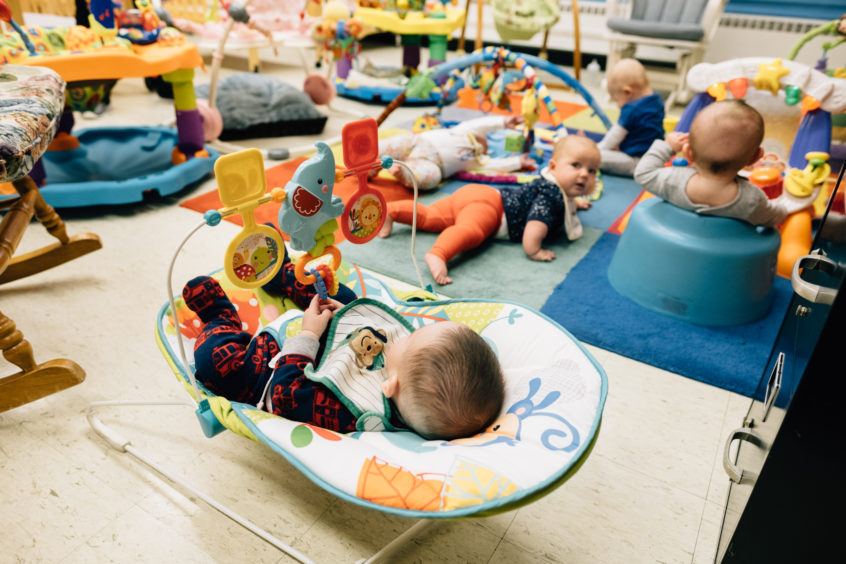
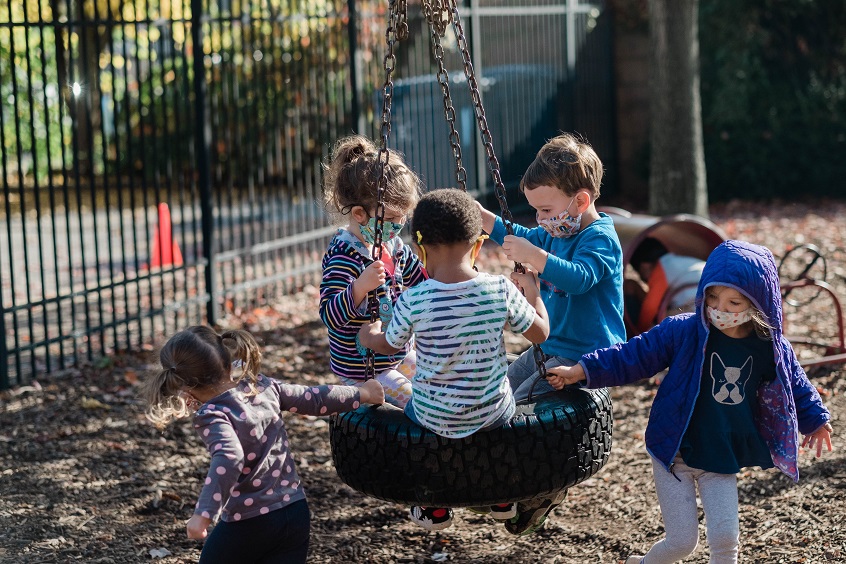
FACT: All children, including babies, learn through play. Play is an important way that young children bond with their caregivers; develop cognitive, physical, social, and emotional skills; and build an understanding of the world around them.

    • Regularly touching, talking, and responding to your child’s sounds and needs will solidify the bond between you and your child. Look your baby in the eyes, sing songs to them, and interact with them regularly through play activities.
    • A simple game of peekaboo not only leaves your baby giggling and smiling, but it also provides a chance for children to make eye contact with their caregiver; practice their arm and head movements; and learn that even if a person or object disappears from their view, it still exists somewhere else.

FACT: Starting from birth, meaningful play experiences help your child build background knowledge, imagination, and rational thought that enables academic skill development. In fact, play is the primary way your child uses language and math concepts.

    • As an infant or toddler, your child is taking in new sights, sounds, smells, and sensations. Broaden your child’s horizon by taking a stroll through nature, narrating what you see, smell, hear, and feel during the journey. This will expose your baby to new vocabulary through a positive outdoor experience.
    • Support your child’s ability to make choices that interest them as a way to guide their math and literacy skills. Start by providing multiple book and activity options to your child and let them choose the one they are interested in.
    • Find a playful way to introduce math concepts. For example, you can use healthy food items like apple slices, grapes, or raisins to introduce concepts of adding, subtracting, and grouping during snack time. Use words like more, less, first, after, rectangle, circle, heavier, and other common math terms.

FACT: In addition to learning skills like counting and speaking in sentences, it’s important for children to practice social, emotional, and physical skills that support their future success inside and outside of the classroom.

    • With supervision, give your baby their own spoon at mealtime or give them a child-safe bowl and spoon to play with. You can also give your baby blocks and balls to strengthen their grip, practice their holding skills, and improve dexterity.
    • Be expressive with your face and make eye contact with your child. This will teach them different social expressions that help with non-verbal communication. Use your eyes and hands to point to something to teach the child how to follow other people’s cues. You can also introduce your child to the names of emotions during this time.
    • Encourage social skill development by providing opportunities for your child to meet and play with family members, friends, and caregivers. This allows children to develop relationships with people other than the parent or primary caregiver and helps build feelings of trust.

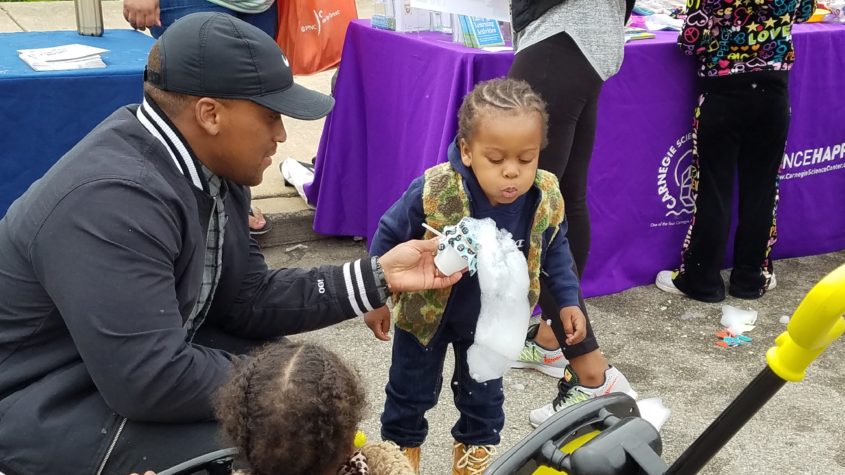
FACT: While caregiver-child play is important, unsupervised child-led play helps children become independent and make decisions.

    • Provide opportunities for your child to practice sharing, teamwork, creativity, and independence by inviting other children over for a playdate (when possible). Gather a box of household items like clothes, child-safe dishes, books, and more and let the children determine how they will use them.
    • Introduce your child to new items and materials. Let them touch the items and work to figure out what they do and how they work. If your child is expressing frustration, provide them with a quick demonstration or how-to. After that, let your child take the lead and try it out themselves.
    • Include times throughout the day where your child must direct their own play. In a safe environment (preferably a location with a baby monitor), leave your child unattended with child-safe play items for a short period of time. Monitor how your child handles the situation and if they play with the items. Each time you leave, stay away for a bit longer to encourage the development of self-regulation skills.

Print this Resource

To learn more and view the full guide, view the free printable PDF of this resource (English) (Español). Additional information is available. To learn more, please visit our Developmentally Appropriate Practice: A Guide for Parents page.

 

News

Developmentally Appropriate Practice: A Guide for Parents

About

Early childhood is an important time when children experience rapid development, learn important skills, and learn more about the world around them. To learn how you can support the early development of your child, read the facts and opportunities provided below.

What is Developmentally Appropriate Practice?

Developmentally Appropriate Practice (DAP) is the approach early care and education professionals use to teach young children. Developmentally Appropriate Practice:

    • is grounded in research on how young children learn;
    • provides connection to real-world experiences and opportunities to gain knowledge and skills through hands-on learning;
    • prepares children for future learning; and
    • acknowledges the role of play in learning and development.

Facts and Opportunities

FACT: Meaningful play experiences help your child build background knowledge, imagination, and rational thought that enables academic skill development. Consider:

    • Playing with your child in a water table helps them understand math concepts like shapes and measurements, as well as science concepts like float, sink, and waves.
    • Asking your child questions about observed activities, encouraging experimentation, and helping them understand cause and effect relationships during play.
    • Including playful elements like using reusable materials to create their own inventions.

FACT: Play is the primary way your child uses language and math concepts. Consider:

    • Allowing your child to construct stories during imaginative play will later become the foundation for creative writing.
    • Helping your child recreate elements of familiar books during play, demonstrating the understanding of characters, emotions, and empathy.
    • Supporting your child to make choices that interest them as a way to guide their math and literacy skills.
    • Asking what strategies your child’s teacher uses for reading instruction.
    • Asking if worksheet and book activities are made playful.

FACT: Dramatic play helps your child develop executive functioning and the ability to self-regulate. Consider:

    • During dramatic play, take turns with your child contributing ideas into imagined scenarios.
    • Providing your child with opportunities to make choices in their learning.

FACT: Physical movement—including the freedom to play—helps your child improve his/ her behavior and attention. Consider:

    • Asking your child’s teacher if physical activity is part of the classroom routine.

Print this Resource

To learn more and view the full guide, view the free printable PDF of this resource (English) (Español). Additional information is available for parents and caregivers of infants and toddlers. To learn more, visit our Developmentally Appropriate Practice: A Guide for Caregivers of Infants and Toddlers page.


News

Tummy Time: an Important Child Developmental Milestone, TELI

About

Tummy time helps to build a foundation for other skills as an infant develops proper alignment of the spine and the postural control needed for sitting, crawling, and walking. It’s also an opportunity to practice visual tracking, which is when your child moves their eyes in a coordinated manner as they turn their head.

In their resource “Tummy Time: An Important Child Development Milestone,” the Early Learning Institute (TELI) provides more information about tummy time and highlights opportunities for parents to support.

Learn More

To learn more, visit the Early Learning Institute website.


News

May 29, 2020

Call It Child Care

Child care supports children’s healthy development and a lifetime of learning.

That’s why we call it child care.

In June 2018, the Pennsylvania state legislature passed House Bill 1677 to update Pennsylvania’s regulations and code to use the term “child care” rather than “day care” to reflect the work of early learning programs more accurately.

Trying Together worked closely with the bill’s prime sponsor, Representative Jason Ortitay, who represents Allegheny and Washington counties. Thanks to advocates like you, and Rep. Ortitay’s persistence, HB 1677 passed and was signed by the Governor.

Why Call It Child Care?

Trying Together recognizes that shifting commonly used language can be difficult. However, by using the term “child care” instead of “day care,” you recognize that:

1. The impact of child care is much longer than a day.

    • Early childhood programs support lifelong success for children and families. Research has shown that high-quality child care builds a strong foundation from which children grow and thrive.
    • By having access to early care and education programming, families experience multi-generational benefits, with young children achieving higher test scores and graduation rates, committing fewer crimes, and earning higher wages, to name a few.
    • Caregivers are able to reenter the workforce, increasing the financial stability of the family and the long-term professional success of the caregiver.

2. The words we use matter.

    • The words we use affect the public’s perception of the early care and education field and affect the field’s own accountability in providing high-quality care.
    • Using “child care” rather than “day care” recognizes the important work of these professionals, in addition to the work children put in to learn, develop, and grow.
    • Accurate language is critical to gaining respect, validation, and investments in currently under-resourced systems.

3. “Child care” acknowledges the complexity of high-quality early care and education programs.

    • High-quality child care programs employ, develop, and retain educated credentialed staff.
    • Child care professionals use a curriculum, lesson plans, and family engagement activities to promote the cognitive, social, emotional, and physical development of the children they serve.

How You Can Help

Please join us in the coming months as an advocate for the “Call It Child Care” initiative.

If you’re an early care and education professional, use the term “child care” when speaking about your work and update your materials as needed. If you’re a family or community member, embrace the term “child care” and use it when referencing your child’s program!

DIGITAL RESOURCE TOOLKIT

Interested in doing more? Use our digital resource toolkit to advocate for “Call It Child Care” today!

Watch This Video

Learn More

To learn more about the initiative, visit our Call It Child Care page.

News

Early Learning: Myths vs. Facts

Did you know that 90 percent of the brain is developed by the age of five?

It is common knowledge that early childhood is an important period of each person’s life where children learn lifelong skills such as counting, reading, and writing. Although the brain continues to develop and change into adulthood, the first eight years of a child’s life build the foundation for future learning, development, and success.

However, there are many misconceptions about early learning, especially when it comes to what early learning looks like. To learn more, read through the following myths and facts.

Early Learning Myths

Myth 1:

Play is something that professionals and caregivers use to fill time. There aren’t any benefits to play, but children enjoy it.

Myth 2:

Academic skills are the most important element of early learning. At home and in early childhood programs, young children should be focusing on learning letters, shapes, and numbers.

Myth 3:

For it to be beneficial, play has to have a purpose. It would be best if a parent or educator guided the child through play and supervised the entire session.

Myth 4:

You should wait until your child is a bit older to start playing. Babies aren’t old enough to play.

Early Learning Facts

Fact 1:

Meaningful play experiences help your child build background knowledge, imagination, and rational thought that enables academic skill development. In fact, play is the primary way your child uses language and math concepts.

Fact 2:

In addition to learning academic skills, early childhood programs focus heavily on practicing social, emotional, and physical skills that support children’s success in and out of the classroom.

Fact 3:

While caregiver-child play is important, unsupervised child-led play helps children become independent and make decisions.

Fact 4:

Babies love to play and it’s a great way to bond! Even a simple game of peekaboo can leave your baby giggling and smiling.


News

May 27, 2020

Developmentally Appropriate Parenting Series

Creating high-quality learning experiences at the earliest stages of your child’s life

As an early childhood nonprofit, Trying Together recognizes that a child’s parent is their first and most important caregiver.

From the moment a caregiver meets their child, whether that is through birth, adoption, fostering, or guardianship, parents use their instincts and experiences to guide their personal caregiving style. Caregivers’ perspectives are valuable and can be especially powerful in supporting children’s long-term success when paired with research and science on the way that children learn and develop.

Evidence-based research shows that children’s brains develop rapidly from zero to age five. Through consistent and caring daily interactions with their children, parents and other caregivers are able to build healthy relationships with and best support the early development and learning of their children. When children grow up in safe environments with engaged, supportive caregivers, the positive effects are felt throughout their lifetime. But where do caregivers go to find information and resources that help them do this?

Through the family resource series Developmentally Appropriate Parenting, Trying Together assists parents and caregivers like you in creating high-quality learning experiences at the earliest stages of your child’s life.

About the Series

Developmentally Appropriate Parenting is a family resource content series developed by Trying Together as an effort to empower caregivers to create high-quality experiences at the earliest stages of their child’s life. To do this, we are developing digital and print content for families that covers critical early childhood topics.

To stay up-to-date on available materials, sign up to receive our newsletter.

Featured Content

Use the list below to navigate through each series topic:

Request free printed materials from our Developmentally Appropriate Parenting Series.

Available Languages

Caregivers viewing our online resources can use the “Select Language” button in the top right corner of the screen to access the information in their native language.

Printed Materials

Request free printed materials from our Developmentally Appropriate Parenting Series. Printed materials are available in English and Spanish.

More Information

For questions about the Developmentally Appropriate Parenting series, email Trying Together at: info@tryingtogether.org.


News

April 23, 2020

Support Resources for Families

Organizations and tools that offer support.

Trying Together

Trying Together supports high-quality care and education for young children by providing advocacy, community resources, and professional growth opportunities for the needs and rights of children, their families, and the individuals who interact with them. Visit the Trying Together website to view all of our available resources.

Featured Resources

Allegheny Child Care

In partnership with the Allegheny County Department of Human Services and Allegheny Partners for Out-of-School-Time (APOST), Trying Together developed Allegheny Child Care. By using this online tool, parents and caregivers of young children can search for available child care spots at early learning, after-school, out-of-school, summer camp, and virtual programs in Allegheny County.

To use the tool, visit the Allegheny Child Care website. For additional support in finding child care and/or funding your child care needs, visit the ELRC Region 5 website or call 412.350.3577.

Early Learning Resource Centers (ELRCs)

Pennsylvania’s Early Learning Resource Centers (ELRCs) provide a single point-of-contact for families, early learning service providers, and communities to gain information and access services that support high-quality child care and early learning programs.

To request support and learn more, visit the ELRC Region 5 website or call 412.350.3577.

Services

    • Provides assistance in understanding, identifying, and enrolling in high-quality child care.
    • Provides assistance in enrolling to receive public benefits through COMPASS (SNAP, CHIP, Medical Assistance, etc.).
    • Provides information about Family Support Centers.
    • Connects caregivers to an appropriate home visiting program, including Early Head Start (EHS).

United Way of Southwestern Pennsylvania

United Way fights for the health, education, financial stability, and basic needs of everyone in Southwestern Pennsylvania communities. If your family is struggling to access food, pay bills, or needs access to health and human services, contact 2-1-1 via phone, text your zip code to 898-11, or search their service database.

Services

    • Connects individuals to Rent Payment Assistance, Utility Assistance, Housing Search Assistance, Transportation Expense Assistance, and more.
    • Connects individuals to food pantries, soup kitchens, SNAP, general clothing provision, diaper assistance, and more.
    • Connects individuals to homeless shelters, community shelters, homelessness prevention programs, and more.

COMPASS

COMPASS is an online platform managed by the Pennsylvania Department of Human Services (PA DHS) to provides community members access to many of Pennsylvania’s health and human services benefits, allowing them to learn about benefits, see if they qualify, apply for benefits, and more. To learn more, visit the COMPASS website. If you are a caregiver who is searching for child care and other early learning programs, visit their program search page.

Services

    • Helps families and caregivers identify and access early learning programs in their area.
    • Allows community members to complete one application for multiple benefits, such as SNAP, CHIP, Cash Assistance, Free or Reduced Price School Meals, Child Care Works, Medical Assistance, and more.
    • Sends applications to the appropriate agency for review.

The Alliance for Infants and Toddlers

The Alliance for Infants and Toddlers is the Service Coordination unit for families of children receiving  Early Intervention services (birth to three years of age) in Allegheny County. If you are concerned about your child’s development or would like to know more about Early Intervention services, contact the Alliance at 412.-885.6000 or fill out this contact form. Eligibility criteria apply.

Services

    • Provides parent education and support, including identification and referral to community resources.
    • Provides monitor services in areas such as movement, language and communication, social and play skills, problem solving, and self-help.
    • Assists your child and family in transitioning to appropriate services at age three, including Department of Education funded pre-kindergarten programs.


News

April 10, 2020

Affording High-Quality Child Care


You found quality care. Now what?

You found a high-quality child care program and are ready to enroll your child, but how do you pay for it? Do you qualify for publicly-funded programs? Learn more about qualifying for subsidy and supplemental payment programs available for families below:


Federal Poverty Guidelines 2020
Persons in
Household
100% 200% 300%
1 $12,760 $25,520 $38,280
2 $17,240 $34,480 $51,720
3 $21,720 $43,440 $65,160
4 $26,200 $52,400 $78,600
5 $30,680 $61,360 $92,040
6 $35,160 $70,320 $105,480
7 $39,640 $79,280 $118,920
8 $44,120 $88,240 $132,360


Pre-K Counts

Pennsylvania Pre-K Counts provides high-quality pre-kindergarten services to three- and four-year-old children at no cost to families.

Eligibility

To be eligible, children must live in families that earn no more than 300 percent of the federal poverty level (see above). If eligible, Pre-K Counts is offered in school districts, Keystone STARS 3 and 4 child care programs, Head Start programs, and licensed nursery schools.

Application

To learn if you’re eligible and to apply, visit the COMPASS website or contact your local Early Learning Resource Center (ELRC).

Child Care Works

The Child Care Works subsidized child care program helps low-income families pay their child care fees and is managed by the Early Learning Resource Center (ELRC) office located in your county.

Eligibility

To be eligible, families must earn no more than 200 percent of the federal poverty level (see above); meet work or education requirements; and meet other eligibility requirements. If eligible, your local ELRC will provide a child care subsidy that will pay a portion of your child care cost. Families will be held liable for the remaining cost, which is referred to as a “family co-pay.” Both the subsidy payment and the family co-pay will go directly to the child care program.

Application

To learn if you’re eligible and to apply, contact your local ELRC.

Head Start

Head Start is primarily a federally-funded program that provides education, health, and social services to families with children ages three, four, or five. Head Start programs help children develop academic and social skills that prepare them for school and life. While enrolled in a high-quality Head Start pre-kindergarten program, children receive nutrition, health, and other supports that help them grow mentally, physically, and socially. Families are also offered support to help them obtain services for a variety of needs, including employment and housing.

Eligibility

To be eligible, families must earn no more than 100 percent of the federal poverty level (see above). If eligible, the pre-kindergarten program will be available for free. Due to limited funding, Pennsylvania Head Start only provides services to a limited number of children and families. However, a waiting list is available if all spots are filled.

Application

To learn if you’re eligible and to apply, contact your local Head Start program or Early Learning Resource Center (ELRC).

Early Head Start

Early Head Start serves pregnant women and families with children from birth to age three. Operating similarly to Head Start, Early Head Start works to ensure that every child receives high-quality services that help them grow physically, academically, and socially and that families obtain needed services to help them become self-sufficient. The program may be offered as center-based or home-based services and is free.

Eligibility

To be eligible, families must earn no more than 100 percent of the federal poverty level (see above). Due to limited funding, Pennsylvania Early Head Start only provides services to a limited number of children and families. However, a waiting list is available if all spots are filled.

Application

To learn if you’re eligible and to apply, contact your local Head Start program or Early Learning Resource Center (ELRC).

More Information

Even if you do not qualify at the levels listed above, many programs offer their own independent scholarships or tuition assistance programs. Ask each program you are considering financial assistance. For more information, contact your local ELRC. If you live in Allegheny County, contact ELRC Region 5 at 412.350.3575 for more information.

Information provided by the Pennsylvania Department of Human Services